
Labor Day 2026 Could Be the Most Expensive Road-Trip Weekend on Record
Gasoline prices are headed into record territory for the Labor Day holiday, while heavy traffic, higher hotel rates and elevated airfare add to the cost of a final summer getaway.
By StoryBreak
Published September 6, 2026 at 12:52 AM
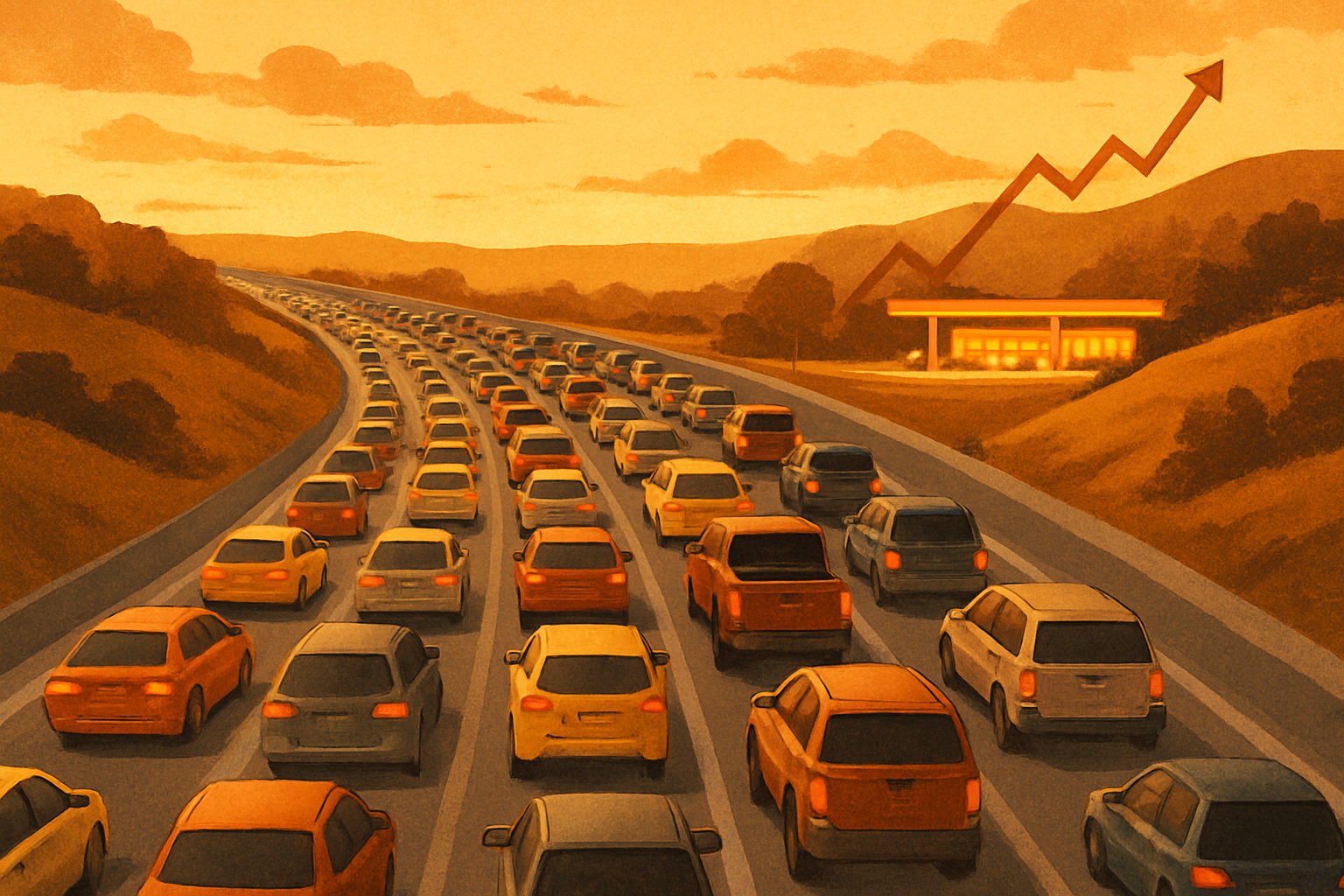
Americans heading out for Labor Day weekend are facing a costly end to summer: Gasoline prices are on track to set a record for the holiday, while travelers also contend with higher hotel rates, pricier flights and concentrated traffic on major highways.
The national average for regular gasoline reached $4.14 a gallon on September 3, according to AAA. That was already above the previous Labor Day record of $3.82, set on September 3, 2012. AAA said the average had never previously topped $4 on Labor Day.
The distinction matters. There is not yet a single official measure showing that the total cost of a road trip—including fuel, lodging, meals, tolls and other expenses—will be the highest ever. But fuel alone is entering record territory, and several other travel costs are moving in the same direction.
AAA booking data shows domestic hotel bookings are 9% more expensive than during the comparable Labor Day period last year. Average domestic airfare is up 2%, to about $750 for a round trip, while tickets to the most popular domestic destinations average roughly $790—nearly 20% higher than a year ago.
For drivers, the fuel increase is especially significant because Labor Day travel is concentrated into a short period. Unlike longer holiday stretches, the weekend’s departures and returns tend to bunch around Thursday afternoon, Friday and Monday afternoon, when holiday travelers overlap with regular commuters.
INRIX expects the heaviest outbound congestion to occur Thursday, September 3, between 2 p.m. and 7 p.m., and Friday, September 4, from noon through 8 p.m. Saturday afternoon is also expected to be busy as travelers head toward beaches, parks and other recreational destinations. The return trip is forecast to peak Monday, September 7, between 2 p.m. and 5 p.m.
Sunday, September 6, is expected to be the easiest day for long-distance driving in general, although traffic may still build around tourist areas and major events. INRIX recommends leaving before lunchtime for outbound trips and avoiding the middle of the afternoon whenever possible.
The cost pressure at the pump is being driven in part by crude oil prices, which AAA said were in the $90-per-barrel range amid volatility around the Strait of Hormuz. Crude accounts for roughly half of the retail price of gasoline, meaning international oil-market swings can quickly affect household travel budgets.
A typical 500-mile round trip in a vehicle that gets 25 miles per gallon would require about 20 gallons of fuel. At $4.14 per gallon, that is approximately $83 for gasoline alone, before tolls, parking, food or lodging. A larger vehicle getting 20 miles per gallon would need 25 gallons, pushing the fuel bill above $100.
The higher prices do not appear to be eliminating demand. AAA’s Labor Day booking analysis found strong interest in U.S. destinations including Seattle, Orlando, Boston, Denver and New York. National parks and Alaska cruises are also drawing travelers, with many visitors using cities such as Denver, Las Vegas and Seattle as starting points for road-based trips.
The weekend is also expected to test vehicle reliability. AAA said it handled more than 400,000 roadside-assistance calls during last year’s Labor Day period, involving problems such as dead batteries, flat tires, lockouts and towing.
Drivers can reduce the financial hit by comparing prices before entering major travel corridors, filling up earlier, checking tire pressure and avoiding unnecessary idling in traffic. Leaving early may also save time: On routes where congestion doubles normal travel times, a delayed departure can turn a short getaway into a much longer—and more expensive—trip.
For now, the clearest record is at the gas pump. Whether Labor Day 2026 becomes the most expensive road-trip weekend overall will depend on final prices for fuel, hotels, food and other travel services. But for millions of drivers, the warning is already visible on the price sign: This year’s last summer getaway is starting with an unusually high baseline cost.
Sources & Further Reading
StoryBreak
Independent digital news and reporting, updated throughout the day.
This article was researched and drafted with AI assistance and reviewed as part of StoryBreak's editorial process before publication. Read our editorial standards.