
NFL Players’ Cleats Melted on 157-Degree Turf. The Bigger Problem Is What It Did to the Game
The Eagles’ 24-20 win over the Titans in Nashville came with a bizarre equipment problem: players reported cleats softening or melting as Nissan Stadium’s artificial turf reached a reported 157 degrees. The incident raises questions about heat protocols, traction and the NFL’s continuing turf debate.
By StoryBreak
Published September 21, 2026 at 11:16 PM
The Philadelphia Eagles left Nashville with a 24-20 victory Sunday, but the most consequential evidence from the game may have been on players’ feet.
The artificial turf at Nissan Stadium was reported during the broadcast to have reached 157 degrees Fahrenheit. The air temperature was in the mid-90s, creating a surface roughly 60 degrees hotter than the conditions players felt away from the field.
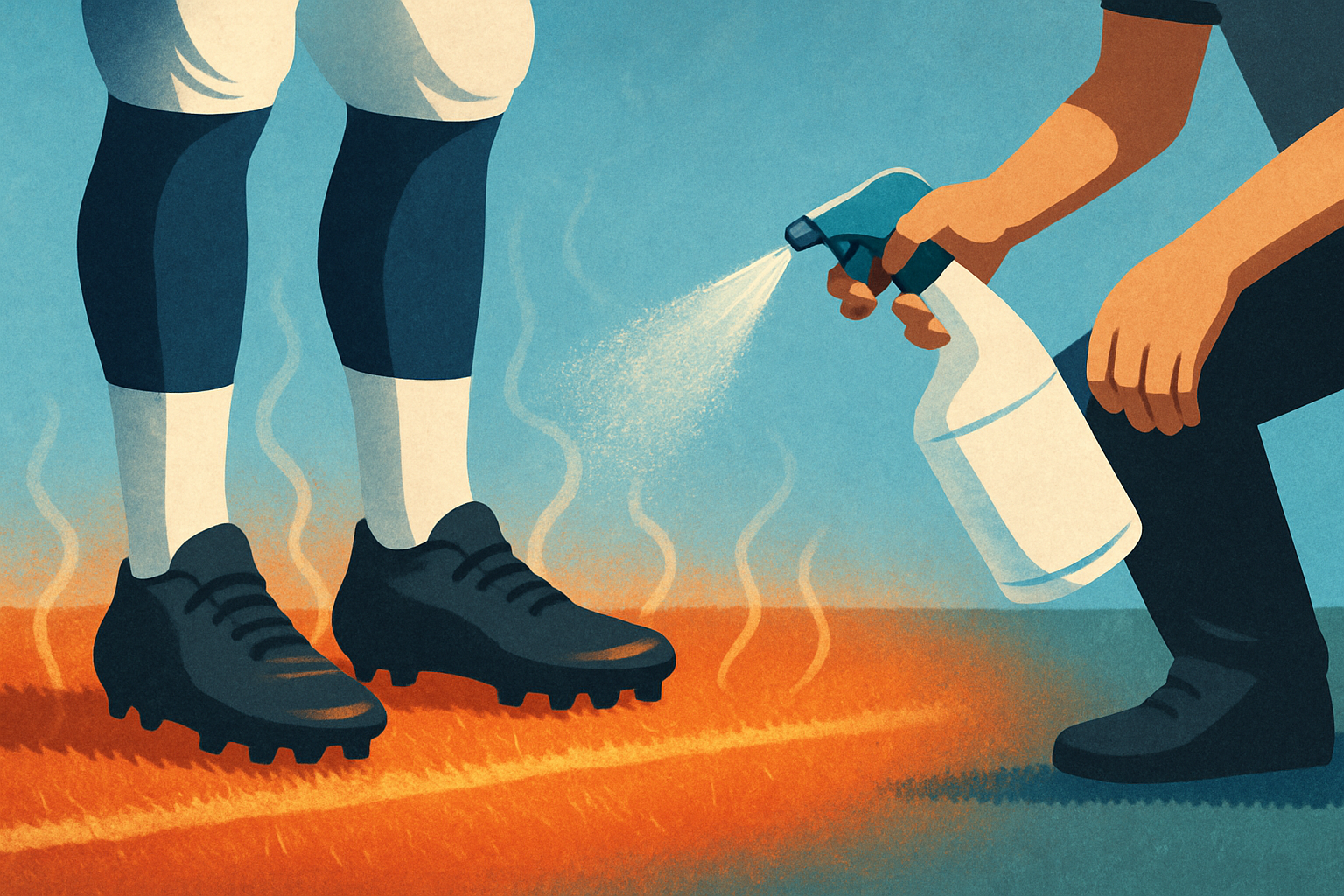
That difference quickly became a practical problem. Eagles guard Cam Jurgens said he went through multiple pairs of cleats during the game, describing halftime as a “NASCAR pit crew” operation. Titans safety Amani Hooker said the midsoles of his cleats had melted completely off, while sideline staff were seen spraying water on players’ footwear.
The Eagles’ official account did not independently confirm the exact 157-degree reading, but it did state that the turf measured above 150 degrees at times. The team also described the game as a test of adaptation in extreme heat. Multiple reports said Sirianni needed an IV after the game, and players described their feet as burning even after the final whistle.
That matters because cleats are not just equipment; they are part of a player’s contact with the field. If a sole softens, separates or loses its intended shape, traction can change from one play to the next. For linemen pushing laterally and absorbing contact, that can affect balance. Eagles tackle Jordan Mailata said he rolled an ankle twice and questioned whether the condition of his cleats contributed.
The surface problem was not entirely unexpected. Before Sunday’s game, the Titans’ official website reported that Hooker had already discussed cleats melting during the team’s previous home game. That means the Eagles-Titans matchup was not an isolated surprise but the second consecutive week in which players raised concerns about the same field during an extreme heat spell.
The science is straightforward even if the game-day consequences are unusual: synthetic surfaces can absorb and retain solar energy, especially when dark infill materials are present. NFL Football Operations guidance identifies infill as a factor in surface temperature and microclimate. The league also requires fields to be tested for playing characteristics, including synthetic turf’s hardness, depth and evenness. Those standards, however, do not answer the central question raised in Nashville: what happens when a field remains playable by ordinary testing measures but becomes hot enough to damage footwear?
That is where the 157-degree number needs careful handling. It was a broadcast measurement, not a publicly available league finding or formal postgame inspection in the sources reviewed. The exact figure should therefore be treated as reported rather than settled. But the underlying event is well supported: players and coaches described extreme heat, cleats were replaced or cooled, and the Eagles’ official recap confirmed the turf exceeded 150 degrees.
The incident also adds force to the players’ long-running preference for natural grass. Mailata, who has represented the Eagles in player-safety discussions, argued that the league should move toward grass fields. The question is no longer only whether turf changes how a tackle feels or how injuries occur over a season. In Nashville, players said the surface was hot enough to compromise the equipment intended to keep them stable.
The NFL now has a clear follow-up issue. It can review the field’s measurements, determine whether its existing heat procedures were adequate and decide whether teams need a defined surface-temperature protocol. Until then, the most revealing statistic from the Eagles’ win may not be 24-20. It may be the gap between a 95-degree afternoon and a playing surface that reportedly reached 157.
Sources & Further Reading
- Philadelphia EaglesPrimary source
- Tennessee TitansPrimary source
- NFL Football OperationsPrimary source
- NFL Football OperationsPrimary source
- CBS Sports
- The Washington Post
StoryBreak
Independent digital news and reporting, updated throughout the day.
This article was researched and drafted with AI assistance and reviewed as part of StoryBreak's editorial process before publication. Read our editorial standards.