Nvidia shares fall 4.6% as Fed warning erases post-earnings rally
Nvidia delivered another powerful earnings report, but its stock reversed sharply on Friday, August 28, after Federal Reserve Chair Kevin Warsh said inflation remains too high and suggested the central bank may need to keep rates elevated or raise them. Rising Treasury yields pressured high-growth technology stocks and overshadowed Nvidia’s outlook.
By StoryBreak
Published August 31, 2026 at 1:13 AM
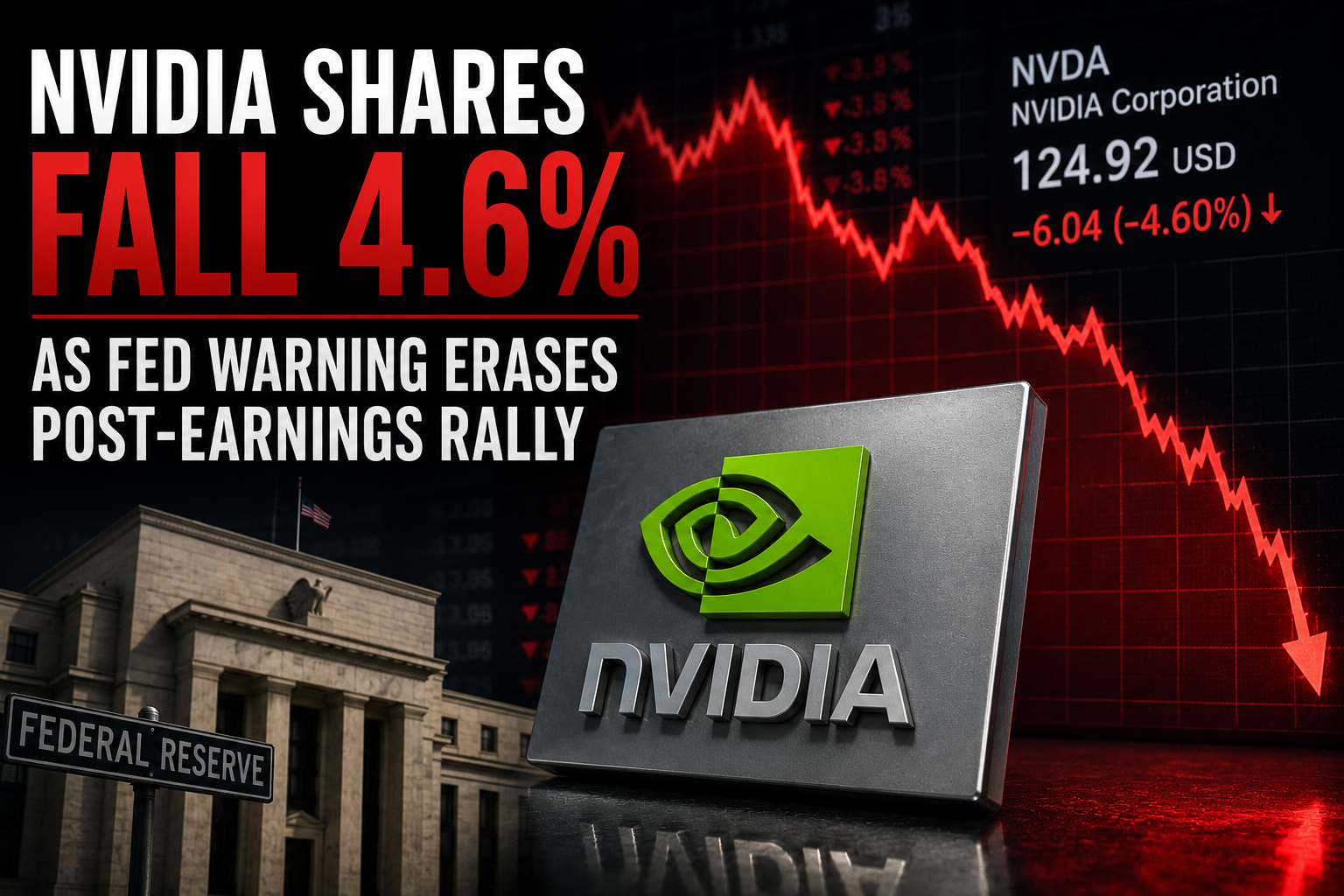
Nvidia shares fell 4.6% on Friday, August 28, closing at $217.49, as investors shifted their attention from the chipmaker’s strong quarterly results to a more hawkish message from the Federal Reserve.
The decline came one session after Nvidia helped drive a broad technology rally. The company reported fiscal second-quarter revenue of $96.2 billion on August 26, up 106% from a year earlier, and projected continued growth as demand for artificial-intelligence infrastructure remains strong. Yet the enthusiasm faded as traders assessed the interest-rate implications of Federal Reserve Chair Kevin Warsh’s speech at the Jackson Hole Economic Policy Symposium.
Warsh said inflation was still running above the Fed’s 2% target and that policymakers had “work to do” unless they became confident that underlying price pressures were moving toward the goal clearly and quickly. He did not commit to a specific rate decision, but the remarks reinforced expectations that borrowing costs may remain high for longer and that additional increases could be considered if inflation fails to improve.
That matters disproportionately for Nvidia and other high-growth technology companies. When Treasury yields rise, future corporate earnings become less valuable in today’s dollars, which can put pressure on richly valued stocks even when their operating results remain strong. Higher yields can also make safer fixed-income investments more attractive relative to shares.
The bond market reacted quickly. The yield on the benchmark 10-year Treasury note moved above 4.7% late Friday, while shorter-term yields also climbed as investors increased bets on tighter monetary policy. The major U.S. stock indexes finished lower for the session, with semiconductor shares among the groups facing the heaviest pressure.
Nvidia’s earnings were not the only factor in the selloff. Investors had already pushed the stock higher ahead of the report, raising the bar for the company to deliver a result that would support further gains. The company’s figures cleared many conventional measures of success, but the market’s response showed that strong demand alone is not the only variable determining the stock’s price.
Nvidia said second-quarter revenue rose 18% from the previous quarter, while net income increased 126% from a year earlier to $26.4 billion. Gross margin was 75%, according to the company’s earnings release. Those numbers underscore the scale of the AI buildout, but they also highlight why the stock has become particularly sensitive to changes in interest rates and investor expectations.
The Fed’s message adds a second source of uncertainty to Nvidia’s outlook. The company’s customers are spending heavily on data centers and AI computing systems, but that investment depends on corporate budgets, financing conditions and expectations for future returns. If higher interest rates persist, companies may face greater pressure to justify the pace of their AI spending, even if demand for Nvidia’s products remains healthy.
For investors, the immediate question is whether Friday’s move was a temporary post-earnings reversal or the beginning of a broader reassessment of technology-stock valuations. The answer will likely depend on upcoming inflation and employment data, movements in Treasury yields and whether Nvidia can continue exceeding expectations as new products enter the market.
Friday’s decline therefore did not erase Nvidia’s fundamental growth story. It did show, however, that the stock is trading within a market increasingly driven by two forces at once: the extraordinary earnings potential created by AI and the cost of capital set by the Federal Reserve.
Sources & Further Reading
StoryBreak
Independent digital news and reporting, updated throughout the day.
This article was researched and drafted with AI assistance and reviewed as part of StoryBreak's editorial process before publication. Read our editorial standards.