Your Savings Account Could Be Costing You Hundreds a Year — Here’s Why the Gap Is So Large
The average savings account is paying a fraction of what competitive high-yield accounts offer. On a $25,000 balance, that difference can amount to roughly $868 a year before taxes.
By StoryBreak
Published September 7, 2026 at 9:40 PM
If your savings account is paying something close to the national average, the cost of staying put may be measured in hundreds of dollars a year.
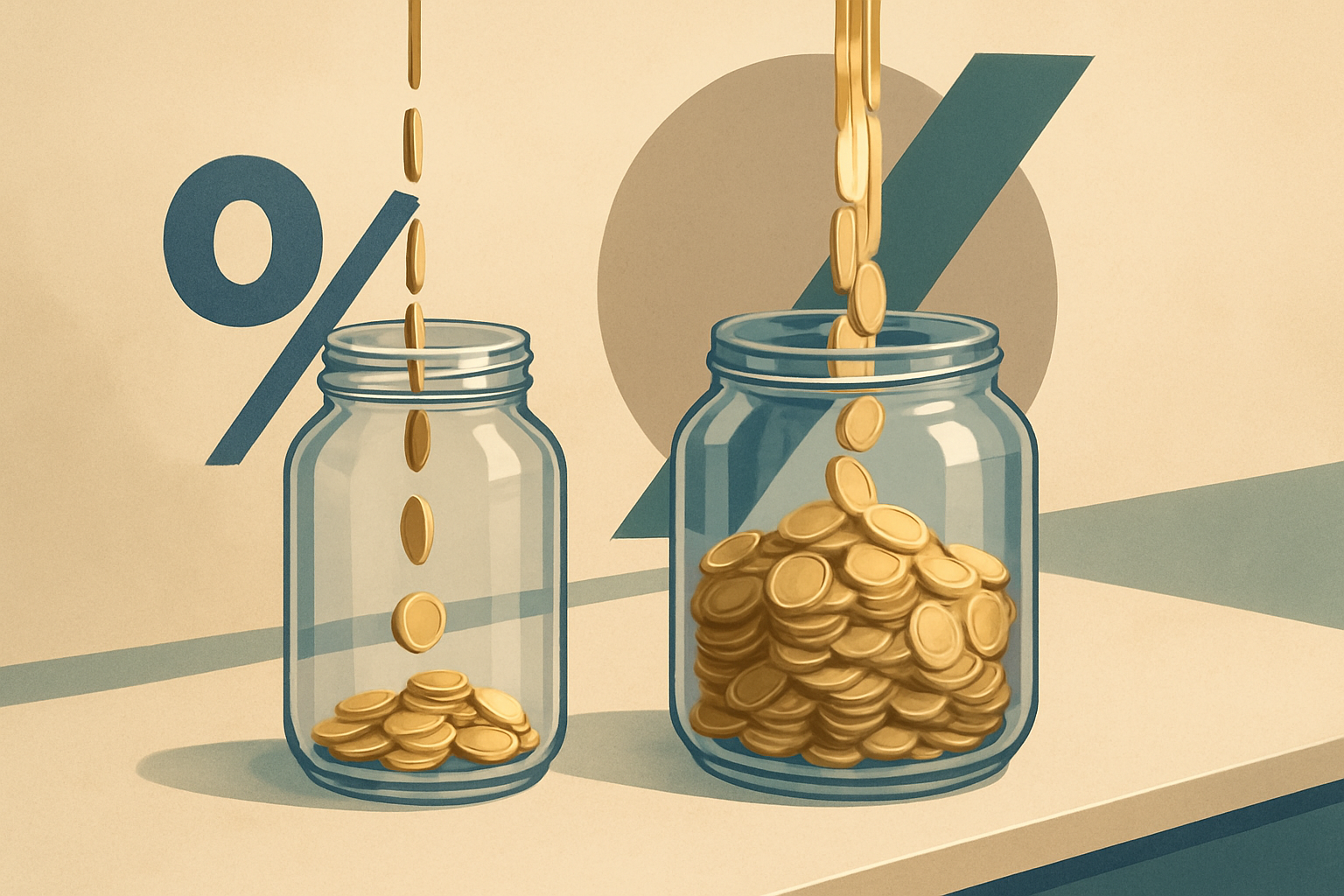
Bankrate’s latest survey puts the average savings account yield at 0.63% as of September 7, 2026. The same survey found that competitive high-yield savings accounts were offering roughly 4% to 4.10%.
That spread looks small on paper. It is not small in dollars.
A $25,000 balance earning 0.63% would generate about $157.50 in interest over a year, assuming the rate stayed unchanged. At 4.10%, the same balance would produce approximately $1,025. The difference: about $867.50 before taxes.
Even a smaller balance can make the gap visible. On $10,000, the difference between those two rates is roughly $347 a year. On $50,000, it approaches $1,735.
The reason for the gap is that “the savings rate” is not one rate. Banks set deposit yields based on their funding needs, competitive position, operating model and expectations for short-term interest rates. A large branch-based bank with a dependable customer base may have less incentive to pay aggressively for deposits. Online banks, which generally operate with fewer physical locations, may compete for customers by offering higher yields.
Short-term interest rates also matter. The Federal Reserve reported an effective federal funds rate of 3.63% in its September 4 release. Deposit accounts do not automatically pay that rate, but banks use short-term market conditions as an important reference point when deciding how much to pay savers.
That helps explain why account rates can change. A high-yield account offering 4% today is usually variable, not a promise that the rate will remain there for years. If market rates fall, the bank can generally lower the account’s APY. If competition intensifies, banks may raise rates or introduce promotional offers.
There is another reason comparisons can be misleading: the highest number in an advertisement may come with conditions. Some accounts require a minimum balance, direct deposit, linked products or a limit on the amount eligible for the top rate. Others may charge monthly maintenance fees or impose restrictions on transfers.
The FDIC’s national-rate data illustrates the difference between a broad market average and the best individual offers. Its figures are based on rates paid across insured institutions and are not meant to represent the highest rate available in the market. That makes the national average useful as a benchmark, but not necessarily a good target for a consumer shopping for a savings account.
Fees can erase part of the advantage, too. The Consumer Financial Protection Bureau notes that banks may charge fees for excessive withdrawals, going below a minimum balance or other account activity. A higher APY is valuable only if the account’s requirements fit the way the customer uses it.
The practical lesson is not that every saver should chase the highest advertised rate. It is that leaving a substantial cash balance in a low-yield account has a measurable opportunity cost. The right comparison is the interest actually earned after fees, conditions and taxes—not the account’s marketing label.
For a household holding emergency savings or money reserved for a near-term expense, the most important questions are simple: What is the current APY? Can it change? Are there balance requirements? Are there monthly fees? How easily can the money be transferred when it is needed?
Those details can matter more than the difference between two account names. But when the gap is between roughly 0.63% and 4%, the arithmetic is difficult to ignore.
Sources & Further Reading
- Bankrate
- Bankrate
- Federal Reserve BoardPrimary source
- Federal Deposit Insurance CorporationPrimary source
- Consumer Financial Protection BureauPrimary source
StoryBreak
Independent digital news and reporting, updated throughout the day.
This article was researched and drafted with AI assistance and reviewed as part of StoryBreak's editorial process before publication. Read our editorial standards.