Trump’s Iran Threat Raises the Stakes of a War He Still Says Could End at the Negotiating Table
President Trump is warning Iran that it faces destruction or prolonged economic isolation unless it reaches a deal, while Tehran threatens to widen the conflict. The next phase may depend less on the rhetoric itself than on whether Gulf allies back renewed U.S. attacks and whether shipping through the Strait of Hormuz returns to normal.
By StoryBreak
Published September 21, 2026 at 10:58 PM
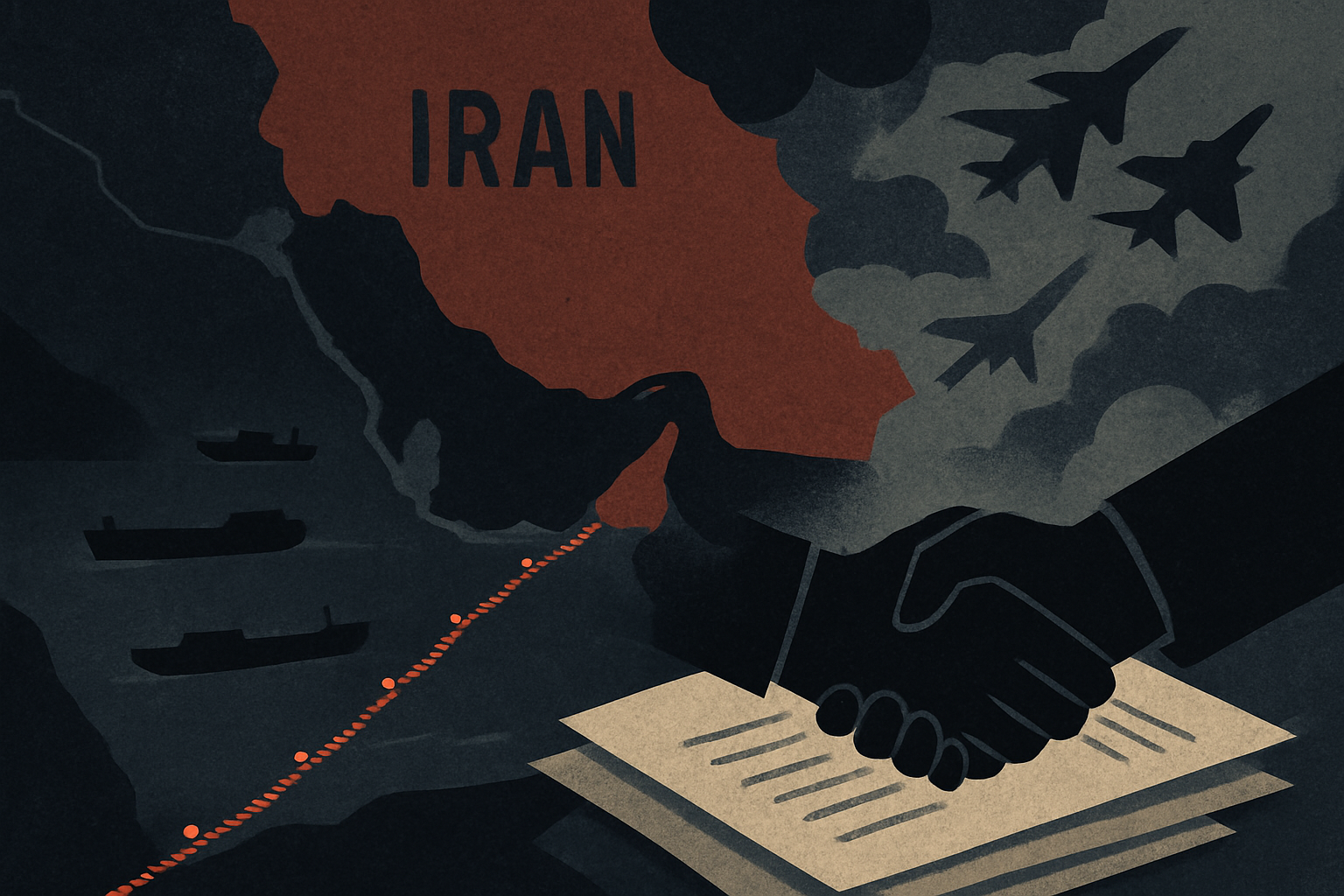
President Donald Trump has revived his most sweeping threat against Iran, warning that Tehran faces a choice between making a deal, enduring economic isolation or being destroyed.
The comments, reported Sunday after Fox News correspondent Trey Yingst spoke with Trump, came as the president described himself as being in a “deciding mode.” Yingst said Trump characterized the choices as “wiping Iran out, letting them rot economically or making a deal.” Trump also questioned when he should “blow the entire nation up,” according to the account.
The remarks do not amount to a confirmed order for a new major attack. But they show that the administration’s preferred endgame remains unsettled after more than six months of war, sanctions and unsuccessful efforts to reach a durable agreement.
Trump’s latest warning followed an interview with Axios last week in which he said he faced a major decision over whether to “annihilate” Iran’s regime or hold back. Axios reported that the president was weighing a return to large-scale combat while seeking the views of Gulf Arab governments, whose territory and energy infrastructure could become targets if Iran retaliates.
That regional concern has already affected U.S. policy. The Associated Press reported in August that Trump delayed planned strikes after appeals from Saudi Arabia, Qatar and the United Arab Emirates. At the time, he described negotiations as Iran’s “last chance,” with discussions expected to involve reopening the Strait of Hormuz and addressing U.S. demands over Iran’s nuclear program.
The waterway is the practical pressure point behind much of the confrontation. AP reported that about 20 million barrels of oil—roughly one-fifth of global daily oil supply in peacetime—normally pass through the Strait of Hormuz. Traffic remains below previous levels. On Monday, Britain’s United Kingdom Maritime Trade Operations center said an unidentified projectile struck a tanker entering the strait, injuring two crew members. The vessel continued under its own power, and no environmental damage was reported.
Iran’s Revolutionary Guard responded to the growing pressure with its own warning. A spokesman, Hossein Mohebbi, said the war was not over and that Iran would change its weapons, tactics and targets if the United States escalated. He warned that the conflict’s geography could expand and said Iran had targets that had not yet been struck, according to Iranian state media as reported by AP.
At the same time, Washington is applying pressure without announcing a new battlefield decision. The White House said in August that it had launched “Operation Economic Outcast,” a sanctions campaign aimed at Iran’s digital assets, technology, gold, aviation and shipping sectors. Treasury Secretary Scott Bessent described the strategy as forcing Iran to choose between isolation and a return to the global economy.
That combination—military threats, economic punishment and offers of negotiations—has become the administration’s repeating pattern. The result is a dangerous ambiguity: Trump is signaling that further escalation is possible, but U.S. policy still leaves room for diplomacy if Tehran agrees to terms that have not been publicly finalized.
The next indicators will be concrete rather than rhetorical. Trump is expected to consult Gulf leaders during the United Nations General Assembly in New York, where Iranian President Masoud Pezeshkian is also scheduled to attend. A meeting between the two presidents, progress on the Strait of Hormuz or a verified nuclear framework would point toward de-escalation. New strikes, attacks on shipping or a breakdown in regional diplomacy would point the other way.
For now, Trump’s threat has increased the pressure without resolving the central question: whether Washington is using the prospect of war to force a deal—or preparing to make war the deal’s replacement.
Sources & Further Reading
StoryBreak
Independent digital news and reporting, updated throughout the day.
This article was researched and drafted with AI assistance and reviewed as part of StoryBreak's editorial process before publication. Read our editorial standards.