
U.S. Launches Fresh Strikes on Iran as Tehran Retaliates With Missile and Drone Fire
The United States carried out another round of strikes against Iranian targets on Tuesday, September 1, after Washington said Iran had threatened commercial shipping and American forces in the region. Tehran responded with missile and drone attacks on U.S. positions in Jordan, escalating a conflict that had entered a period of relative military calm.
By StoryBreak
Published September 1, 2026 at 11:27 PM
Updated September 7, 2026 at 12:00 AM
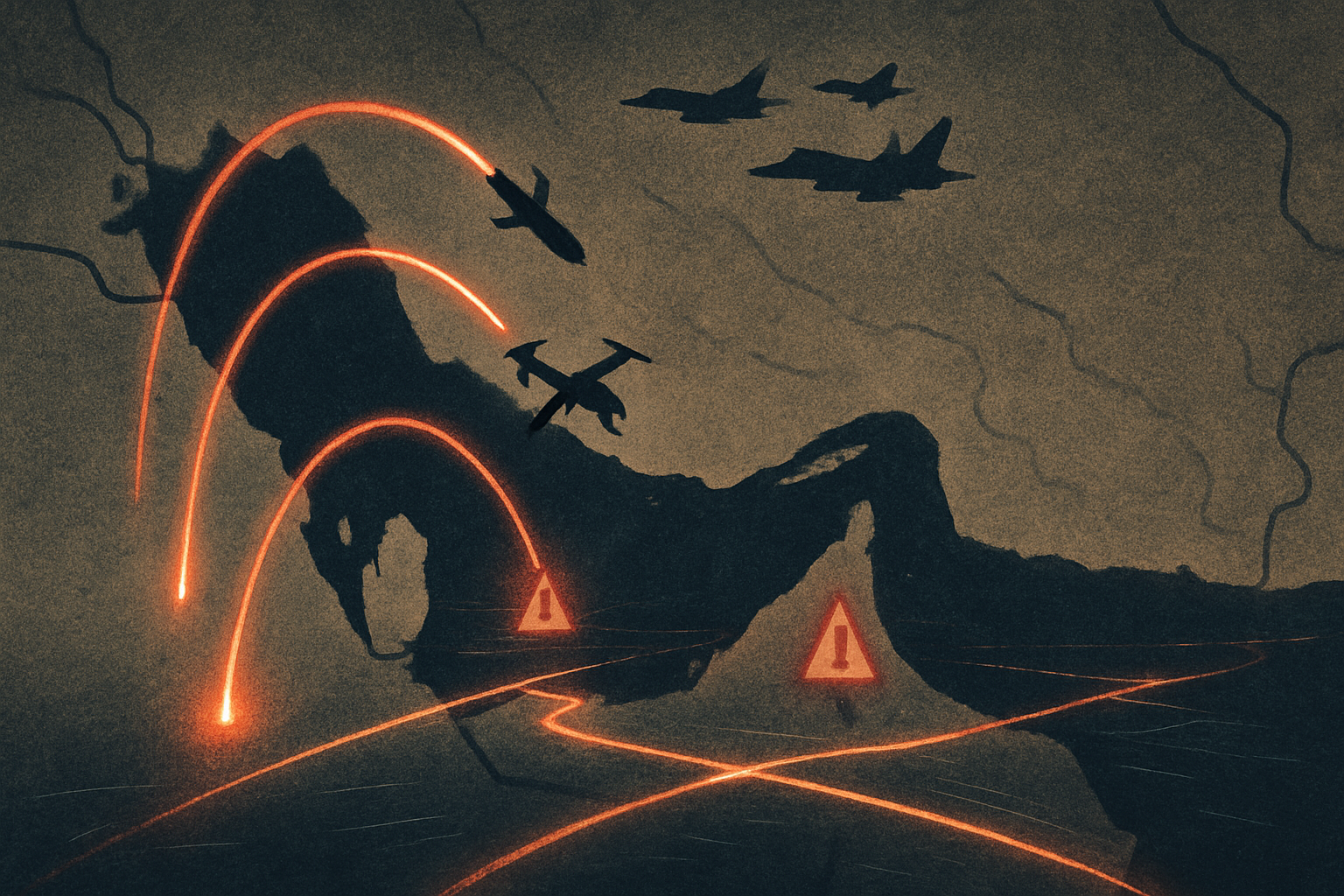
The United States launched fresh strikes against Iranian targets on Tuesday, September 1, and Iran responded with missile and drone fire at American positions in Jordan, sending the two countries into their most serious direct exchange of attacks in weeks.
U.S. Central Command said the strikes targeted Islamic Revolutionary Guard Corps positions in Iran. The command said the operation followed what it described as attempted Iranian attacks on commercial shipping in the Strait of Hormuz and on U.S. service members deployed across the region.
The new attacks came after an earlier U.S. operation on Sunday against rocket launchers on Larak Island, a strategically important location near the Strait of Hormuz. Iran then launched missiles toward two U.S. bases in Jordan. American officials said the missiles were intercepted, while the United Arab Emirates reported stopping an Iranian drone over its waters.
President Donald Trump said the latest U.S. action was justified and warned that Iran would face heavier attacks if it retaliated again. The president has also said the renewed exchange does not necessarily mean the conflict has returned to full-scale war, creating uncertainty over whether the strikes are intended as a limited response or the start of a broader campaign.
Iranian officials have signaled that Tehran will answer further attacks. President Masoud Pezeshkian said Iran would immediately reciprocate if Washington returned to its commitments under an interim agreement reached in June. The arrangement was intended to halt the conflict, but disagreements over its implementation have left the deal effectively stalled.
The latest escalation is centered on the Strait of Hormuz, one of the world’s most important energy routes. Iran has effectively restricted shipping through the waterway, and reports that two tankers came under fire while leaving the strait pushed oil prices higher on Tuesday. The disruption has raised concerns about energy costs, inflation and the safety of commercial vessels operating in the Gulf.
The military exchanges follow months of conflict that had increasingly shifted toward sanctions, blockades and pressure on shipping rather than sustained direct attacks. The apparent pause ended with the U.S. strike on Larak Island and Iran’s subsequent attacks on American facilities in Jordan.
There were conflicting early reports about casualties from the latest operations. The Associated Press reported that a U.S. strike hit a home hosting a wedding in southern Iran, with local officials reporting deaths and numerous injuries. The precise toll and the circumstances surrounding the incident remained under investigation.
No broader diplomatic settlement was announced Tuesday. Iran has continued to describe negotiations as possible, while Washington has threatened additional military action if attacks on U.S. forces or commercial shipping continue.
The immediate risks are concentrated in three areas: further strikes by either side, a widening threat to U.S. bases and regional allies, and additional disruption to maritime traffic through the Strait of Hormuz. The next Iranian response—and whether the United States follows through on its warnings—will determine whether the latest exchange remains limited or develops into a wider phase of the war.
Sources & Further Reading
StoryBreak
Independent digital news and reporting, updated throughout the day.
This article was researched and drafted with AI assistance and reviewed as part of StoryBreak's editorial process before publication. Read our editorial standards.