Wholesale Inflation Jumps to 5.4%, Putting Fresh Pressure on Prices and the Fed
U.S. producer prices accelerated in August as diesel, energy and freight costs surged. The report complicates the Federal Reserve’s interest-rate decision just days before its next policy meeting.
By StoryBreak
Published September 10, 2026 at 1:42 PM
U.S. wholesale inflation accelerated in August, adding a new complication for households facing higher fuel and transportation costs — and for a Federal Reserve preparing to make its next interest-rate decision.
The Labor Department said Thursday that its Producer Price Index rose 5.4% in August from a year earlier, up from 4.8% in July. Prices increased 0.4% during the month, following a 0.1% rise in July.
The headline figure looks broad, but the details show that energy was the immediate engine. Prices for final-demand goods rose 1.1% in August, while final-demand services increased 0.1%. More than three-quarters of the monthly increase in goods prices came from final-demand energy, which rose 4.2%.
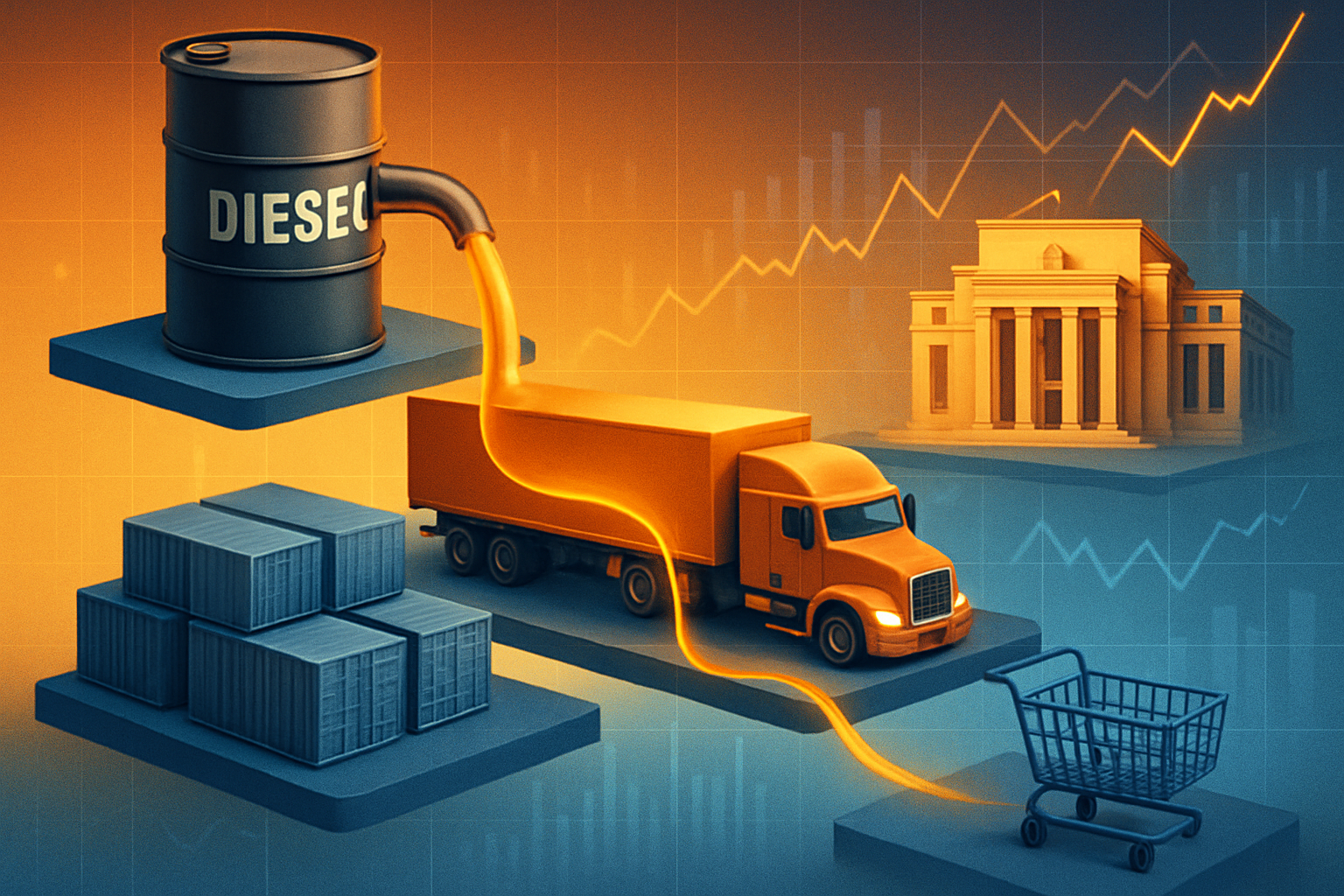
Diesel was the clearest pressure point. Its wholesale price jumped 24.1% from July to August and was nearly 78% higher than a year earlier. Diesel powers much of the trucking, agricultural and construction economy, so the impact can extend well beyond the pump. The cost of transportation and warehousing services rose 2.3% in August, including a 2% increase in truck freight transportation.
That creates a potential path from an overseas energy shock to everyday prices: fuel becomes more expensive, shipping costs rise, and businesses decide how much of the increase to absorb and how much to pass along. The process is neither automatic nor immediate, but it can keep inflation elevated even after the original energy spike fades.
The data also argue against viewing the report as only an oil story. A measure that excludes foods, energy and trade services rose 0.3% in August and 4.7% over the year. That is below the 5.4% headline rate, but it still indicates that underlying producer prices are increasing considerably faster than the Federal Reserve’s 2% inflation objective.
At the same time, not every category moved higher. Wholesale food prices rose just 0.1% in August, while residential electric-power prices declined 0.5%. Prices for some retail and wholesaling services also fell. Those mixed results matter because producer prices do not translate one-for-one into consumer prices. Companies may accept lower margins, renegotiate contracts or wait before changing prices at checkout.
For consumers, the most exposed categories are likely to be those tied closely to fuel and freight: gasoline and diesel, air travel, delivery services and goods that must move long distances. But Thursday’s report alone cannot show how much prices will rise at stores or how long the pressure will last.
For the Fed, the timing is difficult. The central bank is scheduled to meet September 15–16, only days after the producer-price release and the upcoming consumer-price report. A weak consumer inflation reading could support the view that the August increase was concentrated in energy and transportation. A hotter reading would make it harder to justify lower rates, particularly if officials believe higher costs are spreading into services and other categories.
That is the central uncertainty: whether this is primarily a temporary supply shock or a renewed inflation cycle. The August numbers provide evidence of both. Energy and diesel explain much of the sudden acceleration, but the underlying measure remains elevated enough to keep pressure on borrowing costs.
The next meaningful signal will be whether consumer prices confirm the producer data — and whether fuel and shipping costs continue rising in September. Until then, the 5.4% figure is best understood not as a promise that every household bill will rise by that amount, but as a warning that the economy’s cost pipeline is heating up again.
Sources & Further Reading
- U.S. Bureau of Labor StatisticsPrimary source
- Associated Press
- Board of Governors of the Federal Reserve SystemPrimary source
StoryBreak
Independent digital news and reporting, updated throughout the day.
This article was researched and drafted with AI assistance and reviewed as part of StoryBreak's editorial process before publication. Read our editorial standards.