Is AI Really Taking American Jobs? The First Workers Feeling the Pressure Are Young and Entry-Level
New labor-market research finds no evidence of economy-wide AI job losses yet, but employment for workers ages 22 to 25 has weakened sharply in occupations most exposed to generative AI. The data suggest hiring pipelines—not mass layoffs—may be where AI is having its earliest effect.
By StoryBreak
Published September 6, 2026 at 1:07 AM
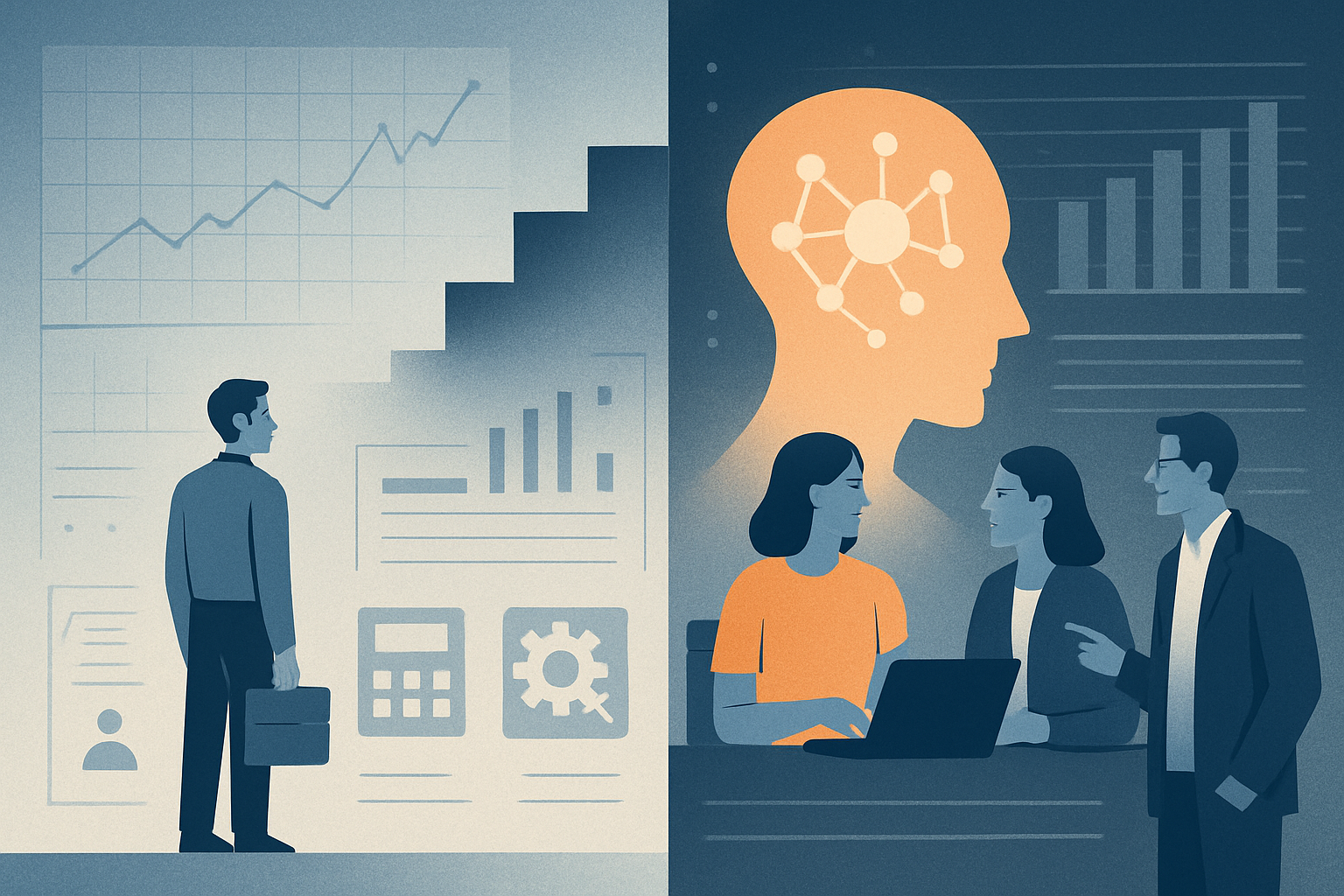
The first clear sign that artificial intelligence is reshaping American employment may not be a wave of layoffs. It may be fewer chances for young workers to get their first job.
A revised study from Stanford’s Digital Economy Lab, based on high-frequency payroll data covering millions of U.S. workers through June 2026, found no evidence of broad, economy-wide job displacement. But it identified a significant divide inside the labor market: Employment for workers ages 22 to 25 in occupations highly exposed to AI was 19% below the level researchers estimated it would have reached if it had tracked less-exposed occupations.
The gap was not apparent among more experienced workers in the same broad labor market. Researchers said the difference has grown steadily since their initial analysis in 2025 and appears to be driven mainly by reduced hiring of young workers, rather than a surge in separations.
That distinction matters. It suggests companies may be using AI first to reduce the need for entry-level hiring, while retaining employees who already possess institutional knowledge, specialized judgment or client relationships.
The workers most exposed are not necessarily software engineers. The Labor Department’s Bureau of Labor Statistics has created a new classification system that groups occupations according to how closely their tasks match current AI capabilities and where AI use has been observed. The agency places occupations with substantial language, information-processing and computer-based work toward the higher end of its relative-exposure scale.
BLS cautions that exposure is not the same as job loss. Its measure does not estimate the probability that an occupation will be automated, nor does it predict wage changes or future employment declines. A task can be assisted by AI without eliminating the worker who performs it.
That warning is reflected in other recent research. A 2026 report from the Society for Human Resource Management estimated that about 5.1% of U.S. employment—roughly 7.9 million jobs using the report’s employment base—falls into a high displacement-risk category. That share was lower than the report’s earlier estimate of 6%, even as the average number of tasks being automated increased.
The difference comes down to the way businesses are implementing the technology. AI may replace selected tasks, help employees complete more work, or allow companies to reorganize jobs without eliminating them altogether. A Federal Reserve analysis of firms’ job-posting behavior likewise frames the current transition as a mix of automation, worker augmentation and the creation of new roles, rather than a single economy-wide outcome.
Hiring data also show where opportunities may be emerging. LinkedIn’s 2026 workforce analysis reported rapid growth in several AI-related roles, including data-center technicians, while other research has found that AI-related hiring is concentrated in technical and professional occupations. The gains, however, are not evenly distributed: A recent LinkedIn analysis reported that women accounted for 26% of new U.S. hires into AI roles in 2025, compared with roughly half of hires in non-AI occupations.
For workers, the immediate risk may therefore be less “Will a machine take my job?” and more “Will an employer still create this job for someone like me?”
The answer varies sharply by occupation. Jobs built around repeatable digital tasks, document processing, routine analysis or standardized content are more exposed to generative AI. Work requiring physical presence, complex social interaction, accountability, hands-on judgment or unpredictable environments is generally less directly exposed to current language models.
Even the most concerning findings remain early evidence. The Stanford researchers do not identify a nationwide collapse in employment, and government agencies emphasize that AI exposure is not a forecast. But the pattern is becoming harder to dismiss: American workers entering the labor market may be encountering a tighter first rung on the career ladder, especially in fields where AI can perform portions of junior-level work.
The next test will be whether reduced entry-level hiring spreads into broader layoffs, or whether companies convert those roles into AI-assisted positions and create new pathways for inexperienced workers. So far, the data point to a labor market being reorganized unevenly—not one in which American jobs are disappearing all at once.
StoryBreak
Independent digital news and reporting, updated throughout the day.
This article was researched and drafted with AI assistance and reviewed as part of StoryBreak's editorial process before publication. Read our editorial standards.