
Dae’Quan Wright set to move from Browns to LSU in unprecedented college football return
Tight end Dae’Quan Wright is expected to join LSU after being waived by the Cleveland Browns, a move that could make him the first player to return to college football after signing with an NFL team.
By StoryBreak
Published August 23, 2026 at 9:00 PM EDT
Updated September 6, 2026 at 8:20 PM EDT
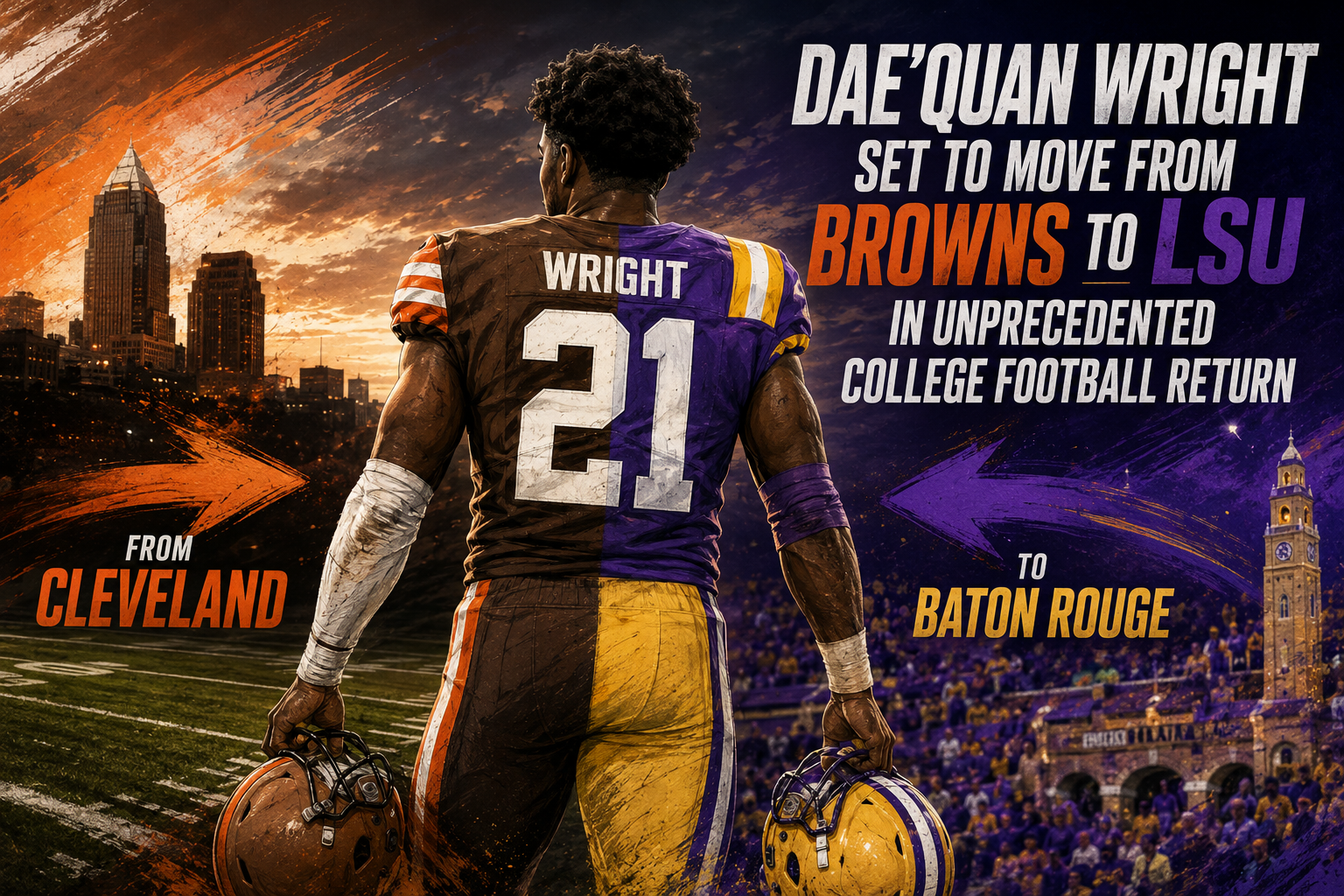
Dae’Quan Wright is positioned to make college football history after the Cleveland Browns agreed to waive the tight end, clearing a path for him to join LSU for the 2026 season if he goes unclaimed.
Wright’s agents, Drew Rosenhaus and Kyle Lincoln, told ESPN that the former Ole Miss standout has an agreement in place with LSU. The move remains contingent on him clearing the NFL’s waiver process and completing the necessary eligibility and roster steps.
If finalized, Wright would become the first known player to sign with an NFL team and then return to college football. His unusual path reflects the growing uncertainty surrounding eligibility rules as college programs, professional teams and athletes adjust to a rapidly changing football system.
The Browns claimed Wright off waivers from the Philadelphia Eagles on August 11, 2026. Cleveland had placed him on its roster during training camp after he went undrafted in April. The team later waived him as it continued making preseason roster moves.
Wright originally entered the NFL after completing his college career at Ole Miss. In 2025, he appeared in 15 games and recorded 39 receptions for 635 yards and five touchdowns, according to Ole Miss statistics. He previously played at Virginia Tech before transferring to the Rebels.
His return to the college game became possible after a Louisiana court granted a temporary restraining order involving athletes seeking an additional season of eligibility. Wright was among former college players who had signed with NFL teams but argued that they should be allowed to return to the NCAA system.
The legal dispute centers on the NCAA’s eligibility framework and the treatment of athletes who exhausted their traditional college eligibility after entering the 2022 recruiting class. A separate court fight has also challenged the NCAA’s five-year eligibility rule, creating a complicated backdrop for teams attempting to finalize rosters before the college season begins.
Wright entered the transfer portal as part of that process. His proposed move to LSU would give the Tigers an experienced tight end with SEC starting experience, while also creating a precedent that could influence other players weighing short-term professional opportunities against another college season.
LSU had not publicly listed Wright on its official 2026 football roster as of August 24, 2026. Until the waiver process and eligibility review are complete, the agreement represents an expected destination rather than a finalized addition.
For Wright, the decision offers another opportunity to compete at the highest level of college football. For the sport, it is a test of how far the current eligibility rules can stretch—and whether the boundary between college and professional football is becoming less defined.
Sources & Further Reading
- ESPN
- Cleveland BrownsPrimary source
- Cleveland Browns TransactionsPrimary source
- Associated Press
- Ole Miss AthleticsPrimary source
- LSU AthleticsPrimary source
- ESPN — Louisiana court rules for the players
StoryBreak
Independent digital news and reporting, updated throughout the day.
This article was researched and drafted with AI assistance and reviewed as part of StoryBreak's editorial process before publication. Read our editorial standards.