
Dolly Parton tributes spread from Nashville to cities across America after her death at 80
Fans, musicians, public officials and institutions honored Dolly Parton in the days after her Aug. 25 death in Nashville. Memorials appeared at her Nashville star, Dollywood continued operating as a place of celebration, the Grand Ole Opry staged a sold-out tribute and the White House ordered flags lowered nationwide through Sept. 1.
By StoryBreak
Published August 31, 2026 at 12:52 AM
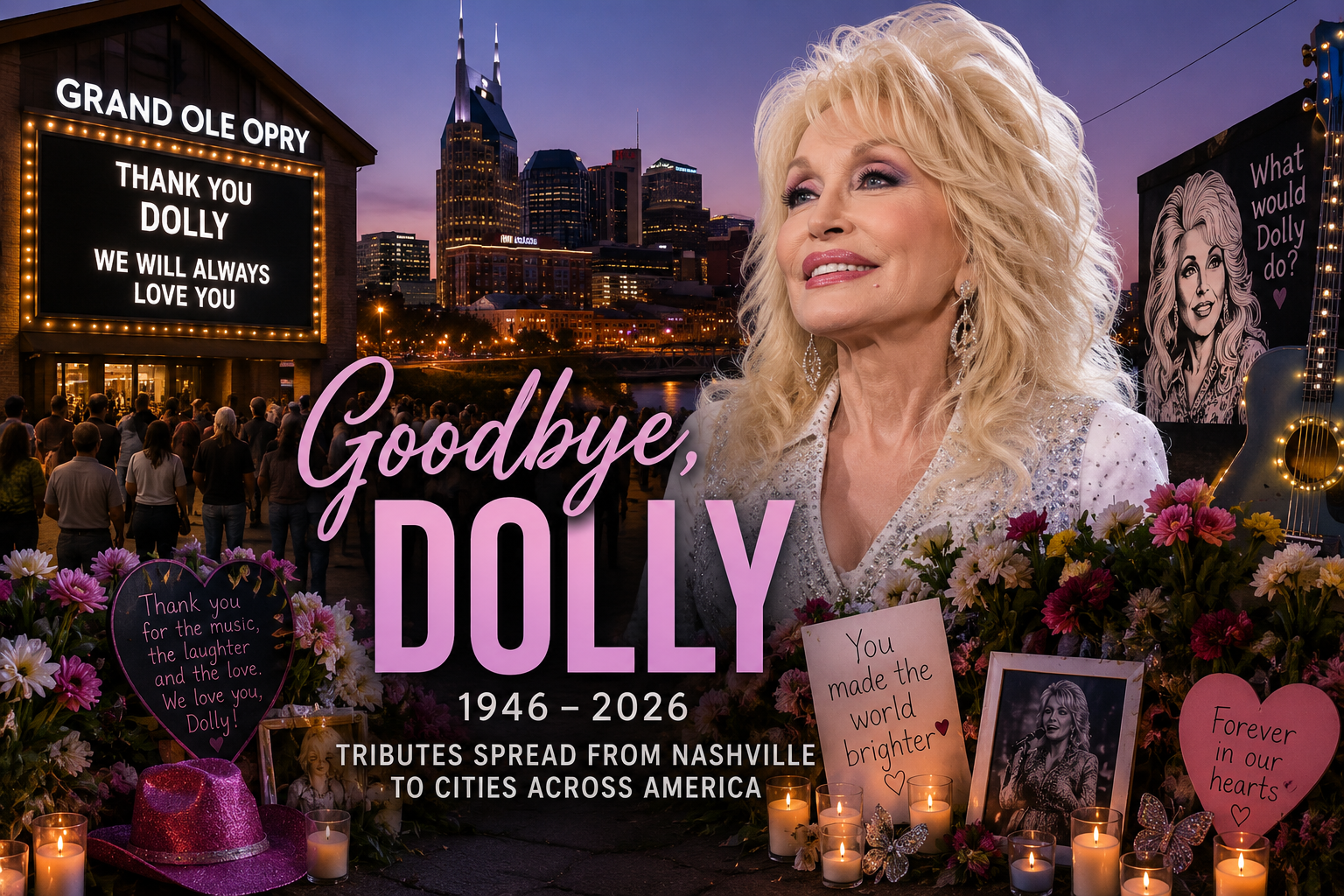
Tributes to Dolly Parton have spread across Nashville and beyond since the country music icon died Aug. 25 at age 80, turning public spaces, concert halls and cultural institutions into places of remembrance.
Parton died in Nashville after a brief battle with cancer, according to a statement from her publicist. Her death ended a career that connected country music, Hollywood, business and philanthropy across generations.
In Nashville, fans left flowers, notes and other personal memorials at Parton’s star near the Country Music Hall of Fame and Museum and at other locations associated with her career. The city also used pink lighting on landmarks including the Korean War Veterans Memorial Bridge and Metro Courthouse, reflecting the color long associated with Parton’s public image.
The Grand Ole Opry, where Parton first performed as a teenager and became a member in 1969, organized tribute programming during the week of her death. A sold-out tribute show featured Opry performers and artists who said Parton’s example helped draw them to Nashville. The performances underscored the institution’s unusually close relationship with Parton: She had appeared on the Opry more than 100 times during a membership that lasted nearly six decades.
Dollywood, the theme park Parton helped establish in the Smoky Mountains, reopened the day after her death. In a statement, the park said Parton wanted it to remain a place of joy, music and togetherness rather than silence. Visitors arrived in pink and rhinestone clothing, treating the park as both an operating attraction and a living memorial.
The response also reached well beyond Tennessee. The Empire State Building was illuminated in pink, while murals and other public tributes appeared in cities around the country. Musicians and performers including Miley Cyrus, Taylor Swift, Paul McCartney, Jane Fonda, Dionne Warwick and Linda Ronstadt issued statements or social-media posts recalling Parton’s music, humor, generosity and personal influence.
The federal government added an official marker to the national mourning. President Donald Trump ordered U.S. flags flown at half-staff at federal buildings, military installations, naval vessels and diplomatic facilities through sunset Sept. 1. The proclamation described the action as a mark of respect for Parton’s memory.
Parton’s legacy is being measured not only in records and awards but also in the institutions and programs she built. The Grand Ole Opry says she sold more than 100 million records, won 11 Grammy Awards, received an honorary Oscar and was inducted into both the Country Music Hall of Fame and the Rock & Roll Hall of Fame.
Her Imagination Library has distributed more than 300 million free books to children, according to the Opry. In North Carolina alone, the program had provided more than 24.6 million books since 2017, with more than 241,000 children enrolled statewide, according to WFAE’s reporting cited by NPR.
That combination of cultural reach and direct public service helps explain why the mourning has taken so many forms. Parton was simultaneously a songwriter whose work was recorded across genres, a business owner whose name became part of the Smoky Mountain tourism economy, and a philanthropist whose literacy program continues independently of her performances.
Her influence is also likely to remain visible through projects already associated with her name. Tennessee lawmakers are considering Sept. 25 as “9 to 5 Day,” while officials and advocates have begun discussing a possible renaming of Nashville International Airport. The airport proposal is not final and faces policy and approval questions.
For now, the immediate public response remains centered on music and shared memory. Nashville has supplied the physical landmarks, Dollywood has kept its doors open and the Opry has provided the stage. Across the country, listeners are returning to songs such as “Jolene,” “Coat of Many Colors” and “I Will Always Love You”—a national farewell shaped as much by celebration as by grief.
Sources & Further Reading
StoryBreak
Independent digital news and reporting, updated throughout the day.
This article was researched and drafted with AI assistance and reviewed as part of StoryBreak's editorial process before publication. Read our editorial standards.