
Huawei Says AI-Chip Demand Is Outrunning Supply as It Takes Aim at Nvidia
Huawei says it cannot make enough AI-computing equipment to satisfy Chinese demand, limiting its overseas ambitions even as it accelerates a new generation of Ascend chips and large-scale systems aimed at Nvidia.
By StoryBreak
Published September 17, 2026 at 11:59 PM
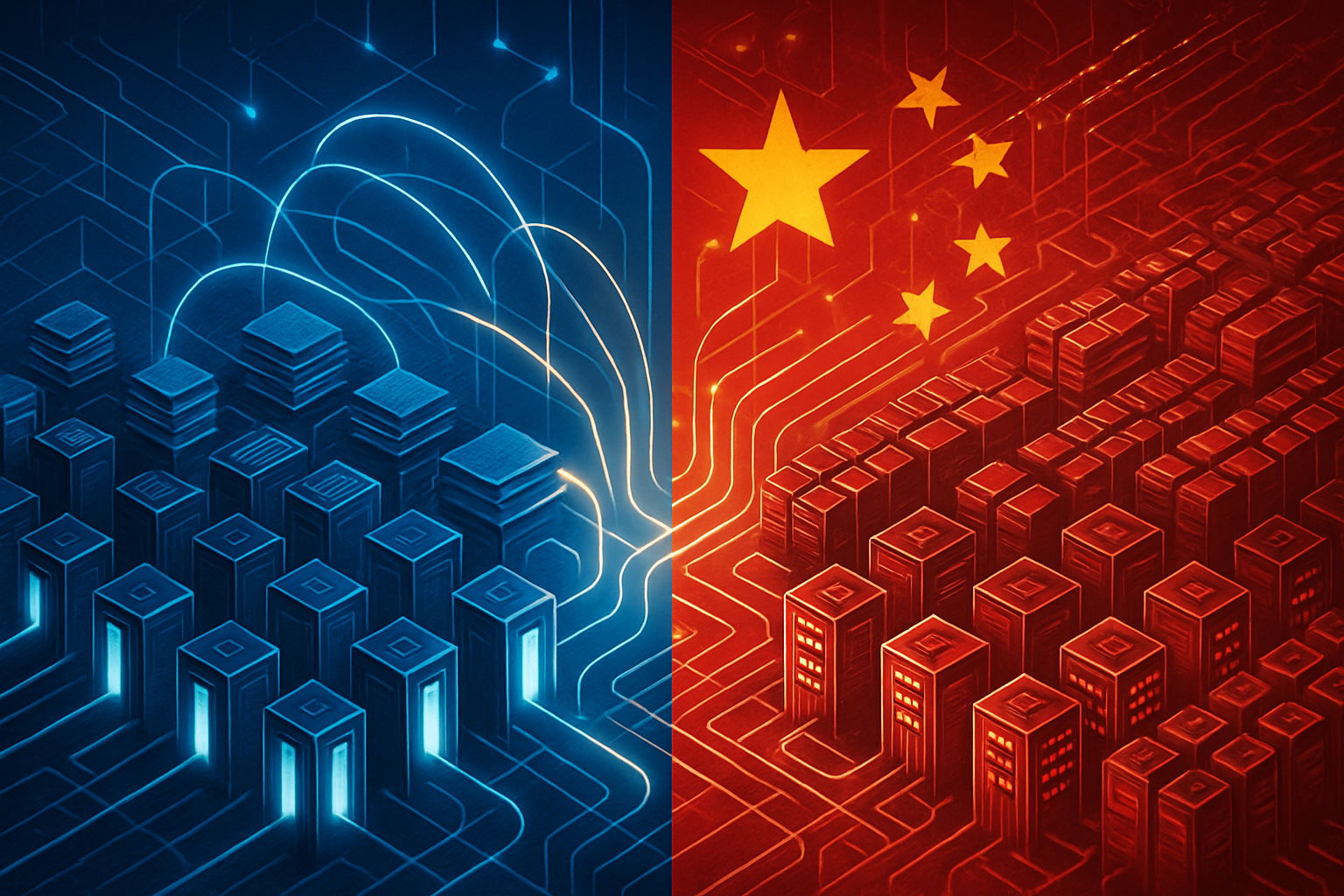
Huawei says demand for its artificial-intelligence chips has grown beyond what it can supply in China—a sign that the company’s biggest near-term challenge may not be finding customers, but producing enough hardware for them.
Eric Xu, Huawei’s rotating chairman, said Thursday at the company’s Huawei Connect conference in Shanghai that domestic demand was already exceeding manufacturing capacity. Because of that imbalance, he said Huawei does not plan to expand fully into international markets for now, although it will continue serving selected overseas customers where demand is especially strong.
The statement marks a notable shift in the way Huawei’s rivalry with Nvidia is developing. Huawei is not simply trying to sell a faster accelerator. It is building a broader computing platform around its Ascend chips, networking technology and large clusters that combine thousands of processors.
Huawei said testing of its Ascend 950DT had produced positive results and that it was in extensive discussions with Chinese AI-model developers. Xu expects many of those developers to begin training models on systems using the chip next year. The company has not released independent benchmarks establishing that the 950DT matches Nvidia’s products across performance, efficiency or software compatibility.
Huawei also presented a forward-looking chip schedule. The Ascend 960DT is planned for the first quarter of 2027, followed by the Ascend 960PR in the third quarter. The company says later systems will use UnifiedBus, its interconnect technology, to link very large numbers of AI processors into unified computing platforms.
That architecture matters because the most demanding AI workloads rarely fit on a single chip. Training and serving large models require many accelerators to exchange data quickly. If one processor is less capable than a competing Nvidia product, a vendor can try to narrow the gap through scale—but only if its networking, memory, cooling and software systems can keep the cluster working efficiently.
Huawei’s own product materials make an aggressive case for that approach. The company says its Atlas 950 SuperPoD, built around Ascend 950DT processors, will support systems containing thousands of chips and will be available in the fourth quarter of 2026. Those performance comparisons are Huawei’s claims, not independent test results, but they show where the company believes it can compete: system design and coordination as much as raw silicon.
The supply problem is also larger than Huawei. Chinese AI-chip makers are contending with shortages and rising costs for high-bandwidth memory, a critical component in AI accelerators. That means expanding output will require more than designing new processors. Huawei must secure memory, packaging, manufacturing capacity and the software support needed to persuade developers to move workloads away from Nvidia’s established ecosystem.
For Nvidia, the immediate competitive threat is concentrated in China, where export restrictions have reduced access to some of its most advanced products and encouraged customers to seek domestic alternatives. Huawei’s inability to meet all Chinese demand indicates that the policy environment has created room for a local supplier—but it also underscores how difficult it will be to turn that opportunity into reliable, high-volume production.
The next milestone is not Huawei’s announcement of another chip. It is whether Chinese model developers actually train large production systems on the 950DT and whether Huawei can deliver those systems at scale. Until that happens, Huawei has demonstrated strong demand and an ambitious platform strategy, but not yet a fully proven Nvidia replacement.
Sources & Further Reading
- Reuters via MarketScreener
- HuaweiPrimary source
- HuaweiPrimary source
- Associated Press
- Reuters via MarketScreener
StoryBreak
Independent digital news and reporting, updated throughout the day.
This article was researched and drafted with AI assistance and reviewed as part of StoryBreak's editorial process before publication. Read our editorial standards.