Microsoft Puts Majorana 2 in DARPA’s Hands at New Maryland Quantum Center
A new Microsoft quantum facility near Washington, D.C., will give DARPA on-site access to a system built around the company’s Majorana 2 chip—turning a long-running research partnership into a more demanding hardware test.
By StoryBreak
Published September 22, 2026 at 10:59 PM
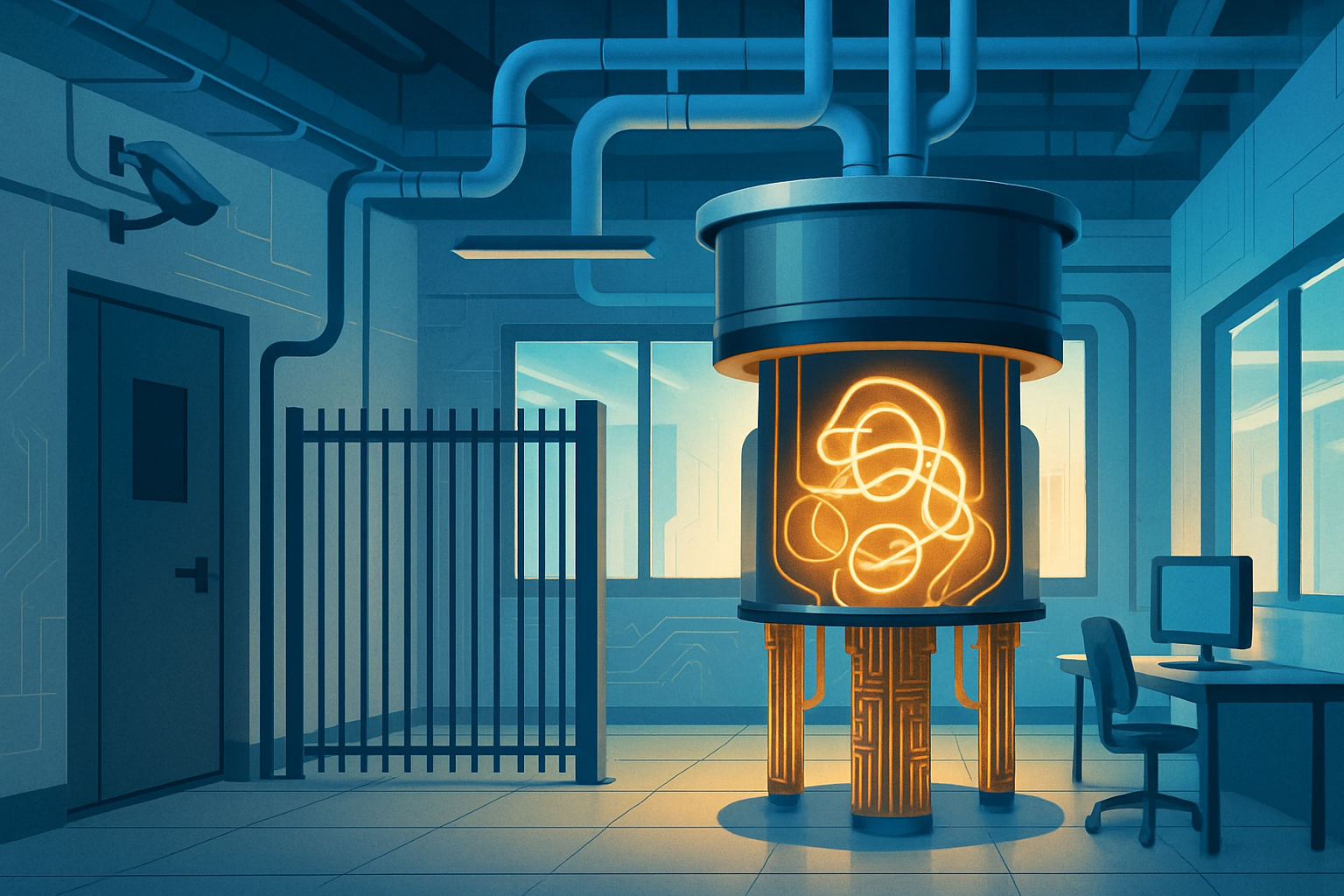
Microsoft is opening a new quantum research center in Maryland where the Defense Advanced Research Projects Agency will get direct, on-site access to a system built around the company’s Majorana 2 chip.
The facility, located in the University of Maryland’s Discovery District near Washington, D.C., represents a change in how DARPA is evaluating Microsoft’s approach to quantum computing. Until now, the agency’s experts accessed Microsoft systems remotely, including machines in Washington state and Europe. At the Maryland site, they will be able to work with the hardware in a dedicated space, load it, start it up, and run their own testing procedures.
That distinction matters because quantum computing is unusually sensitive to the details of the system surrounding the processor. Cooling equipment, control electronics, calibration, software, and operating procedures can all affect results. A demonstration prepared by the company is not the same as a machine that outside evaluators can operate and measure under their own conditions.
“This is a big deal for us,” Zulfi Alam, Microsoft’s corporate vice president for quantum, told Reuters, because the arrangement allows DARPA to assess how well the machine performs in practice and whether its results could justify the cost of the system.
DARPA is not simply looking for a faster laboratory experiment. Its broader Quantum Benchmarking Initiative is intended to determine whether less conventional approaches can lead to economically useful, fault-tolerant quantum computers. The agency has said the program is focused on systems capable of delivering computational value greater than the expense of building and running them.
Microsoft’s first system at the Maryland site will use Majorana 2, the company’s second-generation topological quantum chip. Microsoft says the chip’s qubits have a mean lifetime of 20 seconds, with some lasting as long as one minute, and that the result is a 1,000-fold improvement over the prior generation. The company also says it expects to have a scalable quantum computer by 2029.
Those figures are important—but they remain claims that DARPA’s evaluation is meant to scrutinize. A longer-lived qubit could reduce the burden of error correction, one of the central obstacles in quantum computing. It does not, by itself, establish that a complete system can perform useful calculations at a competitive cost.
The Maryland installation is designed to accommodate future Microsoft chips as well. That makes the center less like a one-time product showcase and more like a standing evaluation platform. As Microsoft changes its materials, chip designs, and control systems, DARPA will have a place to test those revisions without relying solely on demonstrations arranged at Microsoft facilities.
The center also reflects a broader shift in the quantum industry. For years, companies have competed to announce better qubits, larger processors, and more ambitious road maps. The harder question is whether those advances survive independent testing and translate into a machine that solves a problem conventional computers cannot handle economically.
Microsoft’s partnership with Maryland was announced in 2025 as part of the state’s effort to build a quantum technology cluster. The state said it would invest roughly $20 million over several years, with matching support from DARPA. Microsoft’s latest announcement puts that infrastructure to work at a moment when the company is trying to move its Majorana program from a physics and materials research project toward a commercial engineering effort.
The next milestone will not be another slogan about quantum advantage. It will be what DARPA can learn when its own experts operate the system, examine its behavior, and compare the machine’s practical output with the cost and complexity required to run it. That is where Microsoft’s 2029 target begins to face a real-world test.
Sources & Further Reading
- Reuters
- Microsoft
- Microsoft
- DARPAPrimary source
- Maryland Department of CommercePrimary source
StoryBreak
Independent digital news and reporting, updated throughout the day.
This article was researched and drafted with AI assistance and reviewed as part of StoryBreak's editorial process before publication. Read our editorial standards.