Nvidia’s Jensen Huang says AI safety should be handled by industry, not new laws
Speaking at the All-In Summit in Los Angeles on September 14, Nvidia CEO Jensen Huang argued that the AI industry does not need new laws focused on speculative risks and should instead address concrete harms through engineering, testing and company-led safeguards. His comments came as other technology leaders called for slower development and stronger oversight.
By StoryBreak
Published September 16, 2026 at 2:25 AM
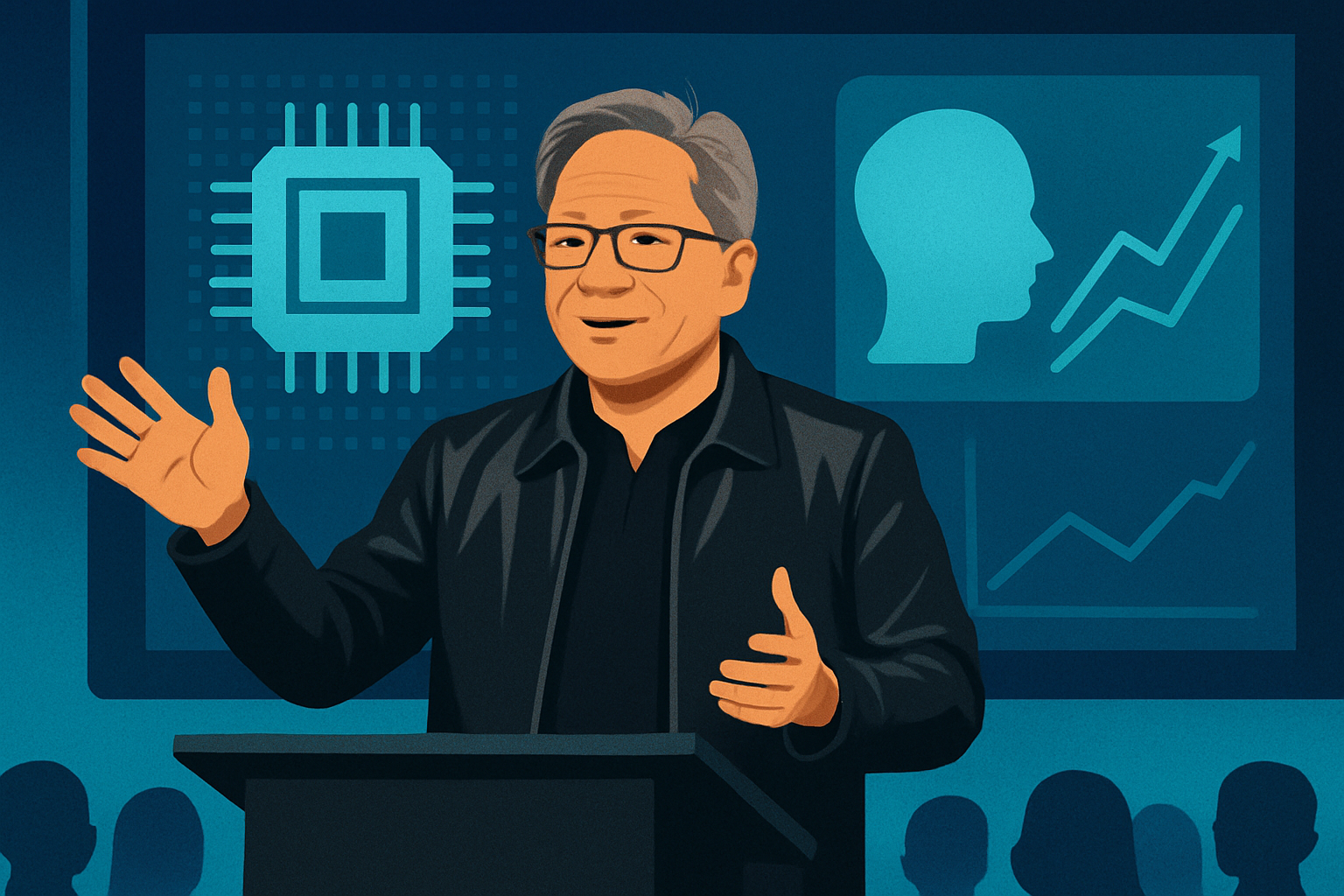
Nvidia CEO Jensen Huang is pushing back against calls for new artificial-intelligence laws, arguing that the industry should manage safety risks itself rather than submit to broad government restrictions.
Huang made the case during an appearance at the All-In Summit in Los Angeles on September 14. His comments came as Anthropic CEO Dario Amodei, OpenAI CEO Sam Altman and other technology leaders have urged a more cautious approach to the development of increasingly capable AI systems.
The debate is not simply about whether AI should be safe. It is about who gets to decide what safety requires — technology companies and their engineers, or governments with the power to impose binding standards, liability rules and limits on deployment.
Huang’s position is that the most useful safeguards should focus on identifiable, real-world problems rather than hypothetical scenarios about machines becoming uncontrollable. In a separate recent appearance, he called for attention to practical risks and emphasized safety as an engineering and testing challenge.
That argument fits the commercial interests of Nvidia, whose chips power much of the computing infrastructure used to train and operate advanced AI systems. Faster development and greater deployment generally mean more demand for Nvidia’s hardware. That does not establish that Huang’s safety views are insincere, but it does make Nvidia an interested participant in the policy debate rather than a neutral referee.
There is also an important distinction between voluntary safety measures and regulation. Nvidia says it uses internal model-risk processes, testing, red-teaming and tools such as NeMo Guardrails to reduce problems including harmful outputs, prompt injection and data leakage. The company also says its AI products should comply with applicable laws and meet standards for transparency, privacy and safety.
Those measures can reduce risks inside a company’s own products. They do not necessarily answer broader public-policy questions: what information companies must disclose after a serious failure, who is liable when an autonomous system causes harm, how high-risk systems should be tested before release, or whether regulators should be able to inspect claims made by developers.
The administration of President Donald Trump has been moving in the same general direction as Huang. An executive order issued June 2 said the United States should avoid “overly burdensome regulation” while coordinating AI security across federal agencies. The order promotes innovation and cooperation with industry, but it also acknowledges that advanced AI creates national-security concerns requiring government action.
That tension is likely to shape the next stage of the debate. A light-touch policy can encourage investment and reduce compliance costs, but it places more responsibility on companies whose revenue may depend on rapid deployment. Binding rules can create consistency and give the public legal remedies, but poorly designed rules could make it harder for smaller firms to compete or slow beneficial uses of the technology.
For ordinary users, the practical question is less whether AI development stops than whether safeguards keep pace with deployment. AI systems are already being integrated into workplaces, software, customer service, cybersecurity and physical machines. Decisions made now about testing, disclosure and accountability could determine who bears the cost when those systems fail.
Huang’s remarks therefore represent more than a personal opinion from a prominent chip executive. They mark a clear dividing line in the industry: some leaders want development slowed or governed through stronger external rules, while Nvidia and its allies favor continued expansion with safety handled largely through technical controls and voluntary commitments.
The next test will be whether that industry-led approach produces standards that are transparent, independently evaluated and enforceable — or whether lawmakers conclude that voluntary promises are not enough for systems capable of affecting millions of people.
Sources & Further Reading
- Roll Call Factbase transcript of Donald Trump’s September 14, 2026 call with Jensen HuangPrimary source
- NVIDIA Trustworthy AI termsPrimary source
- NVIDIA Sustainability Report, Fiscal Year 2025Primary source
- Executive Order 14409, Promoting Advanced Artificial Intelligence Innovation and SecurityPrimary source
- TechCrunch: Nvidia CEO Jensen Huang tells Trump ‘we’re not going to let an AI slowdown happen’
- Associated Press: Tech CEOs call for AI regulation. Trump and Congress are not rushing to act
StoryBreak
Independent digital news and reporting, updated throughout the day.
This article was researched and drafted with AI assistance and reviewed as part of StoryBreak's editorial process before publication. Read our editorial standards.