Oil prices fall as investors await ‘toughest’ U.S. sanctions on Iran
Crude prices slipped about 1% on Monday as traders took profits and waited for details of new U.S. sanctions targeting Iran. Treasury Secretary Scott Bessent was expected to outline the measures later in the day, adding another layer of uncertainty to an already tense oil market.
By StoryBreak
Published August 23, 2026 at 10:04 PM EDT
Updated September 6, 2026 at 8:11 PM EDT
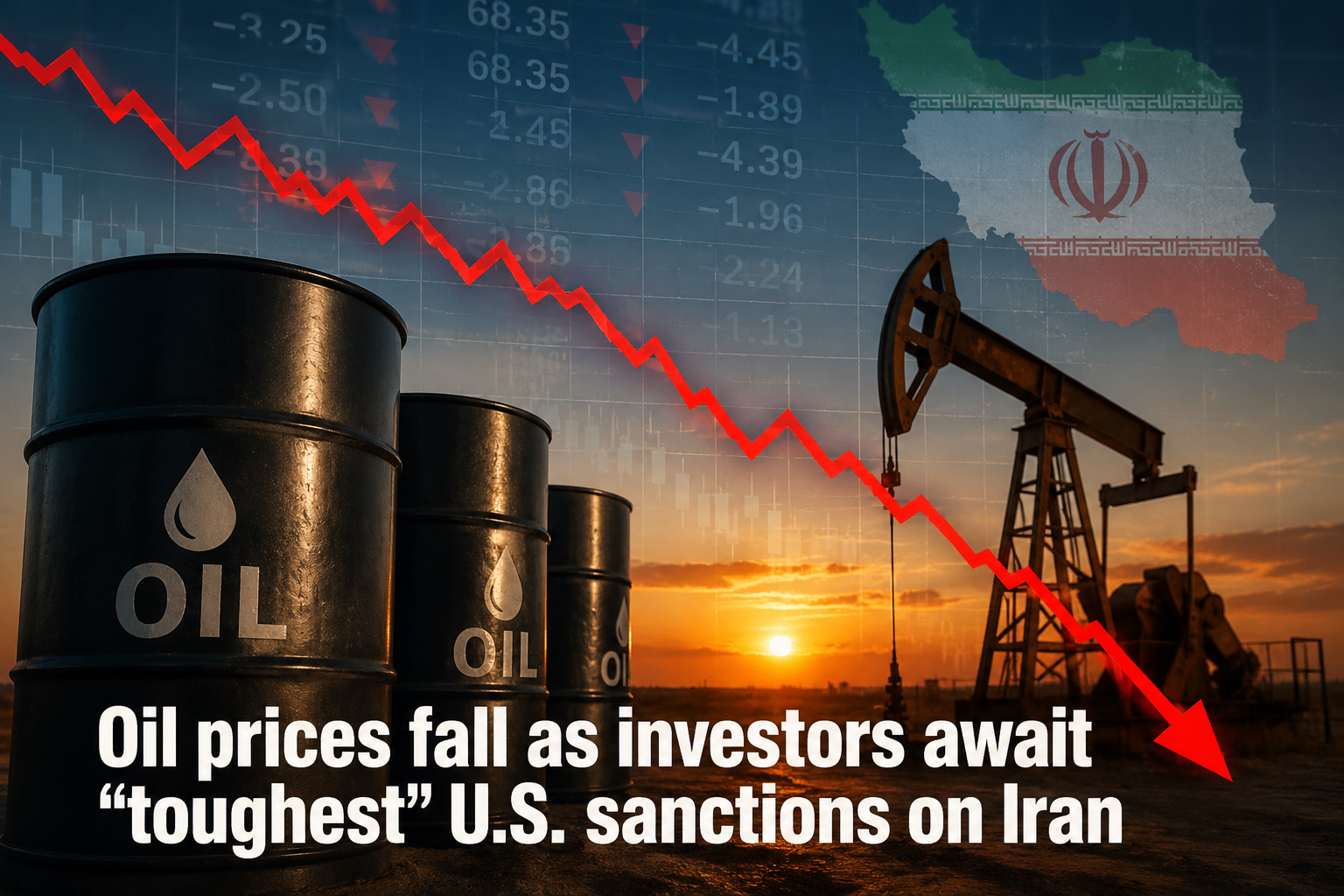
Oil prices fell about 1% on Monday as investors awaited details of new U.S. sanctions on Iran, while traders weighed the potential effect on Iranian crude exports against the possibility that the measures had already been reflected in prices.
Brent crude futures declined 94 cents, or roughly 1%, to $93.45 a barrel by 7:08 p.m. Singapore time, according to Reuters reporting carried by Euronext. U.S. West Texas Intermediate futures fell 92 cents, or about 1.1%, to $86.14 a barrel.
The decline came after oil prices posted strong gains in recent weeks amid tensions involving Iran and the Strait of Hormuz, a critical route for global energy shipments. Monday's move suggested some investors were locking in profits before Washington disclosed the scope of its next sanctions package.
Treasury Secretary Scott Bessent was scheduled to hold a news conference at 2 p.m. Eastern time on Monday. He has described the planned measures as “the toughest sanctions in history,” raising expectations that the United States could intensify pressure on Iran's oil trade, shipping networks or financial intermediaries.
The exact targets and enforcement provisions had not been publicly detailed before the announcement. That uncertainty left traders focused on how aggressively the new measures could restrict Iran's ability to sell crude and how quickly buyers, shippers and banks might respond.
The United States has already expanded sanctions against Iranian oil-related networks this year. In May, the Treasury Department said it was targeting mechanisms used by Iran's military to generate revenue through crude sales and front companies. In July, the department announced sanctions against more than 50 people, entities and vessels tied to a shipping and commodities network that it said helped Iran evade restrictions and profit from oil exports.
Treasury also warned in April that Chinese independent refineries, often called “teapots,” were important buyers of Iranian crude. The department said China purchased approximately 90% of Iran's oil exports and that many of those imports were handled by smaller refineries in Shandong province.
Those existing restrictions mean the market impact of any new action could depend less on the announcement itself than on whether Washington identifies previously untouched buyers, vessels, brokers or financial channels. Tougher enforcement against China-linked trade could have a greater effect on actual Iranian export volumes than additional designations aimed at entities already operating under sanctions.
For oil markets, the central question is whether the measures will remove barrels from global supply or primarily increase the cost and complexity of moving Iranian crude. A meaningful reduction in exports could support prices, particularly if tensions also disrupt shipping through the Strait of Hormuz. But if traders conclude that Iran's exports will continue through alternative channels, the initial risk premium could fade.
Investors were also monitoring broader economic and demand concerns. Higher prices can weigh on fuel consumption and economic activity, while weaker expectations for global growth can limit the upside for crude even when geopolitical risks are elevated.
The market's early decline indicated that traders were waiting for specifics rather than immediately pricing in a major supply shock. The direction of oil prices later Monday was likely to depend on the content of the U.S. announcement, the response from Iran and China, and evidence of whether enforcement would materially reduce Iranian shipments.
Update, August 24-25, 2026: Bessent unveiled the announced measures under the name "Operation Economic Outcast," expanding secondary sanctions to cover digital assets, technology, gold, aviation and shipping — sectors Treasury said Iran uses to generate revenue or evade existing sanctions. The Treasury Department sanctioned nearly 60 additional entities, individuals and vessels tied to nuclear- and missile-technology procurement, cyber operations and oil smuggling. Notably, Bessent did not immediately name which countries or trading partners would face secondary sanctions, saying instead that each would be given a defined timeline to wind down Iran-related business before penalties applied — a rollout some outlets characterized as unveiling a sweeping framework while delaying its most consequential enforcement step. As anticipated in the reporting above, the actual market and export impact will depend on whether that enforcement, once it arrives, reaches previously untouched buyers such as China's independent refineries.
Sources & Further Reading
- CNBC
- Reuters, carried by Euronext
- U.S. Department of the TreasuryPrimary source
- U.S. Department of the TreasuryPrimary source
- U.S. Department of the TreasuryPrimary source
- The Washington Post
- Axios
StoryBreak
Independent digital news and reporting, updated throughout the day.
This article was researched and drafted with AI assistance and reviewed as part of StoryBreak's editorial process before publication. Read our editorial standards.