Kalanick’s Atoms Could Put Uber Back in the Robotaxi Orbit
Travis Kalanick’s Atoms is reportedly developing robotaxi technology and has discussed using it with Uber, which invested $100 million in the startup. The potential alliance would add another contender to an increasingly crowded autonomous-transportation market—but no vehicle, launch city or timetable has been confirmed.
By StoryBreak
Published September 7, 2026 at 1:22 AM
Travis Kalanick may be returning to the part of the transportation business that made him famous—this time as a potential technology supplier to Uber, the company he co-founded.
Atoms, Kalanick’s industrial-automation venture, is reportedly developing robotaxi technology and has held preliminary discussions with Uber about using that technology on Uber’s ride-hailing network. Uber has invested $100 million in Atoms, according to reporting by TechCrunch and the Financial Times.
The investment is notable not only because of its size, but because of the history behind it. Kalanick left Uber’s chief executive role in 2017. Nearly a decade later, Uber is financially backing his new company as it expands an autonomous-vehicle strategy that relies on partnerships rather than a single in-house system.
There is an important distinction between what is reported and what is confirmed. Atoms has not publicly announced a passenger robotaxi, identified a vehicle or named a launch market. Its own description of the business focuses on “physical automation” across mining, transportation and manufacturing. Its most visible autonomy asset is Pronto, an autonomous industrial-vehicle company that Atoms acquired.
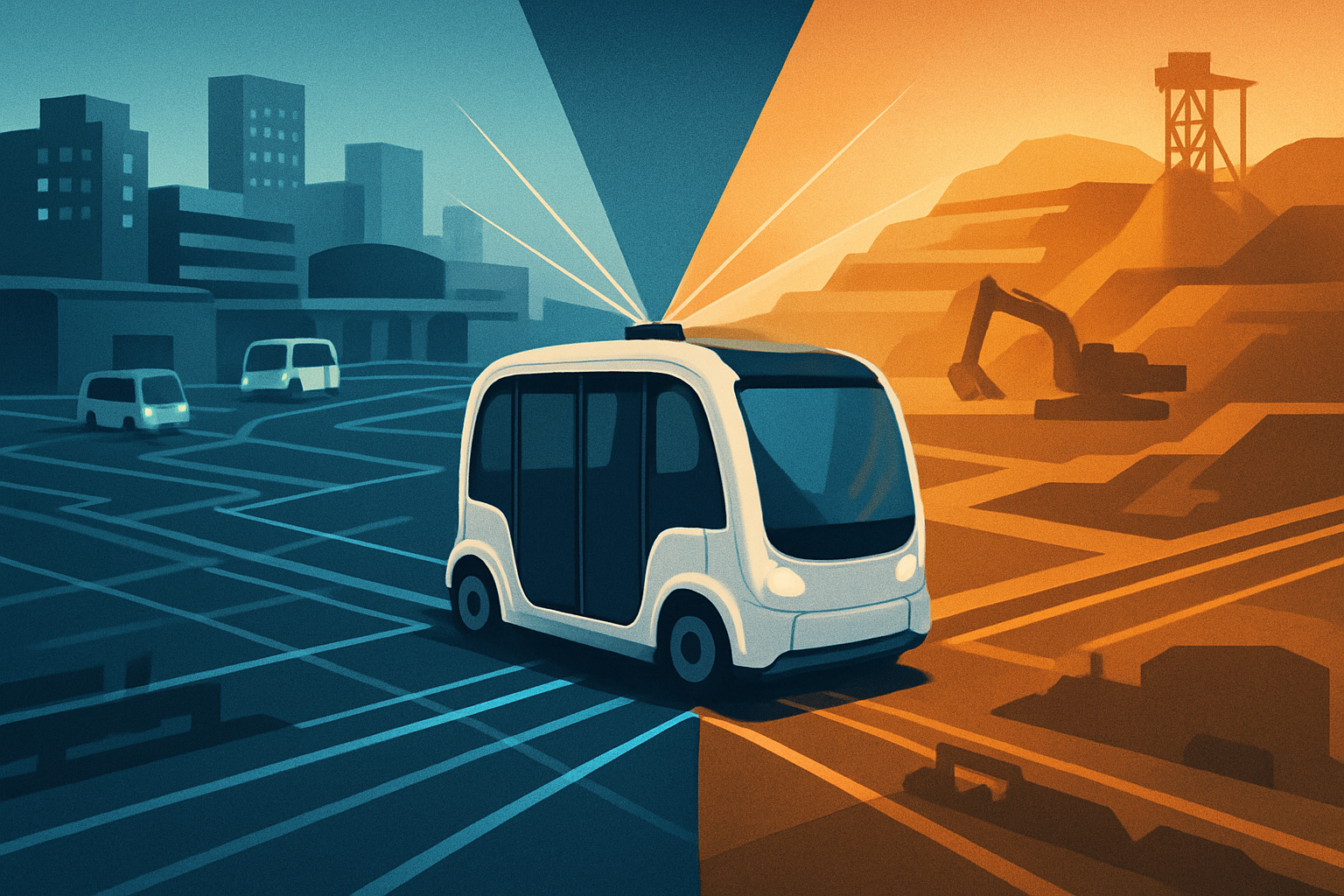
That industrial background could still matter. Autonomous haulage in mines and quarries operates in controlled environments, while robotaxis must handle pedestrians, cyclists, construction zones, emergency vehicles and unpredictable human behavior in public streets. Experience in one setting does not automatically establish readiness for the other. A passenger-vehicle program would require extensive testing, safety validation, regulatory approval and a system for remote assistance and fleet maintenance.
Atoms would also be entering a market that is already becoming crowded around Uber. In 2026, Uber announced or expanded partnerships involving Rivian, Wayve, Nissan, Zoox, WeRide, Pony.ai, Nuro and NVIDIA. The company has described its future as a hybrid network: autonomous vehicles operating alongside conventional drivers, with Uber providing the customer relationship, payments, dispatching and operational support.
That model changes the competitive question. The winners may not be the companies that build every component themselves. Instead, the market could divide into specialized layers: one company supplies the autonomous-driving software, another builds the vehicle, another manages charging and maintenance, while Uber supplies demand through its app.
Uber’s reported investment in Atoms therefore looks less like a bet on one guaranteed robotaxi fleet and more like an option on another source of autonomy technology. It gives Uber a relationship with a well-funded startup whose leader has longstanding ambitions in transportation, while preserving flexibility as other partners move toward deployment.
For Kalanick, the reported plan would represent a return to an unfinished ambition: using software and automation to reshape urban transportation. But the conditions are different now. Robotaxis are no longer a speculative side project pursued by a handful of companies. They are becoming a global infrastructure race involving automakers, artificial-intelligence firms, fleet operators, regulators and ride-hailing platforms.
The next meaningful signal will not be another funding headline. It will be evidence that Atoms can move from industrial autonomy to public-road passenger service: a named vehicle, a testing program, regulatory filings, a city launch or measurable safety performance. Until then, the $100 million investment shows that Uber sees value in Kalanick’s new direction—but it does not show that an Atoms robotaxi is ready for riders.
Sources & Further Reading
- TechCrunch
- TechCrunch
- AtomsPrimary source
- Andreessen HorowitzPrimary source
- Uber Investor RelationsPrimary source
- Uber Investor RelationsPrimary source
- Uber Investor RelationsPrimary source
- UberPrimary source
StoryBreak
Independent digital news and reporting, updated throughout the day.
This article was researched and drafted with AI assistance and reviewed as part of StoryBreak's editorial process before publication. Read our editorial standards.