
Trump Says U.S. Will Rename ‘Artificial Intelligence’ as ‘Super Intelligence’
Speaking at the United Nations on September 22, President Donald Trump said U.S. government documents would begin using “super intelligence” instead of “artificial intelligence,” escalating his campaign to recast AI as an American strategic and economic advantage.
By StoryBreak
Published September 22, 2026 at 4:16 PM
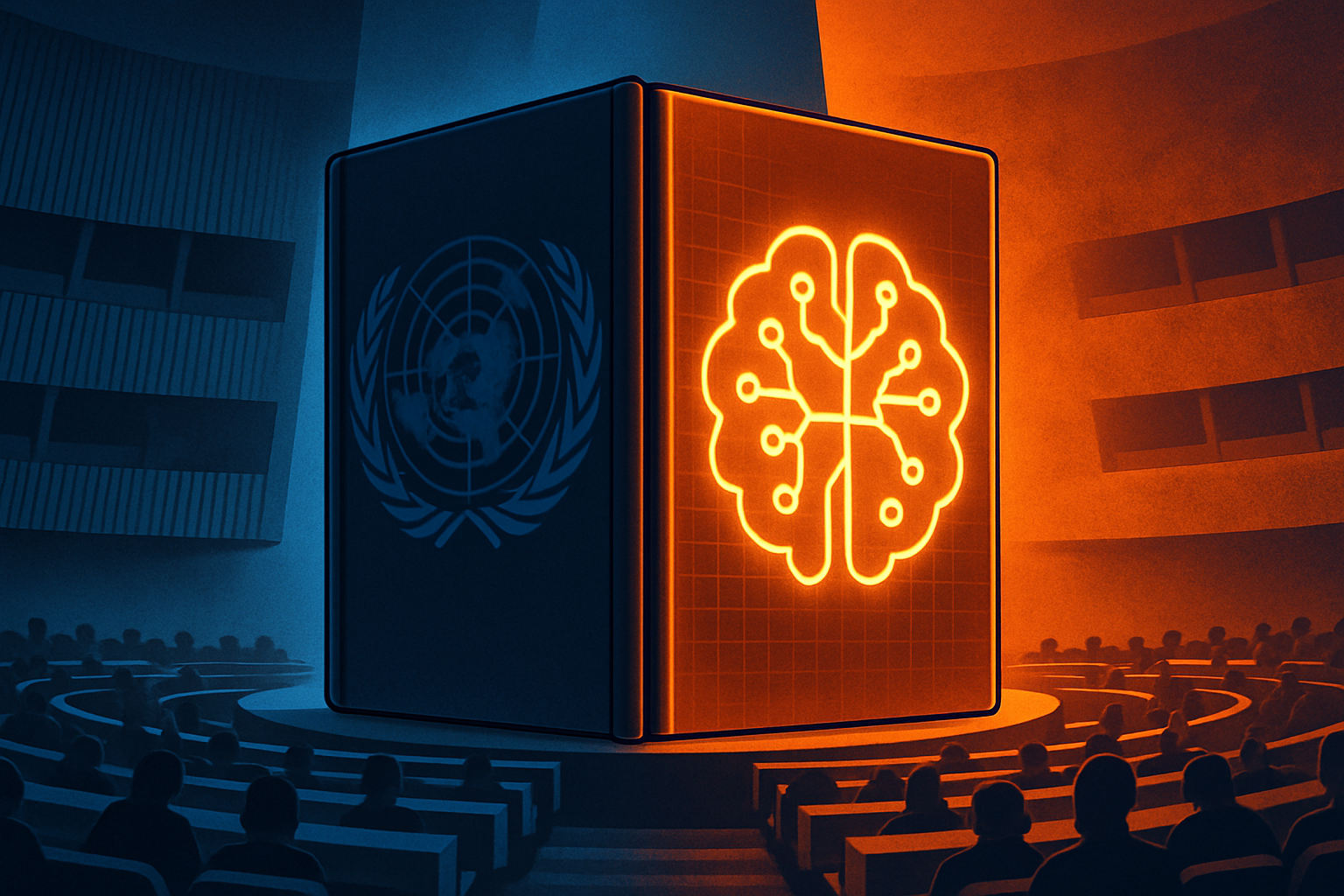
President Donald Trump said Tuesday that the United States will officially rename “artificial intelligence” as “super intelligence,” directing the federal government toward a new label for one of the world’s most contested technologies.
Trump made the announcement during his address to the United Nations on September 22, according to The Associated Press. He said the word “artificial” makes the technology sound fake and that U.S. government documents would be changed to use “super” instead.
The statement builds on a social-media poll Trump posted three days earlier. In that poll, he asked supporters to choose among “Superior Intelligence,” “Extreme Intelligence” and “Supreme Intelligence” as replacements for artificial intelligence. He also announced plans to create an “AI Force,” modeled on the U.S. Space Force, and to appoint an AI czar.
It is not yet clear whether Tuesday’s declaration represents a formal policy change. No written directive, executive order or agency-wide implementation plan was identified in the available reporting. For now, the announcement is best understood as a presidential push to rebrand the technology rather than evidence that federal agencies have already changed their official terminology.
That distinction matters because “superintelligence” is not simply a more flattering synonym for today’s AI systems. In technical discussions, the term generally refers to a hypothetical system whose intellectual abilities exceed those of humans across a broad range of tasks. The White House’s own 2026 Economic Report uses the term in that sense, distinguishing it from specialized AI systems and from artificial general intelligence.
Most tools currently used by consumers and businesses—including chatbots, image generators and automated software agents—remain limited to particular tasks. They can produce impressive results, but they do not demonstrate the across-the-board superiority implied by superintelligence. Applying the label broadly could therefore make the technology sound more advanced than the systems most people actually use.
The proposed rename also fits the administration’s wider approach to AI. Trump has described the technology as a historic engine of economic growth and has emphasized keeping the United States ahead of China. At the same time, he has rejected calls for slowing development or imposing new restrictions, calling warnings about AI destroying humanity a hoax.
That framing puts the name change in a larger political context. Calling the technology “super intelligence” highlights promise, power and national competition. It does not resolve the underlying arguments over safety testing, cybersecurity, misinformation, labor disruption, energy use or accountability when automated systems cause harm.
The next test will be administrative, not rhetorical: whether the White House issues written instructions requiring federal agencies to adopt the new term. Until then, “artificial intelligence” remains the established phrase in U.S. law, government policy and technical research—and “superintelligence” remains a narrower term for a level of capability that has not been demonstrated by current systems.
Sources & Further Reading
- The Associated Press
- TechCrunch
- The White HousePrimary source
- The White HousePrimary source
StoryBreak
Independent digital news and reporting, updated throughout the day.
This article was researched and drafted with AI assistance and reviewed as part of StoryBreak's editorial process before publication. Read our editorial standards.