U.S. Strikes Iranian Rocket Launchers Near Strait of Hormuz as Tensions Flare Again
U.S. forces have struck Iranian rocket launchers near the Strait of Hormuz in the first American military action against Iran in weeks, renewing tensions around one of the world's most important oil shipping routes.
By StoryBreak
Published August 31, 2026 at 12:47 AM
Updated September 6, 2026 at 8:45 PM
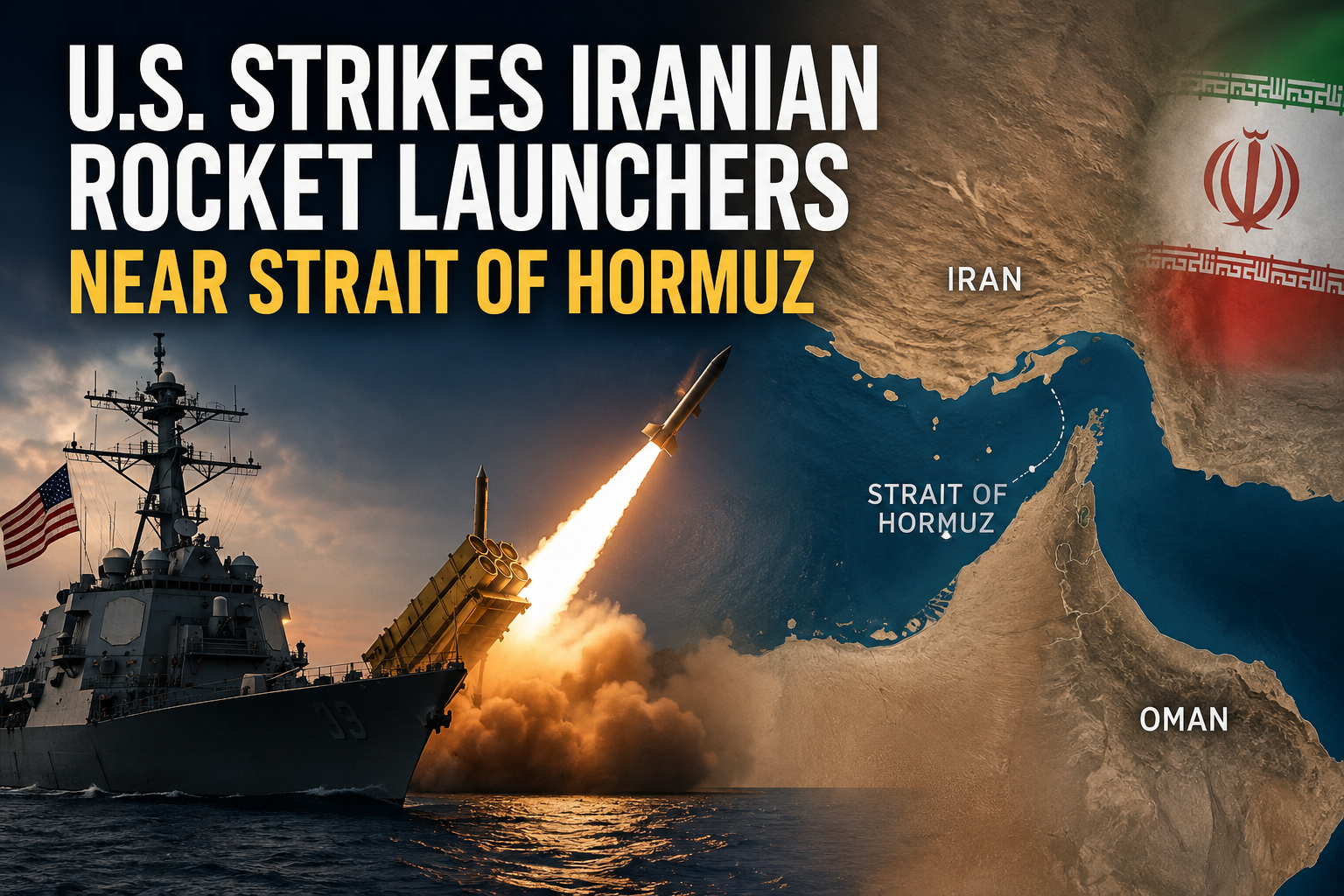
U.S. forces struck two Iranian rocket launchers on Larak Island, in the Strait of Hormuz, on Sunday, August 30 — the first direct U.S. military action in the conflict in roughly a month, according to reporting from the Associated Press, The Washington Post and Bloomberg.
U.S. officials said the strike targeted launchers after observing Iran's Islamic Revolutionary Guard Corps (IRGC) preparing to fire rockets carrying sea mines into the strait, one of the world's most important routes for oil and natural gas shipments. Iranian state media reported explosions near Larak Island, and the IRGC said fighters and civilians had been killed or wounded; those casualty figures have not been independently verified.
Iran responded within hours. The IRGC said it launched a combined missile-and-drone operation, which it called "Punishment of the Aggressor," against the U.S.-operated King Hussein and Al Azraq air bases in Jordan, targeting technical and maintenance infrastructure. Jordanian and U.S. air defenses intercepted most of the roughly 13 missiles that entered Jordanian airspace; a small number struck remote areas away from population centers. Two U.S. officials said there were no American casualties from the strikes on the Jordan bases.
The renewed exchange affected energy markets quickly. Crude oil prices rose that day, with U.S. crude up about 1.8% to roughly $84.94 a barrel and Brent crude up about 1.9% to roughly $89.79 a barrel, as traders weighed the risk that continued fighting could threaten shipping through the Strait of Hormuz or regional oil supply.
The strikes came after roughly a month without direct U.S. military action in what has become an intermittent conflict between the U.S. and Iran spanning more than six months. The situation remained fluid, with further Iranian retaliation or additional U.S. action considered possible in the days that followed.
Sources & Further Reading
StoryBreak
Independent digital news and reporting, updated throughout the day.
This article was researched and drafted with AI assistance and reviewed as part of StoryBreak's editorial process before publication. Read our editorial standards.