
Saudi Oil Pipeline Attack Raises New Fears for Global Energy Supplies: What It Could Mean for Gas Prices
Saudi Arabia has shut its strategic East-West oil pipeline after multiple attacks, removing a key route around the Strait of Hormuz. The immediate risk is not necessarily a permanent loss of oil, but a wider disruption that could keep crude and U.S. fuel prices elevated.
By StoryBreak
Published September 12, 2026 at 8:23 PM
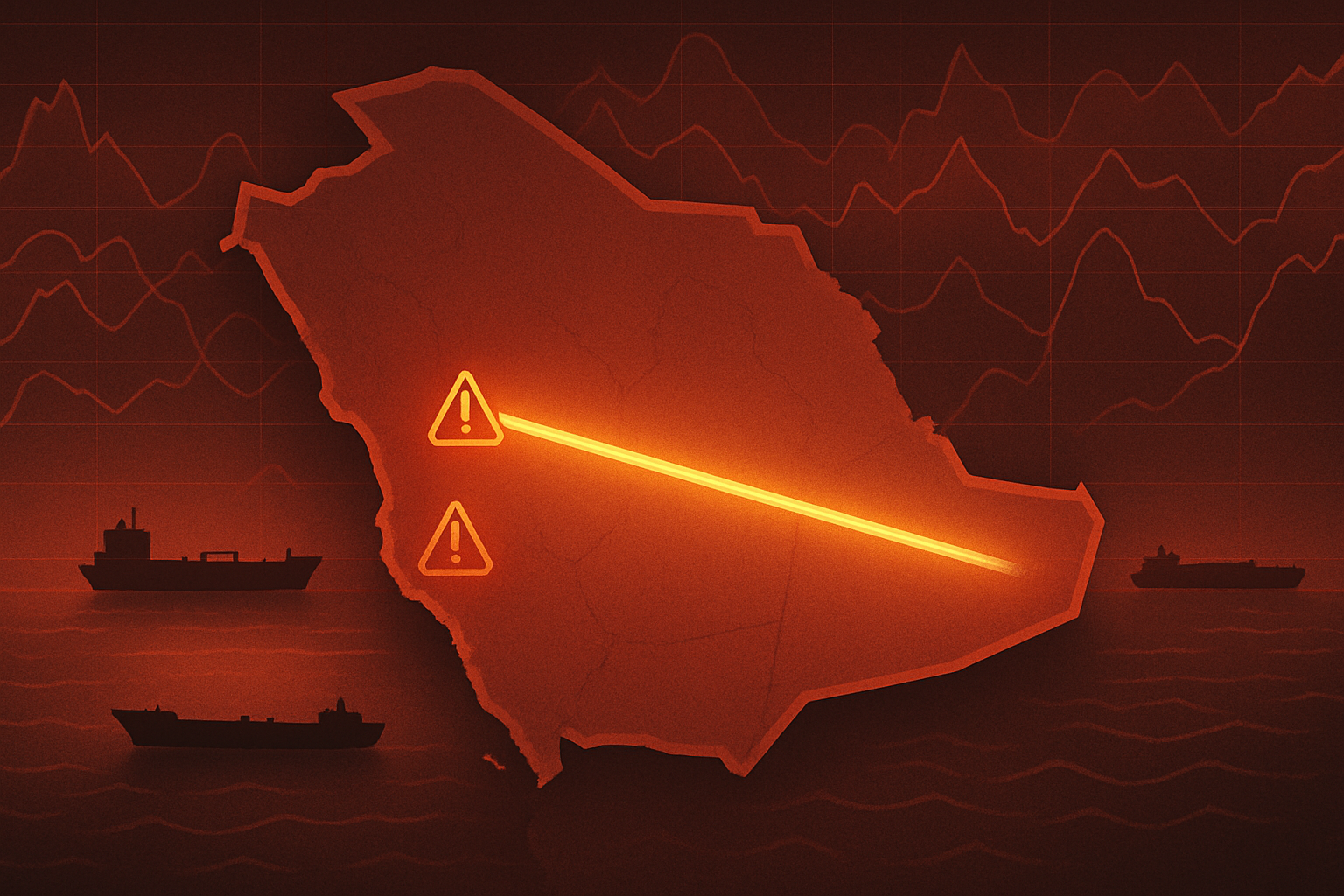
Saudi Arabia has temporarily shut its strategic East-West oil pipeline after multiple attacks, raising fresh concerns that the Middle East conflict could disrupt another major route for global energy supplies.
The Saudi Energy Ministry said the pipeline was struck several times on the morning of Thursday, September 10, and was halted as a precaution while emergency and technical teams assessed its safety. The ministry said the attacks caused some injuries but did not announce a loss of production or say how long the closure would last.
The East-West line runs about 1,200 kilometers across Saudi Arabia, carrying crude from fields near the Gulf to the Red Sea port of Yanbu. Saudi Aramco lists its full crude capacity at roughly 7 million barrels per day. The route is strategically important because it allows Saudi Arabia to move oil toward global markets without sending every cargo through the Strait of Hormuz.
That bypass matters more than usual now. Tanker traffic through Hormuz has already been affected by the wider conflict, and Saudi Arabia has been relying more heavily on westward routes. Reuters reported that the pipeline had recently been carrying an estimated 4 million to 5 million barrels per day—roughly 4% to 5% of global oil supply, according to shipping and market analysts.
The key question for energy markets is whether this is a short security shutdown or the beginning of a sustained export disruption.
A temporary stoppage does not mean that the same volume of oil has vanished from the world market. Saudi Arabia may be able to use storage, adjust production schedules, reroute some cargoes, or resume pumping after inspections. In April, Saudi officials said an earlier attack had reduced East-West pipeline throughput by about 700,000 barrels per day, but that full pumping capacity was restored within days.
The risk is that repeated attacks make the alternative route unreliable. If the pipeline remains closed while shipping through Hormuz and the Red Sea is also constrained, traders could begin pricing a much larger disruption into crude futures. Oil prices often respond to the perceived risk of future shortages before physical supplies are actually exhausted.
American drivers are already entering the latest episode with elevated fuel costs. AAA reported a national average of $4.3104 per gallon for regular gasoline on September 12, 2026. Diesel was averaging $6.1602, a record high according to the organization’s price data. Those figures reflect the broader effect of the Iran conflict, crude prices and refinery pressures—not the pipeline closure alone.
That distinction is important. A new attack can lift crude prices immediately, but retail gasoline usually moves with a delay as refiners, wholesalers and stations work through existing inventories. The size and speed of any increase would depend on how long the Saudi line is offline, whether oil production is affected, and whether other shipping chokepoints remain threatened.
For now, the most important indicators are operational rather than political: confirmation that the pipeline has reopened, evidence of damage to pumping stations, changes in Saudi export loadings from Yanbu, and any new attacks on oil fields, refineries or tankers.
The danger is not simply that one pipeline has stopped. It is that a route built as insurance against a Hormuz crisis is now itself under attack. If that insurance policy cannot be relied upon, the world’s spare capacity to absorb another energy shock becomes smaller—and consumers may feel that risk at the pump before they see a formal shortage.
Sources & Further Reading
- Saudi Press Agency / Saudi Ministry of EnergyPrimary source
- Reuters
- Saudi AramcoPrimary source
- Saudi Press Agency / Saudi Ministry of EnergyPrimary source
- AAA Fuel PricesPrimary source
StoryBreak
Independent digital news and reporting, updated throughout the day.
This article was researched and drafted with AI assistance and reviewed as part of StoryBreak's editorial process before publication. Read our editorial standards.