Wall Street Slides as Oil Jumps Nearly 4% and Treasury Yields Hit Highest Level Since 2007
U.S. stocks fell Wednesday as a strong business-activity report lifted expectations for another Federal Reserve rate increase, while higher oil prices intensified inflation concerns and pushed Treasury yields sharply higher.
By StoryBreak
Published September 24, 2026 at 12:49 AM
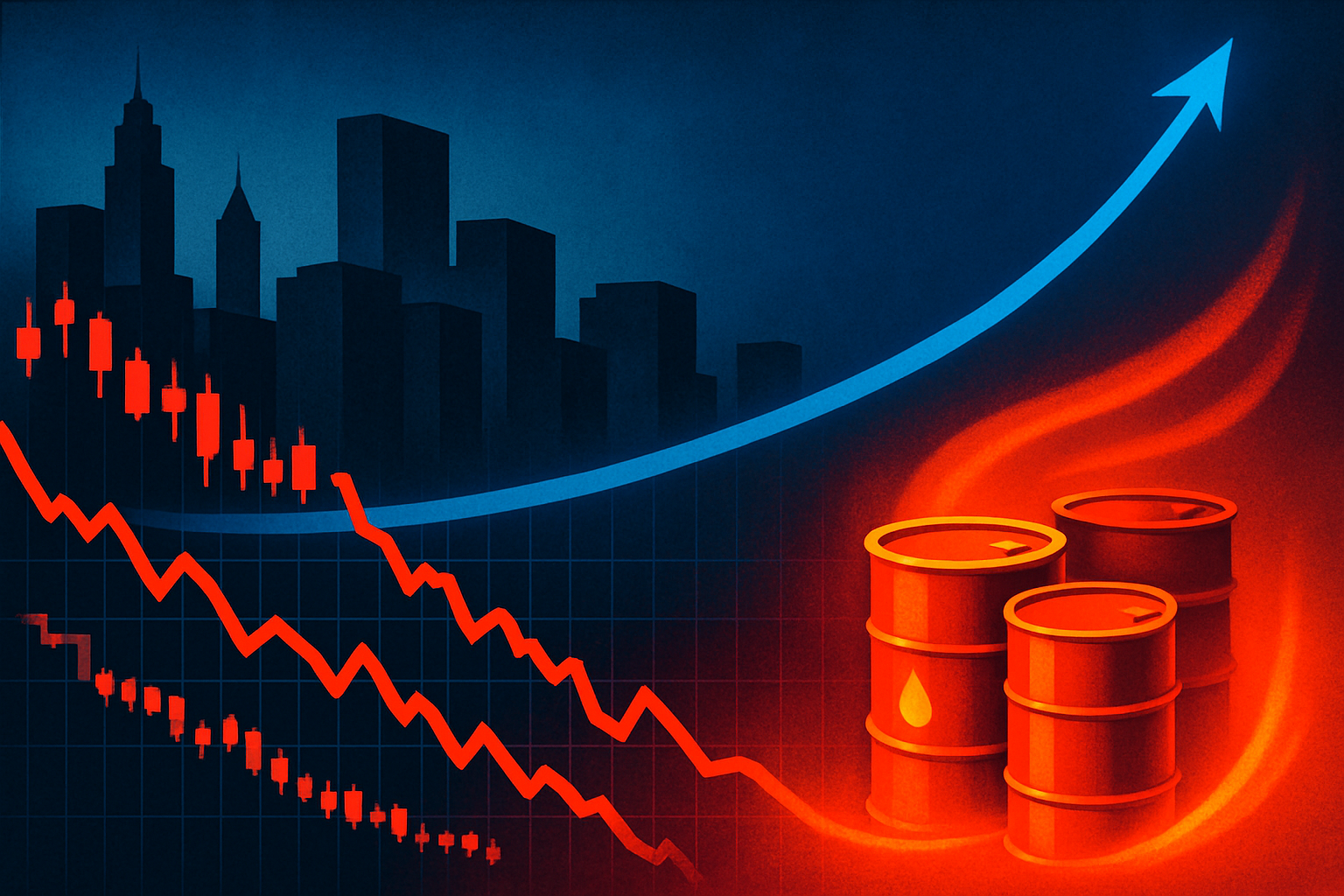
Wall Street ended lower Wednesday, September 23, as a stronger-than-expected U.S. business-activity report collided with a fresh rise in oil prices and a sharp selloff in government bonds.
The Dow Jones Industrial Average fell 0.7%, the S&P 500 lost 0.8% and the Nasdaq Composite dropped 1.1%, according to Reuters. Technology and other high-growth shares were particularly vulnerable as investors recalibrated expectations for interest rates.
Brent crude rose about 4%, ending a five-session decline, while West Texas Intermediate also moved higher. The rebound added to concerns that an already complicated inflation picture could worsen if energy prices remain elevated.
The bond market delivered the clearest warning signal. The benchmark 10-year Treasury yield climbed to about 5.12% during the session, up sharply from 4.96% late Tuesday, according to reporting by The Associated Press. The move placed the yield at its highest level since 2007. Official Treasury data also recorded elevated rates across the government-bond curve on September 23.
The trigger was not simply fear of weaker growth. A survey showed U.S. business activity accelerating to its fastest pace in more than five years in September, with new orders strengthening. That is positive news for the economy—but it also gives Federal Reserve officials less reason to ease policy quickly if inflation remains above target.
That is the market’s central tension. Stronger activity can support corporate revenues, but it can also keep wages, prices and demand firm enough to prolong restrictive interest rates. Higher Treasury yields then raise the return investors can earn from relatively safe government debt, making richly valued stocks less attractive by comparison.
The impact extends beyond Wall Street. Treasury yields influence mortgage rates, corporate borrowing costs and the price of financing government deficits. If oil stays high, households could also face additional pressure at the gas pump and through transportation-related costs embedded in other goods.
Wednesday’s decline also reflected geopolitical uncertainty. Investors were waiting for developments in negotiations aimed at ending the Middle East conflict, while a high-stakes U.S.-China summit was approaching. Any progress on the first issue could reduce the oil premium; a breakdown could do the opposite.
For now, markets are pricing a more difficult path: an economy strong enough to resist rapid cooling, but an energy market capable of pushing inflation higher. The next major tests will be incoming inflation and labor data, the direction of crude prices and whether the Federal Reserve signals that an October rate increase is becoming more likely.
The important distinction is that Wednesday’s selloff was not a verdict that the U.S. economy is collapsing. It was a repricing of how expensive continued strength could become if it keeps interest rates—and borrowing costs—higher for longer.
Sources & Further Reading
StoryBreak
Independent digital news and reporting, updated throughout the day.
This article was researched and drafted with AI assistance and reviewed as part of StoryBreak's editorial process before publication. Read our editorial standards.