The Great American Road Trip Is Changing. The Journey Is Becoming the Point.
Americans are still driving to get somewhere—but current travel research, scenic-byway investment and the 2026 Route 66 centennial show a growing appetite for trips built around the road itself. The new road trip is less about crossing off a destination and more about making the stops count.
By StoryBreak
Published September 15, 2026 at 12:39 AM
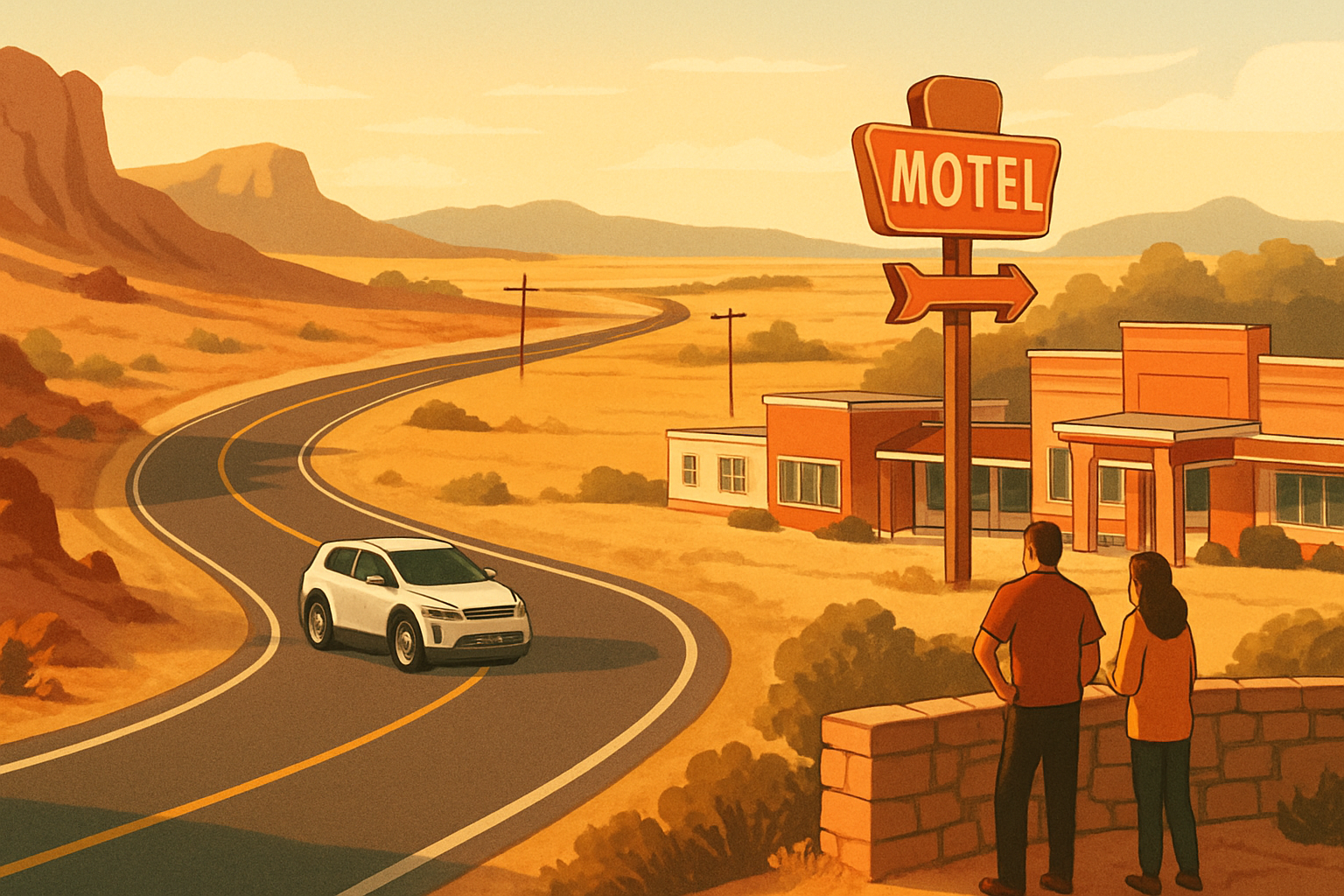
For much of the modern travel era, the road trip was a means to an end: get in the car, cover as much ground as possible and arrive at the beach, the national park or the family gathering before dark.
That logic is changing.
In 2026, travelers are showing renewed interest in scenic routes, historic highways and itineraries that leave room for detours. The result is not exactly a return to the old-fashioned road trip. It is a redesign of it—one in which the drive is no longer dead time between destinations, but part of what travelers came to experience.
Current travel research points to a strong appetite for driving. A 2026 Hertz survey reported that 64% of Americans planned a summer road trip, while Turo’s 2026 U.S. Road Report described Americans as rethinking travel, vehicle ownership and mobility. Research from Miles Partnership also found that scenic touring routes and electric-vehicle travel are among the forces shaping the latest road-trip market.
Cost is part of the explanation. When airfare, lodging and other travel expenses rise, driving can offer more control over timing and spending. A car also allows travelers to split a long journey into smaller experiences: a farm stand, a state historic site, an overlooked downtown, a local diner or a trailhead that would never appear on a flight itinerary.
But affordability alone does not explain the shift. Travel companies and public agencies are increasingly presenting the road as a destination in its own right. The federal America’s Byways program includes 184 designated roads in 48 states, selected for qualities that can be scenic, historic, cultural, natural, recreational or archaeological. The official designation for an All-American Road goes further, describing a route that offers such an exceptional experience that travelers might make the drive itself a primary reason for the trip.
That is a useful test for the modern road trip. Is the route simply the fastest way to reach the place you want to see—or is the route one of the places you want to see?
Route 66 offers the clearest example of the second approach. The highway, established in 1926, is marking its centennial this year as the United States also observes its 250th anniversary. The National Park Service’s Route 66 travel itinerary highlights more than 100 historic sites, including former gas stations, restaurants, bridges, hotels and other places that preserve the story of an increasingly mobile country.
The appeal is not just nostalgia. Historic roads connect travelers with communities that are often bypassed by airports and interstate exits. They also make travel more legible: a road has a beginning, a sequence and a sense of place. Instead of collecting isolated attractions, travelers encounter a region as a chain of landscapes and stories.
That does not mean every road trip needs to become an open-ended expedition. A journey-first trip can be as simple as building one unplanned afternoon into a weekend drive, choosing a scenic byway over the fastest highway, or spending a night in a town that would otherwise be a rest stop.
The trade-off is time. Scenic routes take longer. Popular corridors can become crowded, and remote stretches require more attention to fuel, charging, weather and road conditions. The romance of the open road depends on practical preparation—especially as extreme heat and other weather disruptions increasingly affect outdoor travel.
Still, the larger change is cultural. The road trip is moving away from the idea that travel is successful only when it minimizes the distance between departure and arrival. In its newer form, the trip asks a different question: What would we miss if we rushed through?
For travelers planning a drive this year, the answer may be the most important part of the itinerary.
Sources & Further Reading
- U.S. Department of TransportationPrimary source
- Federal Highway AdministrationPrimary source
- National Park ServicePrimary source
- National Park ServicePrimary source
- Miles Partnership
- Hertz Newsroom
- Turo
- Associated Press
StoryBreak
Independent digital news and reporting, updated throughout the day.
This article was researched and drafted with AI assistance and reviewed as part of StoryBreak's editorial process before publication. Read our editorial standards.