Dating Apps Are Putting Singles on Pickleball Courts and Trivia Teams
As swiping fatigue grows, dating platforms are experimenting with a more social proposition: meet potential matches while playing, answering questions or joining a group activity. The shift may be less about abandoning apps than about making the first meeting feel less like an audition.
By StoryBreak
Published September 21, 2026 at 12:51 AM
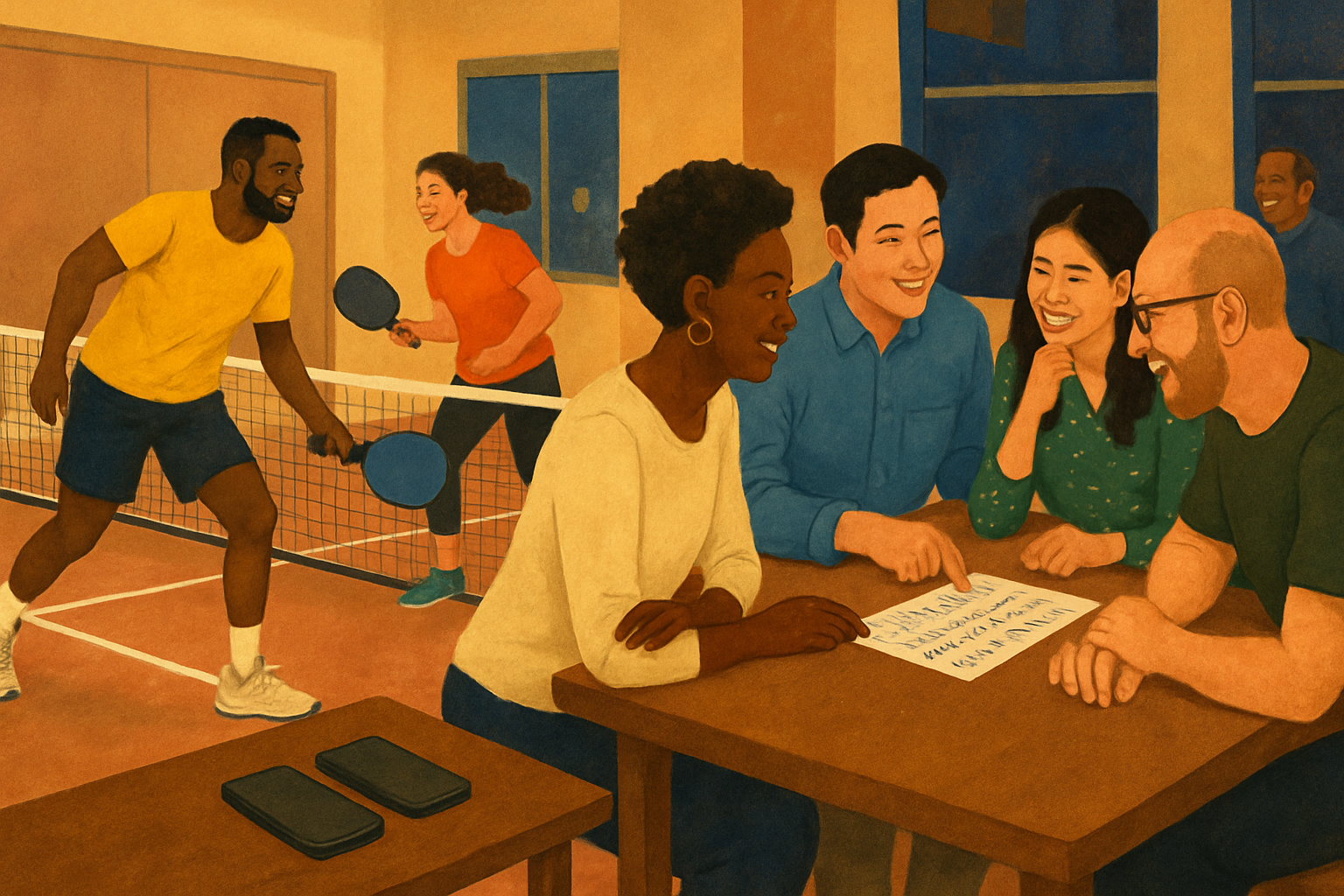
The next dating-app feature may not be another algorithm. It may be a pickleball court.
Dating platforms are increasingly trying to move singles out of the swipe-and-message loop and into shared activities, including trivia nights, sports socials, cooking classes and other group events. Tinder began piloting an Events feature in Los Angeles in March 2026, allowing users to browse local gatherings and see which singles were interested in attending. The company’s examples included a trivia-and-vinyl night and a beach-tennis social.
The strategy is simple: replace some of the pressure of a formal first date with something to do.
That matters because the hardest part of app dating often begins after the match. Two people can exchange carefully edited photos, trade a few messages and still arrive at a first date with little idea how the other person behaves in a room. A game, class or recreational activity supplies a little more information. Is the person encouraging with a teammate? Competitive in an entertaining way? Able to laugh after missing an easy shot?
It also gives both people an exit ramp. If the romantic spark is absent, the evening can still be a trivia night, a workout or a new social connection rather than a two-person interview that has gone badly.
The broader events market suggests that dating companies are responding to more than a passing gimmick. Eventbrite reported that attendance at athletic dating and singles events rose 136% from 2022 to 2023. Attendance at game-based dating events, including board-game and trivia-style gatherings, rose 88% over the same period. The company also reported a 42% increase in attendance at dating and singles events overall from 2022 to 2023.
Those numbers show growing interest in the format, not necessarily a wave of successful relationships. They do, however, point to a change in what many singles want from a first encounter: less screening, more context.
The dissatisfaction with app dating is real but uneven. In Pew Research Center’s most recent national survey on the subject, conducted in July 2022, 53% of people who had used a dating site or app described their experiences as at least somewhat positive, while 46% described them as negative. Nearly half said they had experienced at least one unwanted behavior, such as unsolicited sexual messages, continued unwanted contact, offensive name-calling or physical threats.
That mixed record helps explain why the industry is not simply walking away from swiping. Instead, apps are trying to extend their role. The phone remains the place where people discover an event, indicate interest and reconnect afterward. The activity becomes the place where chemistry is tested.
Academic research published in 2025 describes dating-app fatigue as an emerging problem marked by exhaustion, ambivalence and the repetitive work of presenting oneself to potential partners. Interest-based events offer a partial answer because they let people reveal more than a profile can. But they do not remove the underlying difficulties of dating: mismatched expectations, rejection, safety concerns and the possibility that a fun activity produces a fun evening rather than a relationship.
That may be the point. The new pitch is not necessarily that pickleball will replace Tinder. It is that Tinder, Bumble and their competitors can be more useful if they help people stop behaving like shoppers and start behaving like members of a community.
The success of the experiment will depend on what happens after the whistle blows or the final trivia question is answered. If users return only to browse another event, the feature may be little more than a new engagement tool. If they return because the app helped them meet someone in a setting that felt ordinary and human, dating platforms may have found a way to make the swipe lead somewhere real.
Sources & Further Reading
- Tinder PressroomPrimary source
- EventbritePrimary source
- Pew Research CenterPrimary source
- Springer Nature, SN Social SciencesPrimary source
- Fortune
StoryBreak
Independent digital news and reporting, updated throughout the day.
This article was researched and drafted with AI assistance and reviewed as part of StoryBreak's editorial process before publication. Read our editorial standards.