‘Dreams in Nightmares’ Turns a Midwest Road Trip Into a Search for Freedom
Shatara Michelle Ford’s second feature follows three queer Black friends searching for a missing companion while confronting work, identity and the pressures of living by other people’s expectations.
By StoryBreak
Published August 23, 2026 at 10:35 PM EDT
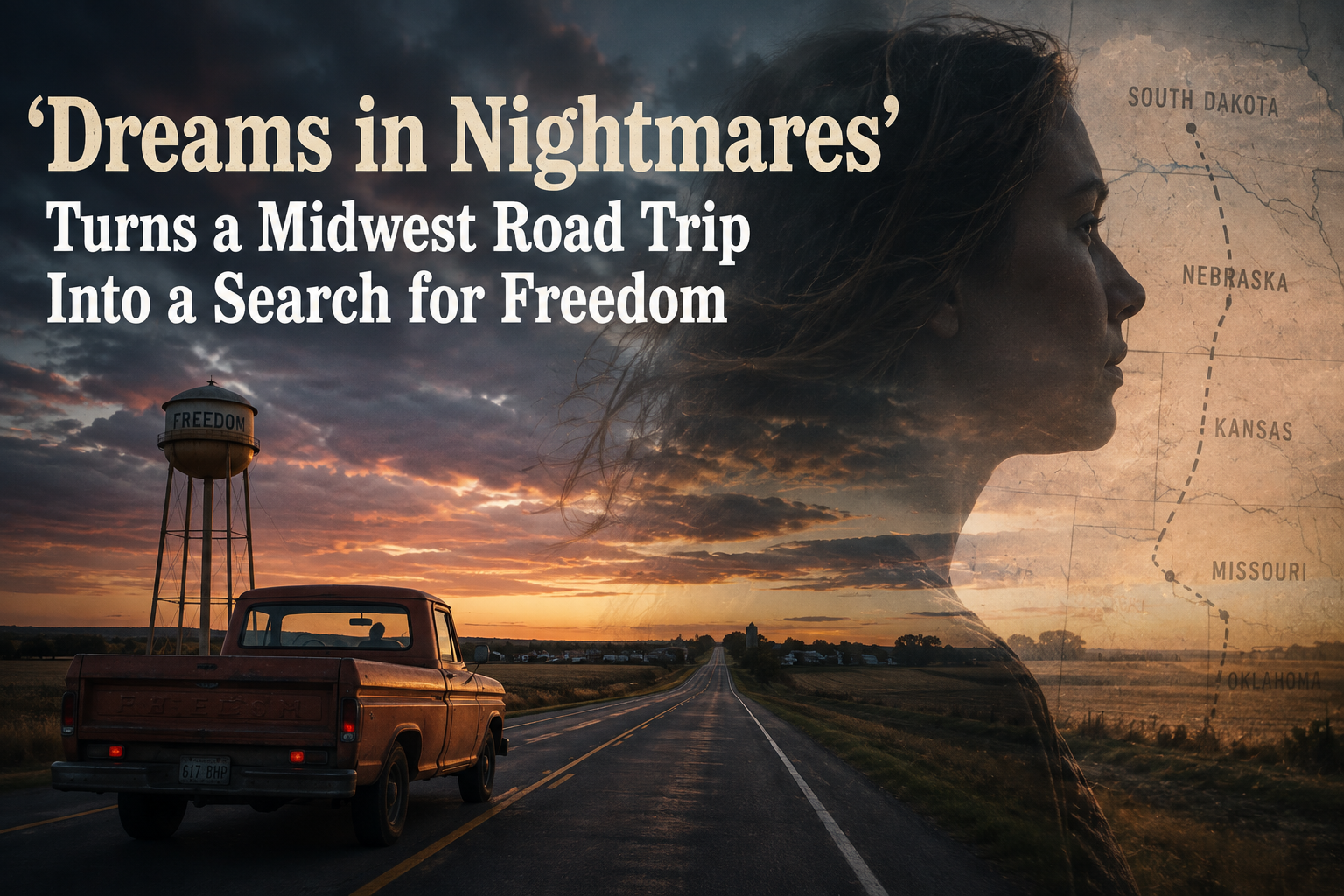
Shatara Michelle Ford’s “Dreams in Nightmares” uses the familiar shape of the American road movie to tell a more intimate story about friendship, exhaustion and the struggle to build a life on one’s own terms.
The drama, which opened in limited U.S. theaters on August 21, follows Z, Lauren and Tasha, three queer Black femmes in their 30s who set out across the Midwest to find their friend Kel after the friend disappears from contact. What begins as a search mission becomes a test of the relationships, ambitions and compromises that have shaped the women’s adult lives.
Z, played by Denée Benton, is dealing with the destabilizing effects of an abrupt layoff. Her uncertainty gives the trip an immediate urgency, but Ford does not treat employment as the only measure of security or success. Instead, the film asks what people lose when they organize their lives around stability that never arrives.
Lauren, played by Dezi Bing, and Tasha, played by Sasha Compère, bring different ideas about responsibility and self-definition to the journey. Their conversations and disagreements give the film much of its momentum. The road becomes less a route toward a single destination than a moving space in which the friends can reconsider the roles they have accepted.
The missing Kel remains central to the story, both as a person the group hopes to recover and as a source of questions about disappearance, choice and escape. Ford gradually widens the search into a portrait of a chosen family trying to remain connected while each member confronts private fears and conflicting desires.
The film’s tone is deliberately expansive. Ford, who previously directed “Test Pattern,” shifts from that film’s tightly focused examination of institutional failure to a looser comedy-drama filled with movement, argument and moments of release. The result is not a conventional thriller about finding someone who has gone missing. It is a road film in which emotional and political pressures surface in each new setting.
That approach also allows “Dreams in Nightmares” to make room for pleasure. The characters laugh, flirt, create art and seek out experiences that are not easily justified as productive. One of the film’s recurring ideas is that joy can be an active choice, particularly for people whose freedom is often treated as conditional.
The ensemble includes Jasmin Savoy Brown, Charlie Barnett and Mars Storm Rucker, with Rucker playing Kel. Ford wrote and directed the film, which runs approximately 128 minutes and was produced as a U.S., U.K. and Taiwan co-production.
“Dreams in Nightmares” premiered at the BlackStar Film Festival in August 2024 before appearing at international festivals, including the Berlin International Film Festival in 2025. Its theatrical release brings the film to audiences beyond the festival circuit while preserving its independent, character-centered scale.
The film’s road-trip framework may suggest a story about distance, but its deeper concern is proximity: how friends care for one another, how they argue over what a good life requires and how they make room for versions of themselves that do not fit neatly into conventional expectations. Ford’s film treats the journey as an opportunity to stop performing certainty—and to imagine a future that belongs to the travelers themselves.
StoryBreak
Independent digital news and reporting, updated throughout the day.
This article was researched and drafted with AI assistance and reviewed as part of StoryBreak's editorial process before publication. Read our editorial standards.