U.S. Bans Some Canadian Alcohol, Dairy and Motorcycles: What American Consumers Could See Next
New U.S. import bans on selected Canadian products begin September 29, escalating a trade fight that could bring higher prices, fewer choices and supply disruptions in targeted categories—but not across all Canadian goods.
By StoryBreak
Published September 9, 2026 at 2:44 PM
The United States is moving from taxing Canadian imports to blocking some of them outright.
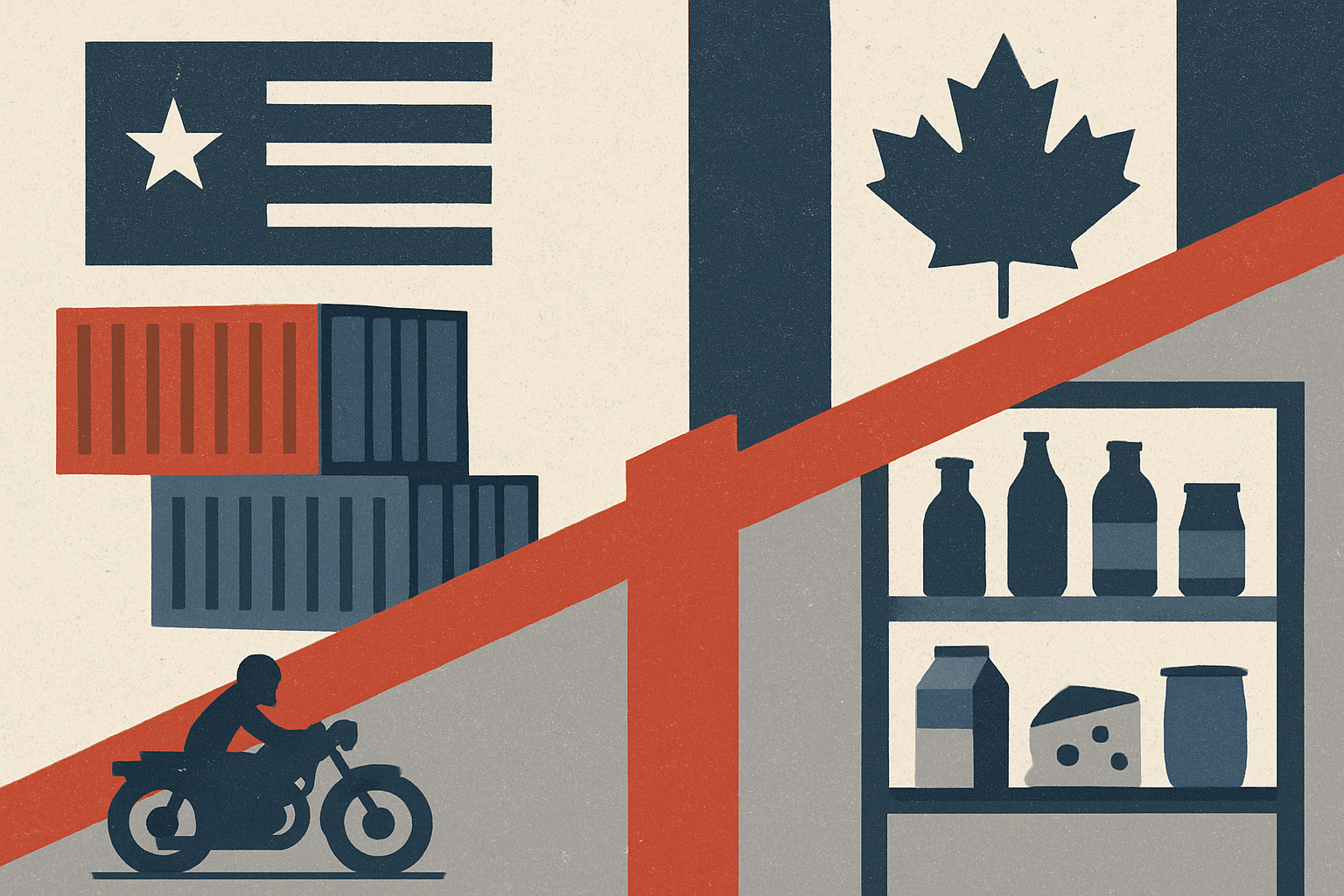
The White House said Tuesday that selected Canadian alcoholic beverages, dairy products, motorcycles and mopeds, and some molasses products will be excluded from the U.S. market beginning at 12:01 a.m. Eastern time on September 29, 2026. The action followed Canada’s new tariffs on about $20 billion of U.S. goods.
For American shoppers, the immediate effect is likely to be selective rather than universal. The policy does not prohibit all Canadian imports. It targets specific products, while other Canadian goods remain subject to tariffs or existing trade rules. That means a consumer is unlikely to see every Canadian product disappear from stores—but certain wines, spirits, dairy ingredients and specialty vehicles could become harder to find or more expensive.
The distinction between a tariff and a ban matters. A tariff adds a cost to an imported product, which businesses may absorb, pass on to consumers or avoid by changing suppliers. A ban prevents the covered product from entering the country under the specified rules. Once the September 29 deadline arrives, retailers and distributors will have to rely on inventory already in the United States, qualify alternative suppliers or wait for the policy to change.
Alcohol is one of the clearest pressure points. Several Canadian provinces had already restricted sales of U.S. alcoholic products, prompting the White House to target various Canadian wines and spirits. The result could be less variety in stores and restaurants, particularly where Canadian brands occupy a specialized niche. Whether prices rise sharply will depend on how easily distributors can replace those products with U.S. or other foreign alternatives.
The dairy measures could be more complicated because the affected products include dairy ingredients such as whey. Those inputs can move through food-manufacturing supply chains rather than appearing under a recognizable Canadian brand on a supermarket shelf. A ban could therefore show up indirectly—in ingredient costs, reformulated products or procurement changes—rather than as an obvious empty shelf.
Motorcycles and mopeds represent a smaller consumer market, but the trade impact may be more concentrated. Buyers looking for a particular Canadian-made model could face limited alternatives, while dealers may have to manage orders and parts differently if the restrictions remain in place.
The broader economic backdrop is substantial. U.S. goods imports from Canada totaled an estimated $381.9 billion in 2025, according to the Office of the U.S. Trade Representative. The newly banned categories are only a fraction of that flow, but the dispute is unfolding inside one of the world’s most integrated trading relationships. The two countries’ total goods trade reached an estimated $715.5 billion last year.
The White House says the bans respond to what it calls discriminatory Canadian treatment of U.S. commerce and are authorized under Section 338 of the Tariff Act of 1930. Canada says its retaliatory tariffs match the scale of Washington’s actions and has imposed duties on U.S. products including steel, aluminum, cheese, appliances, clothing, cosmetics and farm equipment.
The next three weeks will determine whether the bans become a lasting supply-chain problem or a negotiating tactic. Customs guidance, possible legal challenges, product-specific exceptions and renewed talks could all affect what reaches American stores after September 29.
For consumers, the practical lesson is narrower than the headline: this is not a shutdown of Canadian trade. It is a targeted test of how quickly North American businesses can replace products that, for decades, crossed the border with little friction.
Sources & Further Reading
- The White HousePrimary source
- The White HousePrimary source
- Office of the United States Trade RepresentativePrimary source
- Associated Press
- Associated Press
StoryBreak
Independent digital news and reporting, updated throughout the day.
This article was researched and drafted with AI assistance and reviewed as part of StoryBreak's editorial process before publication. Read our editorial standards.