What to Plant in the Fall: Flowers, Trees and Shrubs That Benefit From Going in Now
Fall is a prime planting season for spring bulbs, many trees, shrubs and hardy perennials—but not every plant belongs in the ground before winter. Here is what to plant, when to do it and how to help new roots survive.
By StoryBreak
Published September 18, 2026 at 12:10 AM
Fall is less a season for putting the garden to sleep than for setting up next year’s growth. In much of the United States, cooler air, more manageable moisture and still-warm soil create a useful window for planting spring bulbs, trees, shrubs and many hardy perennials.
The exact deadline depends on where you live. The basic rule is simple: plant while the soil is workable and before the ground freezes, leaving enough time for roots to settle in. In colder regions, that may mean finishing in early fall; in milder areas, the window can extend later. A local extension office or nursery can help translate that broad rule into a planting date for your county.
Start with spring-flowering bulbs
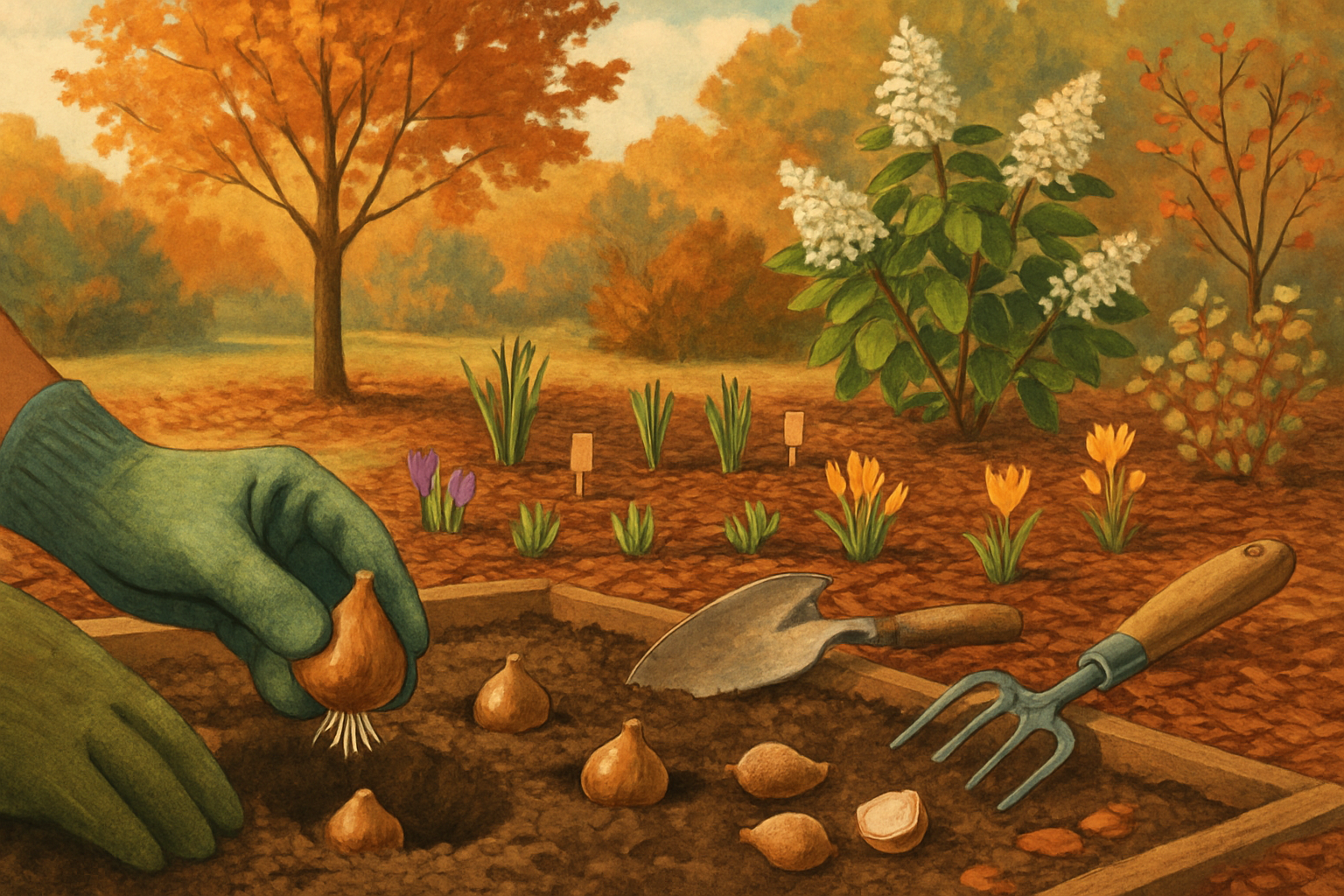
If you want crocuses, daffodils, tulips, hyacinths or glory-of-the-snow next year, fall is the season to plant them. These bulbs use autumn to develop roots and then rely on winter’s cold period to prepare for spring flowering.
Choose firm, healthy bulbs and place them in well-drained soil. Bulbs dislike sitting in water, which can lead to rot, and they generally perform best in full sun. Planting beneath deciduous trees can work well because the site is often sunny before the trees leaf out in spring.
Plant bulbs in groups or drifts rather than scattering them one by one. The result is usually a stronger visual display, and grouping plants makes it easier to remember where they are when their foliage disappears later in the season.
Plant trees and shrubs for a stronger start
Fall is also a good time to establish many deciduous trees and shrubs, including serviceberry, red maple, oak, dogwood, chokeberry, winterberry and oakleaf hydrangea—provided they are suited to the site and local climate. The advantage is not instant size. It is the chance for roots to settle before the demands of summer arrive.
Before buying, check the plant’s mature height and spread, sunlight needs, drainage preferences and hardiness. A shrub that looks compact at the garden center may eventually overwhelm a narrow bed. Native or locally adapted plants can also improve the odds of survival and provide food or shelter for wildlife.
Inspect container plants for roots circling tightly around the pot. If the root mass is badly bound, gently loosen or score the outer roots before planting so they can grow outward into the surrounding soil. Dig a hole wider than the root ball, but do not bury the trunk flare or root collar too deeply.
Hardy perennials can go in, too
Many perennial flowers can be planted in fall, especially when they are sold as established container plants. They may not produce much visible growth before winter, but that does not mean nothing is happening. Root development can continue while the top growth slows.
Mark plants that disappear underground over winter. A small label or garden map can prevent accidental digging or planting on top of them next spring.
What should wait until spring?
Tender summer bulbs and plants that cannot tolerate local winter conditions generally should not be treated like hardy spring bulbs. Cannas, dahlias, tuberous begonias and many summer-flowering bulbs are commonly planted after the threat of frost has passed, then lifted and stored in colder climates.
Annual flowers are another poor investment late in the season unless the goal is short-term color. If frost is approaching, focus on plants that will return or on bulbs and woody plants that can use the season to establish roots.
The aftercare that determines success
Water every new tree, shrub and perennial thoroughly after planting. Continue monitoring during dry weather; autumn rain is helpful but not guaranteed. Evergreens deserve particular attention because they retain foliage through winter and can lose moisture even when dormant.
Add mulch to conserve moisture and suppress weeds, but keep it away from trunks and stems. A thick mound of mulch against a tree can trap moisture and encourage decay.
Do not rush to fertilize or prune newly planted woody plants. The immediate priorities are correct depth, good drainage, adequate water and protection from competition by weeds. Come spring, allow trees and shrubs to leaf out before deciding whether pruning is necessary.
The best fall planting plan is therefore selective: bulbs for spring color, hardy perennials for a head start, and properly sited trees and shrubs for long-term structure. Plant by the calendar, but make the final decision by the soil, the forecast and the plant’s ability to handle your winter.
Sources & Further Reading
- Oregon State University Extension ServicePrimary source
- Penn State ExtensionPrimary source
- Penn State ExtensionPrimary source
- University of Minnesota ExtensionPrimary source
- USDA Natural Resources Conservation ServicePrimary source
- Penn State ExtensionPrimary source
StoryBreak
Independent digital news and reporting, updated throughout the day.
This article was researched and drafted with AI assistance and reviewed as part of StoryBreak's editorial process before publication. Read our editorial standards.