
Planning a 2027 Vacation? Labor Day Is the Moment to Start—Not Necessarily to Buy Everything
The smartest 2027 travel strategy is a split decision: secure scarce cruises, park permits, popular rooms and fixed-date international trips early, while monitoring flexible airfares and hotels for later value. Here is a practical timeline based on 2026 travel patterns.
By StoryBreak
Published September 7, 2026 at 1:35 AM
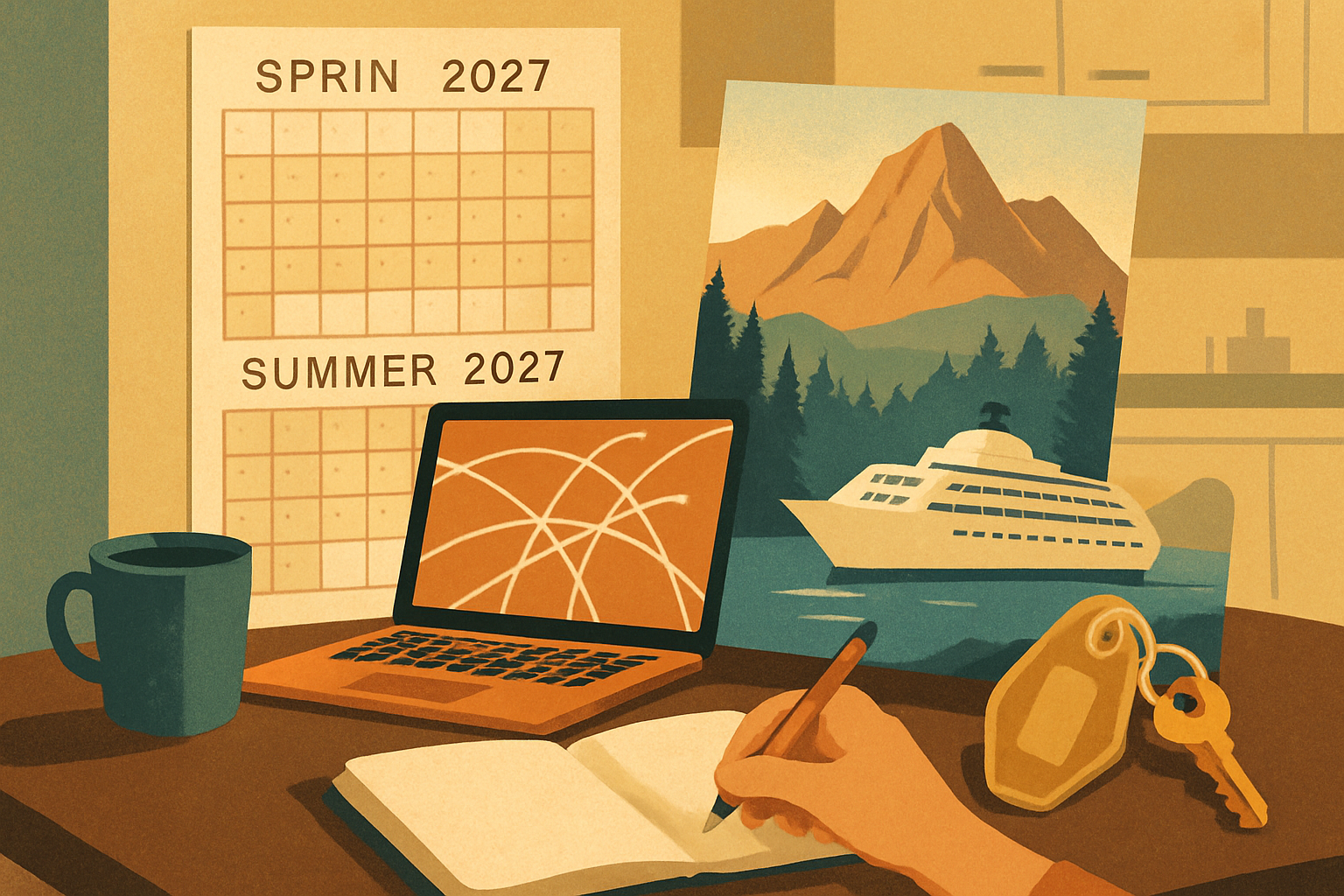
Labor Day traditionally closes the summer travel season. In 2026, it also offers a useful opening for planning next year’s vacations—but not a reason to purchase every component immediately.
The best approach for spring and summer 2027 is to separate what is scarce from what is flexible. A cruise cabin on a specific sailing, a national-park campsite during a school break or a hotel in a small gateway town can disappear long before an airfare reaches its final price. A city hotel with many competitors, by contrast, may offer more choice—and sometimes better value—closer to arrival.
That distinction matters because 2026 travel is showing two apparently contradictory trends. Demand remains resilient among people who can afford to travel, but cost pressure is causing others to delay or abandon trips. Deloitte’s 2026 summer survey found that 45% of Americans planned a vacation involving paid lodging, the lowest share in its six-year series. Yet travelers who were going still planned to spend aggressively on major trips. Morning Consult likewise found that many summer travelers had not completed their bookings well into the season.
For airfare, start researching now, especially for international travel, school vacations and routes with limited nonstop service. Set fare alerts for several nearby airports and track a range of dates rather than waiting for a mythical cheapest Tuesday. There is no universally reliable cheapest day to book: prices reflect route competition, remaining seats, seasonality, fuel costs, schedules and airline revenue management.
The 2026 air market offers a warning against overconfidence. IATA says global passenger demand is still growing, but at a slower pace, while higher fuel costs and constrained capacity are putting upward pressure on fares. That makes an attractive, changeable fare worth considering when it appears—particularly for a fixed-date international trip. For a flexible domestic trip, keep monitoring after booking if the ticket rules allow credits or rebooking.
International travelers should generally build the trip in stages. Choose the destination and rough dates in fall 2026, watch when airlines load the relevant schedule, and then compare nonstop and one-stop options. Book earlier when the itinerary depends on a particular festival, tour departure, rail pass, island connection or family gathering. Leave room to adjust hotels and side trips as exchange rates, schedules and local conditions become clearer.
Cruises belong in the “plan early” category when the sailing, cabin type or itinerary matters. CLIA says global cruise volume reached a record 37.2 million passengers in 2025, and nearly 90% of cruisers say they intend to sail again. Popular summer sailings, family cabins, solo rooms and accessible cabins can be limited. Booking early may also provide a wider choice of cabins and promotional inclusions, even if a later sale eventually lowers the headline price. The practical safeguard is to compare cancellation, rebooking and price-protection rules before paying a nonrefundable deposit.
National parks require the earliest planning of all when the trip involves camping, popular lodges, wilderness permits or a narrow weather window. Do not assume that one park’s reservation policy predicts another’s. In 2026, Rocky Mountain National Park continued timed entry during peak months, while Yosemite announced no season-wide vehicle reservation requirement. Policies can change for 2027, so use the National Park Service and individual park pages rather than old social-media advice. Reserve lodging and permits when their booking windows open, then build the itinerary around those confirmed pieces.
Hotels are the category where waiting can make sense. For large cities, shoulder-season destinations and trips with flexible dates, compare refundable rates now, then recheck periodically. A refundable reservation can function as a placeholder while prices and plans evolve. Resort areas, national-park gateways, small islands and peak holiday weeks are different: limited inventory can outweigh the possibility of a later discount.
A workable calendar looks like this: from September through November 2026, choose destinations, identify school and work constraints, price flights and reserve scarce lodging or cruises with flexibility. During winter 2026–27, watch for new air schedules, cruise promotions and park-permit openings. By spring 2027, lock down high-demand components and compare the total trip cost—not just the airfare. In the final months, recheck hotels, rental cars and activities, but avoid gambling with nonrefundable essentials.
The goal is not to predict the one perfect booking day. It is to buy certainty where supply is limited and preserve flexibility where prices can move. For 2027 travelers, that is a more durable strategy than chasing a calendar superstition.
Sources & Further Reading
- Deloitte Insights
- Morning Consult
- International Air Transport AssociationPrimary source
- International Air Transport AssociationPrimary source
- Cruise Lines International AssociationPrimary source
- National Park ServicePrimary source
- Expedia Group
StoryBreak
Independent digital news and reporting, updated throughout the day.
This article was researched and drafted with AI assistance and reviewed as part of StoryBreak's editorial process before publication. Read our editorial standards.