Scientists Find Mammals’ First Known Dual Antibody Gene System in Bats
A study of vesper bats has identified two complete antibody-producing gene regions on separate chromosomes—a genetic arrangement not previously documented in mammals. The discovery may help explain how bats coexist with viruses without developing severe disease, although researchers say it is only one piece of a much larger biological puzzle.
By StoryBreak
Published September 6, 2026 at 1:26 AM
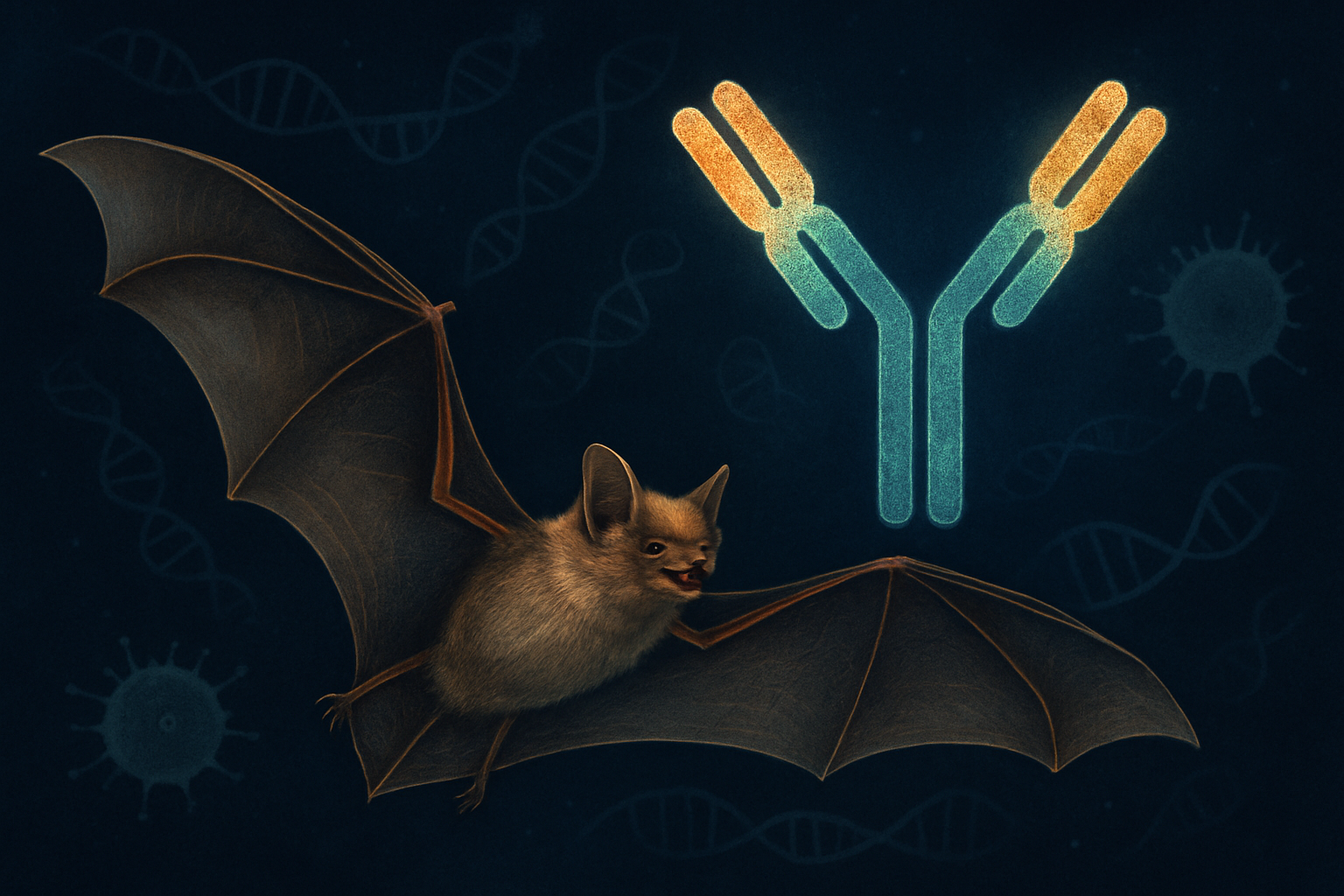
Scientists have discovered a previously unknown arrangement in the immune system of vesper bats: two complete genetic regions capable of producing the heavy-chain component of antibodies. The configuration has not previously been documented in mammals and could give the bats an expanded way to recognize and respond to infections.
The findings, published July 29 in Science Advances, come from researchers at Stanford University, Tulane University, Monash University and the U.S. Centers for Disease Control and Prevention. Their study examined the immunoglobulin heavy-chain, or IgH, region—the part of the genome that contains the instructions for one of the main building blocks of antibodies.
In humans and other mammals studied so far, the genes involved in making antibody heavy chains are organized in a single genomic locus. The researchers found that vesper bats, the largest family of bats, instead possess two separate, complete IgH loci located on different chromosomes.
Antibodies are produced by B cells and bind to specific features of viruses, bacteria and other foreign substances. The body generates enormous antibody diversity by rearranging gene segments within the IgH locus. Having two functional loci could provide bats with an additional genetic framework for producing antibody receptors, potentially increasing the range of threats their adaptive immune system can identify.
The discovery does not mean bats have an entirely separate immune system from other mammals. Bats have the familiar broad components of mammalian immunity, including innate defenses and antibody-producing B cells. What appears unusual is how their antibody genes are organized—and how that organization may have evolved.
Researchers analyzed 26 bat species and found evidence that the duplicated arrangement is associated with vesper bats, also known as the family Vespertilionidae. The group includes many familiar insect-eating species, such as pipistrelle and Myotis bats. The study also found signs that both heavy-chain loci are functional rather than being inactive stretches of duplicated DNA.
The result may help address a long-standing question in biology: how bats can carry or encounter viruses that cause serious illness in other mammals while often showing limited symptoms themselves. Bats are already known to possess several unusual adaptations linked to antiviral defense, inflammation control and DNA repair. Their ability to fly may also have shaped their biology by imposing unusually high metabolic demands.
Still, the new finding should not be treated as a complete explanation for bats’ tolerance of infection. The study identifies a distinctive genetic architecture, but it does not show that the duplicated loci directly protect bats from a particular virus. The researchers also do not yet know how the two systems divide their work, whether they are activated under different conditions or how much they contribute to the antibody repertoire in living animals.
That uncertainty is important because bats are an exceptionally diverse group. More than 1,400 species occupy different habitats, diets and evolutionary lineages, and immune traits can vary considerably from one bat species to another. A mechanism found in vesper bats may not be shared by fruit bats, horseshoe bats or other major branches of the bat family tree.
The findings nevertheless broaden scientists’ understanding of mammalian immune evolution. Much of immunology has been built around humans and laboratory mice, while the adaptive immune systems of bats remain comparatively understudied. Examining how bats generate antibody diversity could reveal new principles of immune regulation and help researchers understand how viruses adapt to long-term hosts.
Any medical applications remain distant. The study does not provide a treatment for human viral disease, nor does it show that bat antibody genes can be transferred safely or effectively into people. Its immediate importance is evolutionary: bats have revealed a form of antibody-gene organization that scientists had not seen in another mammal.
The next steps will include testing how the two loci are used by individual B cells, measuring the antibodies they produce and comparing the system across additional bat species. Those studies could clarify whether the duplicated architecture is a specialized feature of vesper bats or part of a broader pattern still hidden in other mammals.
StoryBreak
Independent digital news and reporting, updated throughout the day.
This article was researched and drafted with AI assistance and reviewed as part of StoryBreak's editorial process before publication. Read our editorial standards.