Scientists Find a Major Biological Shift in the Brain Between 50 and 75
A new Science study finds that the aging hippocampus undergoes coordinated changes in immune cells, blood-brain-barrier support and DNA organization during midlife. The findings may help explain why neurodegenerative disease risk increases with age—but they do not mean dementia begins at 50.
By StoryBreak
Published September 16, 2026 at 2:56 AM
The human brain may undergo a particularly important biological transition during midlife, according to a study published September 15, 2026, in the journal Science.
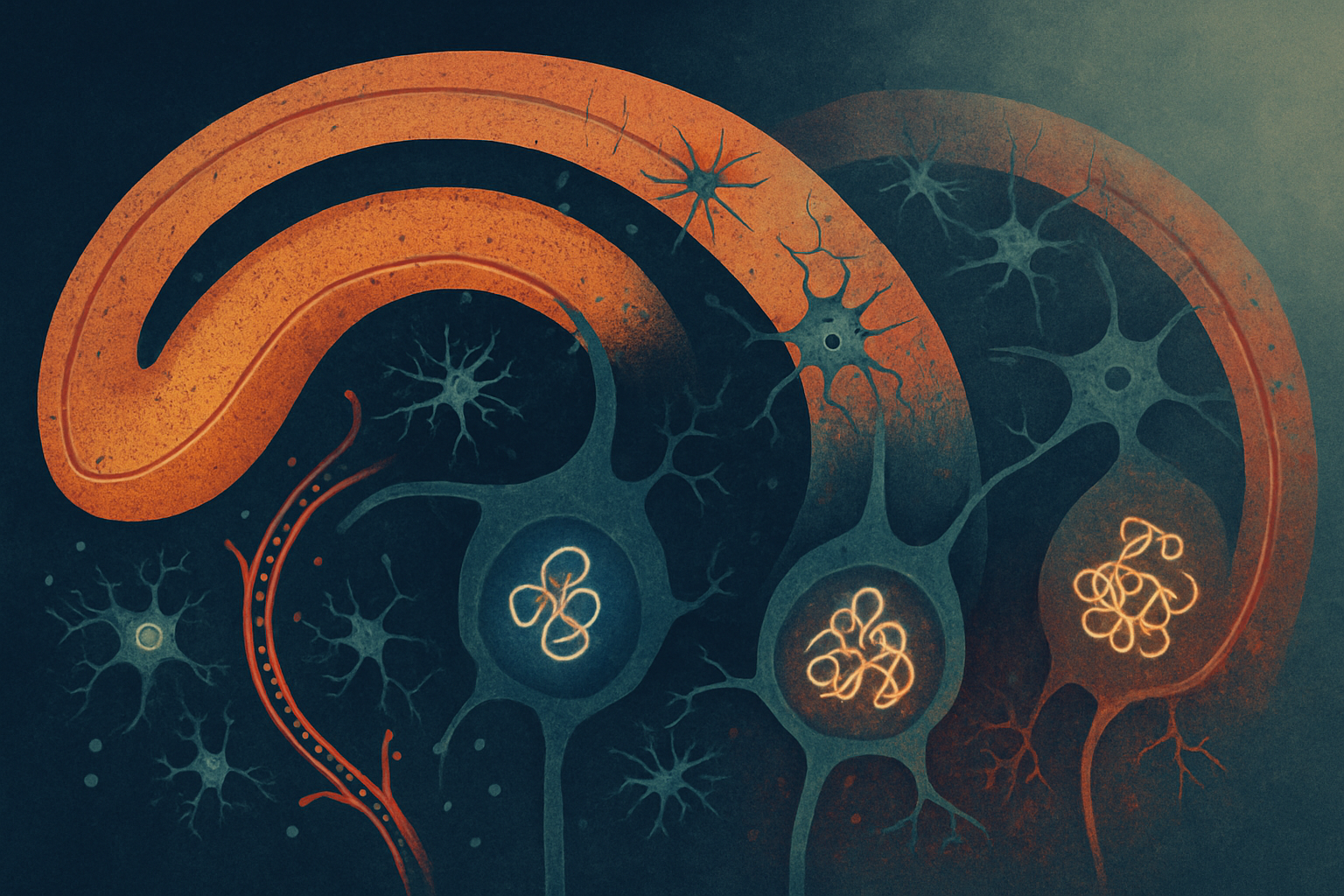
Researchers studying the aging hippocampus—the brain region involved in learning and memory—found that several systems change together as people grow older. One of the sharpest shifts appeared between roughly ages 50 and 75, when a population of immune cells known as microglia changed substantially.
Microglia act as the brain’s resident immune and maintenance cells. They help clear cellular debris, respond to injury and support the brain’s internal balance. The new study found that microglia with embryonic origins declined during the midlife-to-later-life transition, while cells with molecular characteristics more similar to immune cells found in the bloodstream became more common.
Those replacement cells also carried stronger inflammatory signatures. That does not prove they cause Alzheimer’s disease or other forms of neurodegeneration. But it gives researchers a possible explanation for how the aging brain could become less effective at housekeeping and more prone to persistent inflammation.
The study found another potentially important change in cells associated with the blood-brain barrier, the system of blood vessels and support cells that helps regulate what can move from the bloodstream into brain tissue. These cell populations declined with age in the samples examined, suggesting that the brain’s protective interface may also be remodeled as part of normal aging.
The researchers were not only counting cells. They also examined how DNA was organized inside individual cells. DNA is folded in three dimensions within the nucleus, and that folding helps determine which genes are turned on or off. Across several brain-cell types, the study found that this three-dimensional genome organization became less orderly with age.
That finding matters because it points to a change in the brain’s operating instructions, not merely a loss of neurons. Aging may affect how cells regulate genes involved in immune activity, maintenance and communication. In other words, the older brain may be changing both its cellular workforce and the system that tells those cells what to do.
The research was based on human hippocampal tissue examined with single-cell and genome-mapping methods. It was not a clinical trial, and it did not follow living participants over time to determine who later developed memory loss or dementia. The ages identified in the study describe a broad biological pattern across samples—not a universal deadline at which every person’s brain changes in the same way.
That distinction is important. The study offers clues about why age is the strongest known risk factor for neurodegenerative disease, but it does not show that a midlife immune-cell shift directly causes Alzheimer’s. Nor does it establish a medical test or treatment for people in their 50s, 60s or 70s.
What it does provide is a more detailed map of the aging hippocampus. The results suggest that brain aging is not simply a slow, uniform decline. It may involve coordinated remodeling of immune cells, vascular support systems and genome architecture, with some changes becoming especially visible during midlife.
The next step is to determine which of these changes are harmless features of aging, which are linked to cognitive decline, and which might be reversible. That work could eventually guide therapies aimed at preserving the brain’s immune balance or protecting the genome’s organization. For now, the study’s main message is narrower but significant: the biology of brain aging may shift substantially before symptoms make the change visible.
Sources & Further Reading
StoryBreak
Independent digital news and reporting, updated throughout the day.
This article was researched and drafted with AI assistance and reviewed as part of StoryBreak's editorial process before publication. Read our editorial standards.