Glucosamine Linked to Faster Alzheimer’s Progression in Study—but the Evidence Is Not a Stop-Taking Warning
A Nature Metabolism study found that glucosamine users with mild cognitive impairment were more likely to progress to Alzheimer’s-related dementia. But the research was observational, and a later analysis found similar patterns for other supplements, leaving open the possibility of confounding.
By StoryBreak
Published September 27, 2026 at 4:41 PM
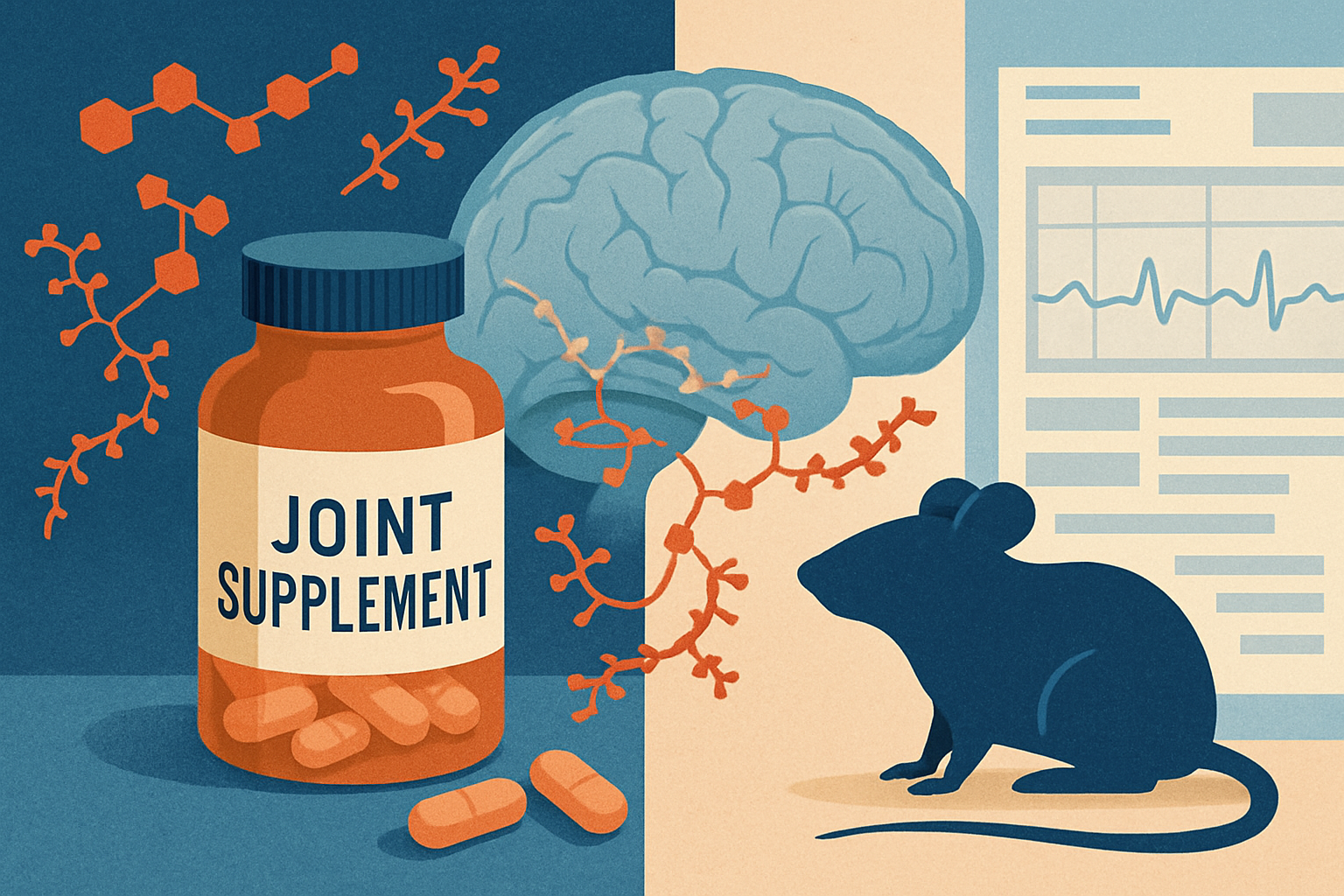
A popular joint supplement was associated with faster progression toward Alzheimer’s-related dementia in a new study—but the result is more cautionary signal than definitive safety warning.
Researchers writing in Nature Metabolism reported that people with mild cognitive impairment who had glucosamine documented in their medical records were about 25% more likely to transition to Alzheimer’s-related dementia during follow-up. Among people already diagnosed with Alzheimer’s-related dementias, glucosamine use was associated with a roughly 25% higher risk of death.
The study analyzed records from the University of Florida Health system. The researchers identified 41,884 patients with mild cognitive impairment and 24,481 patients with Alzheimer’s-related dementias for their transition or survival analyses. Follow-up lasted a median of about five years, and approximately 8% of patients in the relevant groups had glucosamine use recorded.
Those figures describe an association, not proof that the supplement caused cognitive decline. The study was retrospective: researchers looked back at existing health records rather than assigning people to take glucosamine or a placebo. That leaves several possible explanations. People taking the supplement may have had more severe joint disease, less mobility, different overall health, or other characteristics that also affect dementia progression.
The paper does offer a biological hypothesis. Using postmortem human brain samples and Alzheimer’s mouse models, the researchers found evidence of increased glycan production, a process in which sugar molecules are attached to proteins. They called the broader abnormality “hyperglycosylation.” In mice genetically engineered to develop Alzheimer’s-like disease, oral glucosamine increased brain glycan levels and worsened performance on a social-memory task. Blocking parts of the same pathway improved some cognitive outcomes in the animals.
That mechanism is biologically interesting, but it does not convert the human findings into a clinical trial result. The mouse experiments used controlled conditions and cannot establish whether ordinary over-the-counter use produces the same effects in people.
A subsequent preprint adds another reason for caution. Researchers examining a separate National Alzheimer’s Coordinating Center cohort found that the association between glucosamine records and progression toward Alzheimer’s disease remained in the same direction. But similar patterns appeared for multivitamin or broad-vitamin records and calcium or vitamin D records. That finding suggests the signal may reflect how supplement users differ from nonusers—or how supplements are recorded in clinical data—rather than a glucosamine-specific effect.
The practical takeaway is narrower than the headline. People with mild cognitive impairment or dementia who use glucosamine should tell their clinicians about it and ask whether it remains appropriate alongside their other medicines and supplements. The study does not establish that people without cognitive impairment will develop dementia because they take glucosamine, and it does not justify abruptly stopping a treatment without medical advice.
What would settle the question is prospective research that measures supplement dose and duration, tracks arthritis and mobility, and compares glucosamine users with carefully matched nonusers or placebo groups. Until then, the study is best understood as a warning that “over the counter” does not mean biologically inactive—and as a reminder that an association found in medical records can be the beginning of an investigation, not its conclusion.
Sources & Further Reading
- Nature MetabolismPrimary source
- PubMedPrimary source
- medRxivPrimary source
- University of Florida McKnight Brain Institute
StoryBreak
Independent digital news and reporting, updated throughout the day.
This article was researched and drafted with AI assistance and reviewed as part of StoryBreak's editorial process before publication. Read our editorial standards.