
FDA Approves Oral Drug Combination for ESR1-Mutated Advanced Breast Cancer
The FDA approved imlunestrant with abemaciclib for a treatment-resistant form of ER-positive, HER2-negative advanced breast cancer. In the pivotal trial, the combination extended the median time before disease progression from 5.5 months to 11.1 months among patients with ESR1-mutated tumors, though serious side effects were more common with the two-drug regimen.
By StoryBreak
Published September 24, 2026 at 1:03 AM
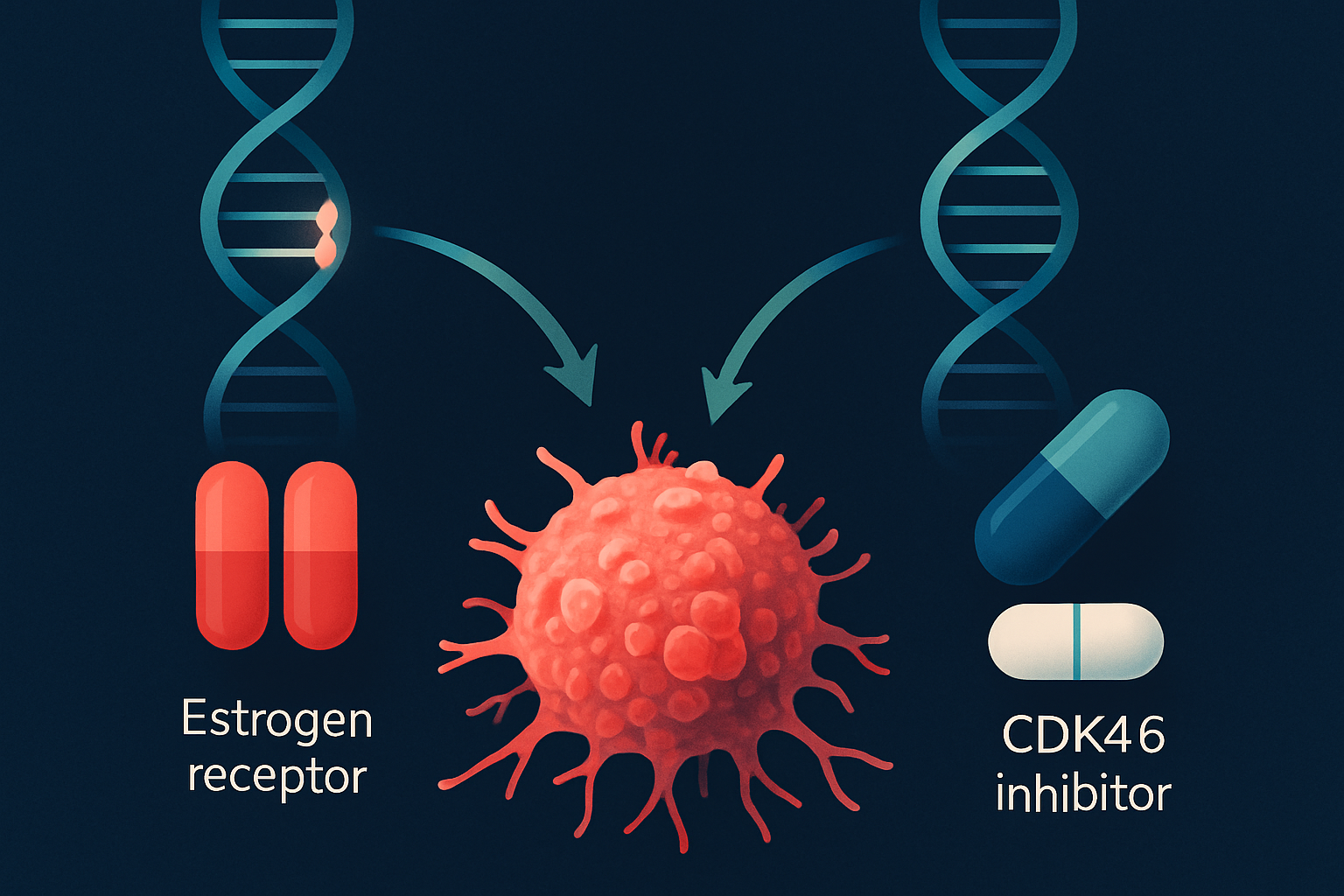
The Food and Drug Administration has approved a new all-oral treatment combination for a common treatment-resistant form of advanced breast cancer, giving some patients another option before moving to more intensive therapies.
The combination pairs imlunestrant, sold as Inluriyo, with abemaciclib, sold as Verzenio. It is approved for adults with estrogen receptor-positive and HER2-negative locally advanced or metastatic breast cancer whose tumors contain an ESR1 mutation and whose disease has progressed after at least one line of endocrine therapy.
The approval, announced September 18, 2026, is narrower than the headline may suggest. It does not cover all breast cancer patients, and it is not an approval for early-stage disease. Patients must have advanced or metastatic cancer, the appropriate hormone-receptor and HER2 profile, prior endocrine treatment, and a mutation identified through an FDA-authorized test.
The reason ESR1 matters is that the mutation can emerge as breast cancer adapts to aromatase inhibitors, a commonly used class of hormone treatments. In practical terms, the mutation may help cancer cells continue using estrogen-related growth signals even after treatment has attempted to block them.
Imlunestrant is designed to target the estrogen receptor itself. Abemaciclib works differently, blocking CDK4/6 proteins that help cells divide. The combination is meant to attack two connected parts of the cancer’s growth machinery rather than relying on hormone targeting alone.
The FDA based the decision on EMBER-3, a randomized, open-label phase 3 trial involving 874 adults with ER-positive, HER2-negative advanced breast cancer whose disease had returned or progressed during or after treatment with an aromatase inhibitor. In the group with ESR1-mutated tumors, the median time before the cancer progressed or the patient died was 11.1 months for those receiving imlunestrant plus abemaciclib, compared with 5.5 months for those receiving imlunestrant alone.
That is a difference of 5.6 months in median progression-free survival, or roughly twice as long before the disease worsened. It is a meaningful result for patients whose cancer has become resistant to standard endocrine treatment. But progression-free survival is not the same as overall survival. The FDA’s approval announcement does not establish that the combination helps patients live longer, and longer follow-up will be needed to answer that question.
The added drug also brought added risk. In the published EMBER-3 results, grade 3 or higher adverse events occurred in 48.6% of patients receiving imlunestrant and abemaciclib, compared with 17.1% of patients receiving imlunestrant alone. That difference illustrates the central tradeoff: the combination improved disease control, but it was substantially more difficult to tolerate in the trial.
The FDA simultaneously approved the Guardant360 CDx test as a companion diagnostic to identify patients with ESR1-mutated tumors who may be eligible. That testing requirement is important because ESR1 mutations are generally acquired during the course of treatment; a result from an earlier biopsy may not reflect the tumor’s current genetic profile.
For patients and clinicians, the approval expands the menu of mutation-directed treatments, but it does not eliminate the need for individualized decisions. The choice will depend on previous therapies, the pace and location of disease, other health conditions, expected side effects, access, and whether a patient’s tumor continues to show the mutation when it is tested.
The next key question is whether the longer period without progression translates into longer survival and how this combination performs against other oral ESR1-directed treatments. For now, the clearest evidence is more limited but still consequential: in a defined group of patients with advanced, hormone-sensitive breast cancer, adding abemaciclib gave imlunestrant considerably more time to control the disease.
Sources & Further Reading
- U.S. Food and Drug AdministrationPrimary source
- New England Journal of MedicinePrimary source
- Healthline
StoryBreak
Independent digital news and reporting, updated throughout the day.
This article was researched and drafted with AI assistance and reviewed as part of StoryBreak's editorial process before publication. Read our editorial standards.