FDA authorizes first wearable to continuously monitor both blood sugar and ketones
A newly authorized wearable can continuously track glucose and ketone levels in people with diabetes, giving patients and caregivers another way to detect warning signs of potentially life-threatening diabetic ketoacidosis before it becomes an emergency.
By StoryBreak
Published August 29, 2026 at 10:54 PM
Updated September 6, 2026 at 8:38 PM
People living with diabetes will soon have access to a new type of wearable designed to monitor more than blood sugar.
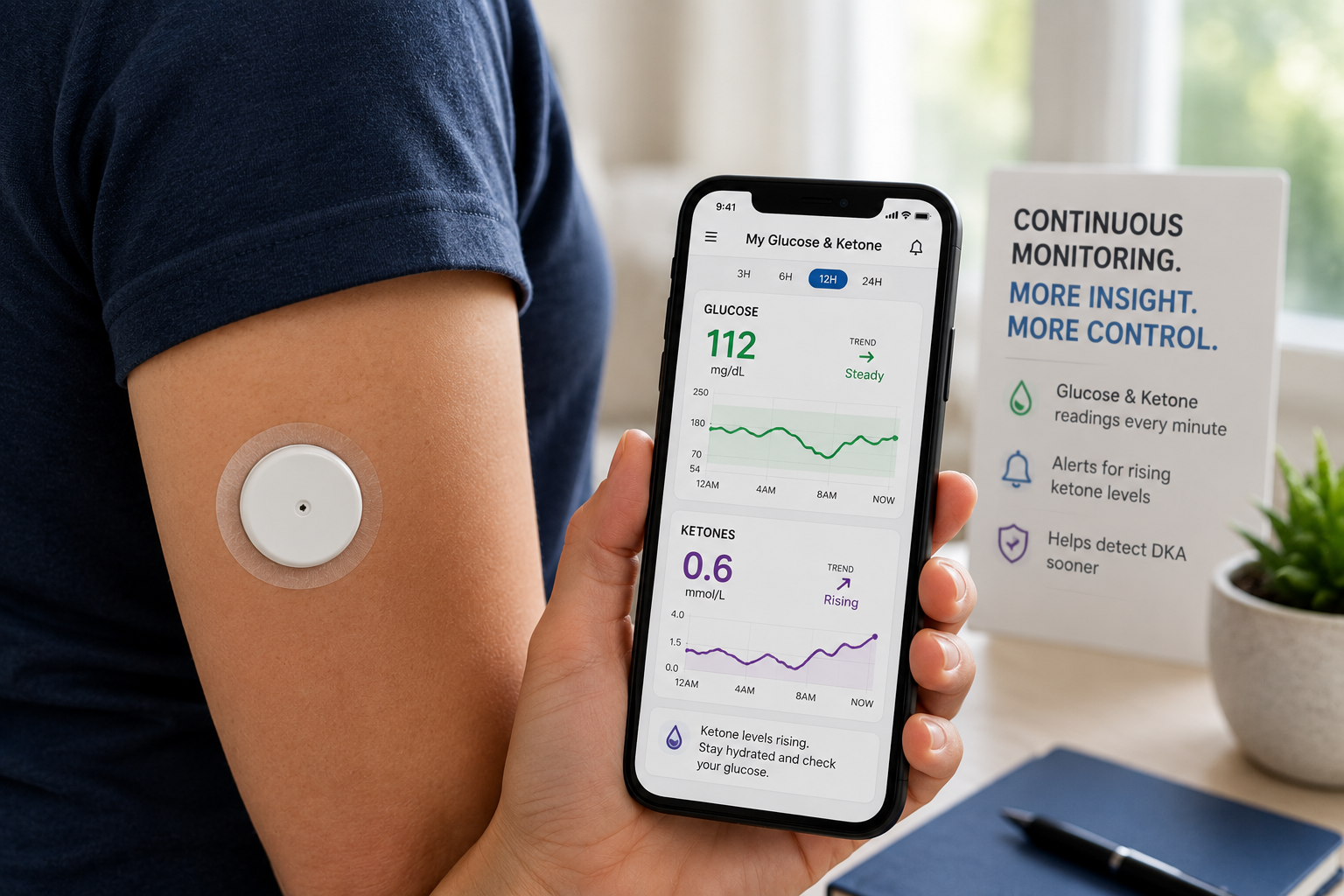
The U.S. Food and Drug Administration has authorized the Libre Duo 10 Day Continuous Dual Glucose Ketone Monitoring System, a wearable sensor capable of continuously measuring both glucose and ketone levels.
The FDA says it is the first wearable device authorized in the United States to continuously monitor ketones and the first device in the world capable of continuously monitoring glucose and ketones together in a single wearable.
The system is authorized for people with diabetes who are 2 years old and older.
Its biggest potential benefit isn't simply convenience. The technology is designed to provide earlier warning of a dangerous diabetes complication known as diabetic ketoacidosis, or DKA.
Why ketones matter
People with diabetes are accustomed to monitoring their blood sugar, but glucose doesn't always tell the entire story.
When the body doesn't have enough insulin to allow glucose to be used properly for energy, it can begin breaking down fat instead.
That process produces chemicals called ketones.
If ketones accumulate to dangerous levels, the result can be diabetic ketoacidosis. DKA can develop quickly and become life-threatening without treatment.
The risk is particularly important for people with type 1 diabetes.
The FDA estimates that about 40.1 million Americans are living with diabetes, including approximately 2.1 million people with type 1 diabetes.
One sensor measures two things
Until now, people who needed to check ketones generally had to perform a separate test.
Those tests provide a measurement at a particular moment, but don't continuously show whether ketone levels are rising or falling.
Libre Duo changes that.
The wearable measures both glucose and ketone levels every minute, day and night, using fluid just beneath the skin.
The readings are transmitted wirelessly to a compatible smartphone.
Users can see their current levels as well as whether those levels are trending upward or downward.
The system can also issue an automatic alert when ketones reach a concerning threshold, potentially giving a patient or caregiver an opportunity to respond before the situation develops into a medical emergency.
The FDA cautions that ketone readings should still be considered alongside a person's glucose readings and symptoms.
Tested in more than 600 people
The FDA reviewed clinical and performance data from six clinical studies involving more than 600 participants ages 2 and older.
Researchers evaluated how accurately the wearable measured glucose and ketones across different levels during its 10-day wear period.
According to the FDA, the device accurately tracked clinically meaningful changes in ketone levels, including detecting elevated levels before the onset of diabetic ketoacidosis.
The device previously received the FDA's Breakthrough Device designation, a program intended to accelerate development and review of certain technologies that could provide more effective diagnosis or treatment of serious or life-threatening conditions.
The FDA granted Abbott Diabetes Care marketing authorization through its De Novo pathway, which is used for new types of low- to moderate-risk medical devices.
A potentially important change for families
Continuous glucose monitors have already transformed diabetes management for many patients by replacing much of the need for repeated finger-stick measurements.
Continuous ketone monitoring could bring a similar change to another part of diabetes care.
The potential may be particularly significant for parents and caregivers.
Instead of discovering elevated ketones through a single test after symptoms appear or blood sugar rises, continuous monitoring provides information throughout the day and night.
FDA Center for Devices and Radiological Health Director Michelle Tarver called the authorization a “breakthrough for the safety of children and adults living with diabetes.”
Diabetes technology continues moving toward constant monitoring
The authorization also illustrates how wearable health technology is evolving.
Continuous monitors increasingly allow patients to collect health information outside hospitals and doctors' offices and share that information with caregivers or healthcare professionals.
Abbott says its dual glucose-ketone technology is designed to integrate with its existing Libre digital health ecosystem and is being developed for compatibility with automated insulin-delivery systems. The company previously received authorization to introduce related Libre Duo technology in Europe.
The new sensor doesn't eliminate the dangers associated with diabetic ketoacidosis, and its readings aren't a substitute for medical evaluation when someone has symptoms of an emergency.
But continuously seeing two important measurements instead of one could provide something patients haven't had before: an earlier view of a dangerous condition as it begins to develop.
Sources & Further Reading
StoryBreak
Independent digital news and reporting, updated throughout the day.
This article was researched and drafted with AI assistance and reviewed as part of StoryBreak's editorial process before publication. Read our editorial standards.