FDA expands Mounjaro approval to reduce heart attack and stroke risk in adults with type 2 diabetes
The FDA has expanded its approval of Mounjaro to include reducing the risk of heart attack, stroke and cardiovascular death in adults with type 2 diabetes who are at high risk for cardiovascular events, adding another major use for the widely prescribed medication.
By StoryBreak
Published August 29, 2026 at 8:20 PM
Updated September 6, 2026 at 8:38 PM
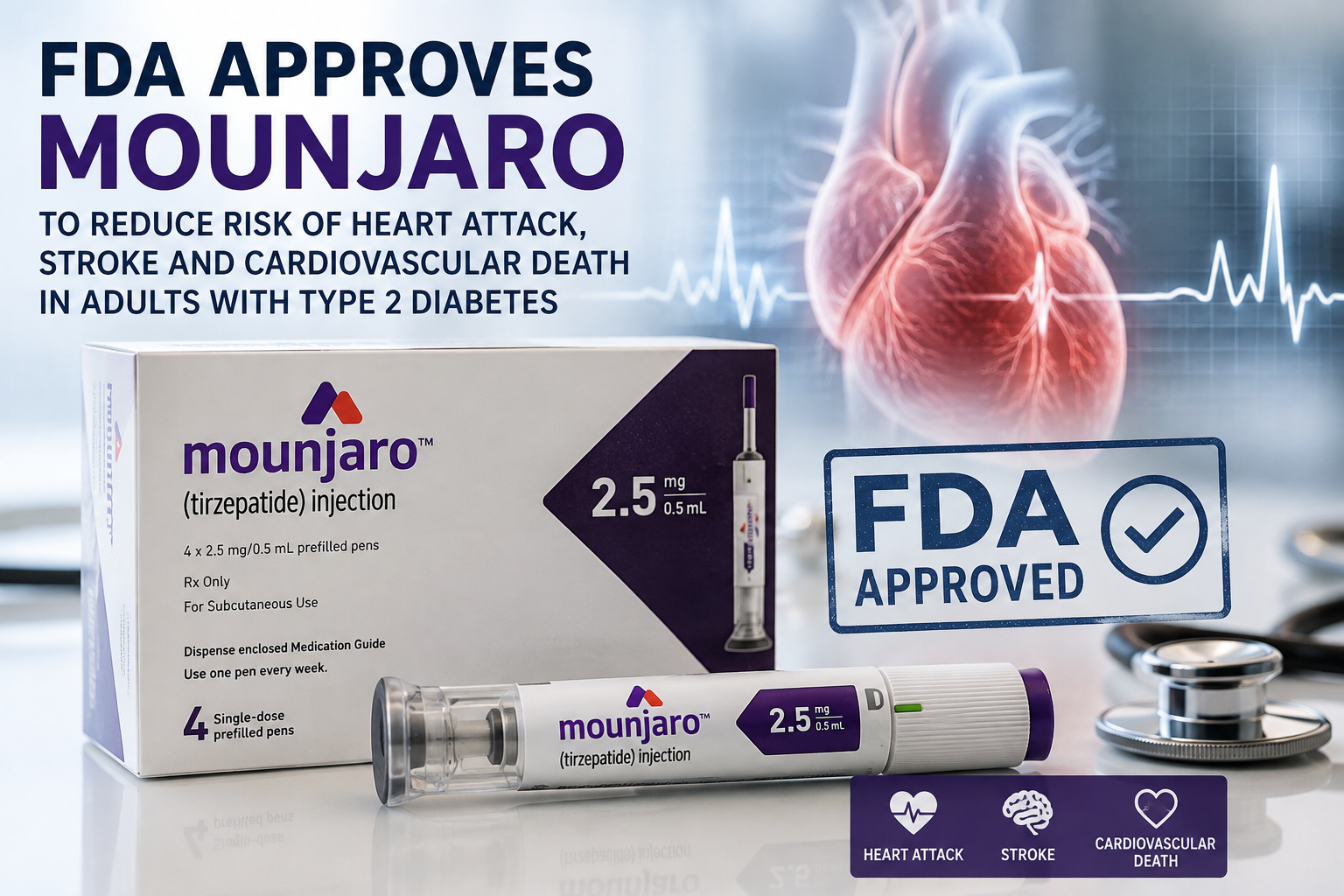
Mounjaro has received a major new approval from the U.S. Food and Drug Administration, expanding the role of the popular diabetes medication beyond controlling blood sugar.
The FDA has approved Mounjaro, also known by its generic name tirzepatide, to reduce the risk of major cardiovascular events in adults with type 2 diabetes who are at high risk for those events.
Those cardiovascular events include heart attack, stroke and cardiovascular death.
The decision gives doctors another option for addressing two conditions that are often closely connected: type 2 diabetes and cardiovascular disease.
What changed with the approval?
Mounjaro was already approved, along with diet and exercise, to improve blood sugar control in people age 10 and older with type 2 diabetes.
The new indication specifically applies to adults with type 2 diabetes who are at high risk for cardiovascular events.
Mounjaro is a once-weekly injectable medication that activates both GIP and GLP-1 hormone receptors. That distinguishes tirzepatide from medications that target only the GLP-1 receptor.
A trial involving more than 13,000 people
The expanded approval follows results from SURPASS-CVOT, a large Phase 3 cardiovascular outcomes trial comparing Mounjaro with Trulicity, or dulaglutide.
The study enrolled 13,299 people across 30 countries and followed participants for more than four and a half years.
Participants had type 2 diabetes and increased cardiovascular risk.
Researchers evaluated major cardiovascular events including cardiovascular death, nonfatal heart attack and nonfatal stroke.
What did researchers find?
Mounjaro met the study's primary goal of demonstrating that it was not inferior to Trulicity for preventing major cardiovascular events.
Participants receiving Mounjaro experienced an 8% lower rate of cardiovascular death, heart attack or stroke compared with those receiving Trulicity.
That figure requires some context: the trial was designed primarily to establish that Mounjaro was noninferior to Trulicity. The reported 8% difference should therefore not be interpreted as showing that Mounjaro definitively cuts cardiovascular risk by 8% compared with Trulicity.
The study also found a 16% lower rate of death from all causes among participants receiving Mounjaro, although that result was among additional analyses and should be interpreted within the study's statistical design.
Why cardiovascular risk matters in diabetes
Type 2 diabetes and cardiovascular disease are closely connected.
Over time, elevated blood sugar can damage blood vessels and contribute to other cardiovascular risk factors. Managing diabetes therefore involves more than simply lowering a person's blood glucose.
Blood pressure, cholesterol, kidney health, body weight, smoking and other factors can also play important roles in a person's cardiovascular risk.
The new indication means Mounjaro can now be prescribed with an FDA-recognized cardiovascular benefit for qualifying adults with type 2 diabetes at high cardiovascular risk.
Mounjaro and Zepbound contain the same active ingredient
Tirzepatide is also sold by Eli Lilly under the brand name Zepbound, but the two brands have different FDA-approved uses.
Mounjaro is the brand used for type 2 diabetes, while Zepbound is approved for chronic weight management in certain adults and for certain other indications.
The FDA originally approved tirzepatide for chronic weight management under the Zepbound name in 2023.
What patients should know
The expanded approval does not mean Mounjaro is appropriate for everyone.
Like other prescription medications, tirzepatide can cause side effects and carries warnings and precautions that doctors must consider when determining whether it is appropriate for an individual patient.
People currently taking Mounjaro should continue following the treatment plan provided by their healthcare professional rather than changing their dose or medication based on the new approval.
For adults with type 2 diabetes who also face significant cardiovascular risk, however, the FDA's decision adds an important new dimension to a medication already widely used for managing the disease.
StoryBreak
Independent digital news and reporting, updated throughout the day.
This article was researched and drafted with AI assistance and reviewed as part of StoryBreak's editorial process before publication. Read our editorial standards.