Scientists Find an Immune ‘False Alarm’ That May Accelerate Aging
When damaged DNA leaks into the wrong part of a cell, an immune sensor called cGAS can mistake it for a viral threat. In a killifish model of rare DNA-repair disorders, silencing that sensor improved several signs of tissue degeneration—but the result is not yet evidence that blocking cGAS can slow normal human aging.
By StoryBreak
Published September 17, 2026 at 1:19 AM
An immune system alarm designed to detect invading viruses may also worsen the damage caused by broken DNA, according to a new study in Genes & Development.
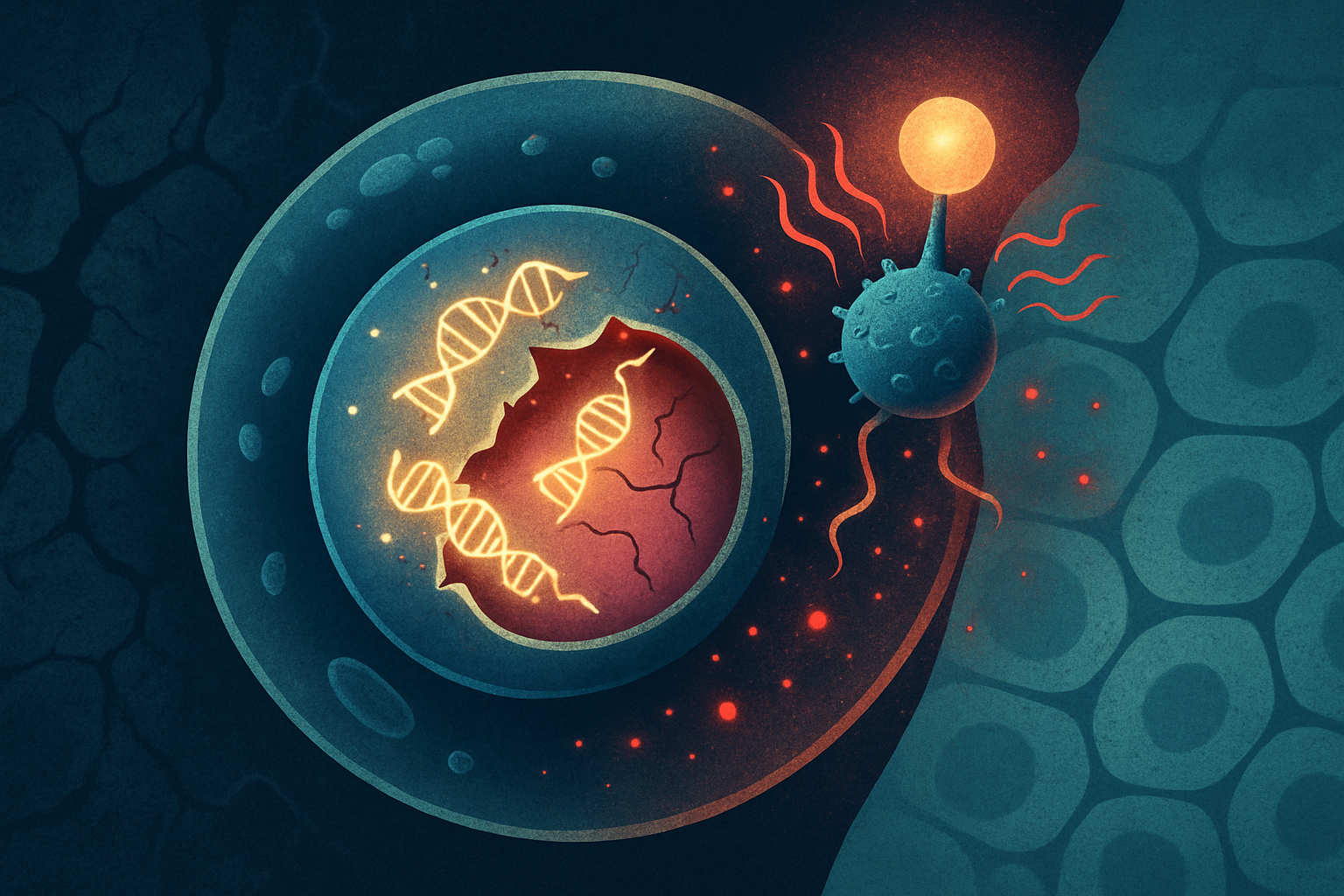
Researchers found that the sensor cGAS can become harmful in a model of severe DNA-repair disease. When DNA fragments escape from the nucleus into the cell, cGAS may interpret them as evidence of infection. That response can activate inflammatory signaling at the same time that the damaged cell is struggling to maintain its genome.
The team, led by researchers at the Hebrew University of Jerusalem with collaborators at the University of Southern California, studied African turquoise killifish genetically altered to reproduce important features of ataxia-telangiectasia, a rare disorder caused by defects in DNA-damage responses. The researchers also examined a model of Bloom syndrome, another disorder associated with genomic instability.
In the more severe ataxia-telangiectasia model, the scientists removed the cgas gene. The change did not erase the underlying DNA-repair defect, but it partially improved several biological problems linked to it. The researchers reported better germline development, less senescence in the liver, reduced neuroinflammation and improvements in markers of genome organization, including heterochromatin, micronuclei and telomere abnormalities.
That result complicates the usual story about DNA damage and premature aging. The damage itself remains important, but the body’s reaction to it may help determine how much tissue deteriorates. In this setting, the immune response appears to amplify the consequences of a defect that began in the machinery responsible for repairing DNA.
The finding does not mean that cGAS is simply a bad actor. The study found that removing cGAS on its own could also reduce genomic stability. The researchers describe its effects as “context-dependent”: cGAS may aggravate disease when DNA-repair systems are severely compromised, yet perform useful protective functions in otherwise healthy cells.
That distinction is crucial for anyone tempted to view the work as an anti-aging breakthrough. The experiments were conducted mainly in killifish, not humans, and focused on rare inherited genomic-instability syndromes rather than the ordinary aging process. The study did not show that cGAS inhibition extends lifespan, reverses human aging or improves health in healthy people.
There is another practical obstacle. cGAS is part of the cGAS–STING pathway, an important component of the body’s ability to recognize infection. Blocking the pathway too broadly could weaken antiviral defenses. The paper also points to evidence that eliminating cGAS in healthy organisms may have damaging effects on genome stability.
The more realistic therapeutic possibility is therefore not a blanket shutdown, but carefully calibrated control. The researchers suggest that partial drug-based inhibition might someday reduce harmful inflammatory signaling while preserving enough cGAS activity for infection detection and normal cellular maintenance. That idea remains speculative and would need to be tested in mammalian models before human studies could be considered.
For now, the study offers a narrower but meaningful lesson: in some accelerated-aging disorders, the immune system may help turn molecular damage into broader tissue decline. Understanding when that alarm protects the body—and when it makes the fire worse—could be as important as finding the original source of the damage.
Sources & Further Reading
StoryBreak
Independent digital news and reporting, updated throughout the day.
This article was researched and drafted with AI assistance and reviewed as part of StoryBreak's editorial process before publication. Read our editorial standards.